Okay, let me get this straight. I'm sitting here in 2025, watching the latest PlayStation State of Play, and Sucker Punch is showing off Ghost of Yotei. They're talking about these new "cinematic modes"—Miike Mode, Watanabe Mode—and I just have to sigh. Deeply. Here's the thing: I'm not some joyless critic who hates fun. I love video games! I love movies! But this whole trend of slapping famous directors' names onto visual filters and calling it a tribute? It feels... cheap. Like putting a fancy label on a can of soup and calling it gourmet. Sure, nobody's forcing me to play with these modes on. My controller won't shock me if I ignore them. But as someone who cares about what art means, I can't help but feel like we're missing the forest for some very stylish, digitally-filtered trees.
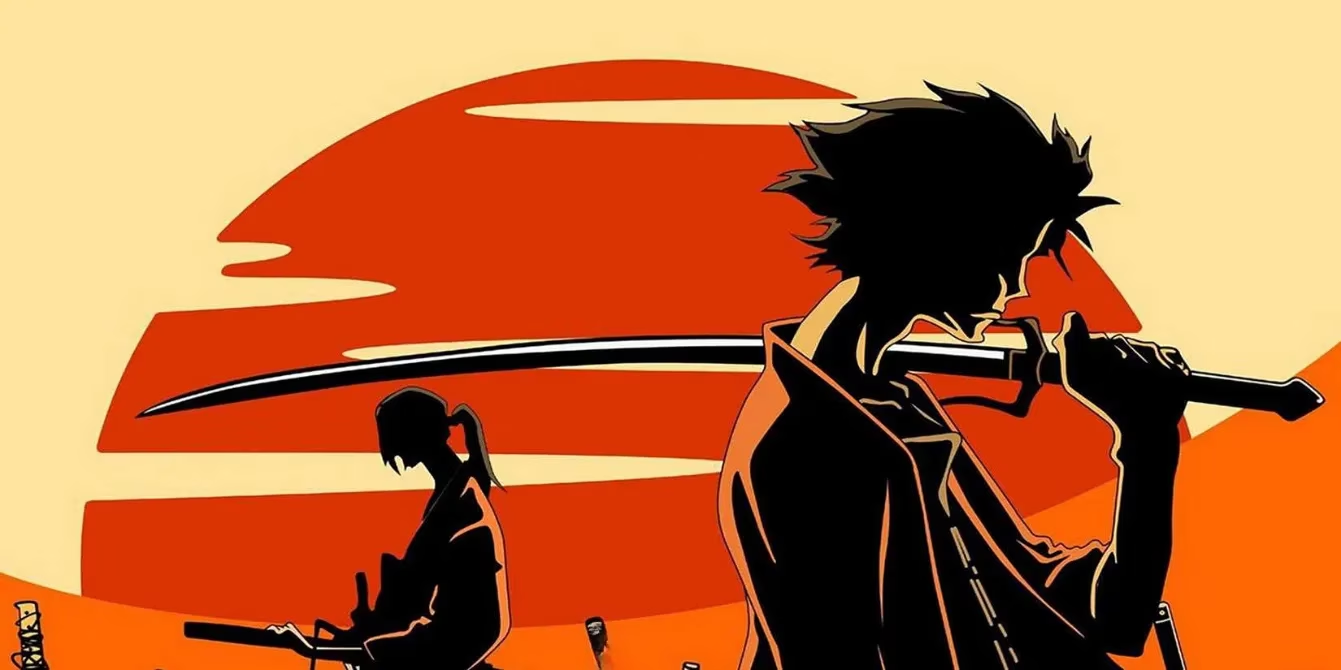
Let's break down what these modes actually are, because the marketing makes them sound way more profound than they are. We've got:
-
Kurosawa Mode: Back from Ghost of Tsushima. It's a black-and-white filter with some film grain and audio tweaks. Partnered with his estate, which is nice, but... it's a filter.
-
Miike Mode: This one pulls the camera in closer to the action and, of course, adds more blood and mud splatter. Because if there's one thing Takashi Miike is known for, it's... camera proximity and gore? 🤔
-
Watanabe Mode: The most baffling of the bunch. It swaps the game's soundtrack for some original lo-fi beats supervised by Shinichirō Watanabe himself. And that's it. No visual changes, no narrative shifts. Just a music swap.
See my problem? Each of these modes takes a director's life's work—decades of honing a unique visual language, exploring complex themes, and revolutionizing their medium—and reduces it to a single, easily-coded game feature. It's like summarizing a novel by its font. Watanabe's genius isn't just anachronistic music; it's how he uses that music to explore loneliness, existentialism, and the collision of cultures in shows like Cowboy Bebop and Samurai Champloo. Miike's provocations aren't just violence; they're about societal taboos, nonlinear storytelling, and creating a deeply unsettling atmosphere that lingers. And Kurosawa? The man was a master of composition, movement, and editing. Calling a black-and-white filter "Kurosawa Mode" feels almost disrespectful to his craft.
| Mode | What It Adds | What It Misses |
|---|---|---|
| Kurosawa | B&W Filter, Film Grain | His genius for dynamic framing & editing |
| Miike | Close Camera, More Gore | His subversive narratives & unsettling tone |
| Watanabe | Lo-Fi Music Swap | His philosophical depth & genre mashups |
Now, I'll put on my generous hat for a minute. Is it cool that a blockbuster game might introduce a new generation to these iconic Japanese directors? Absolutely! Any bridge between gaming and film history is a good thing in my book. If a teenager plays Ghost of Yotei, Googles "Takashi Miike," and discovers Audition or 13 Assassins, that's a win for culture. And yes, these directors are legends of the samurai genre, so the thematic link makes sense on paper.
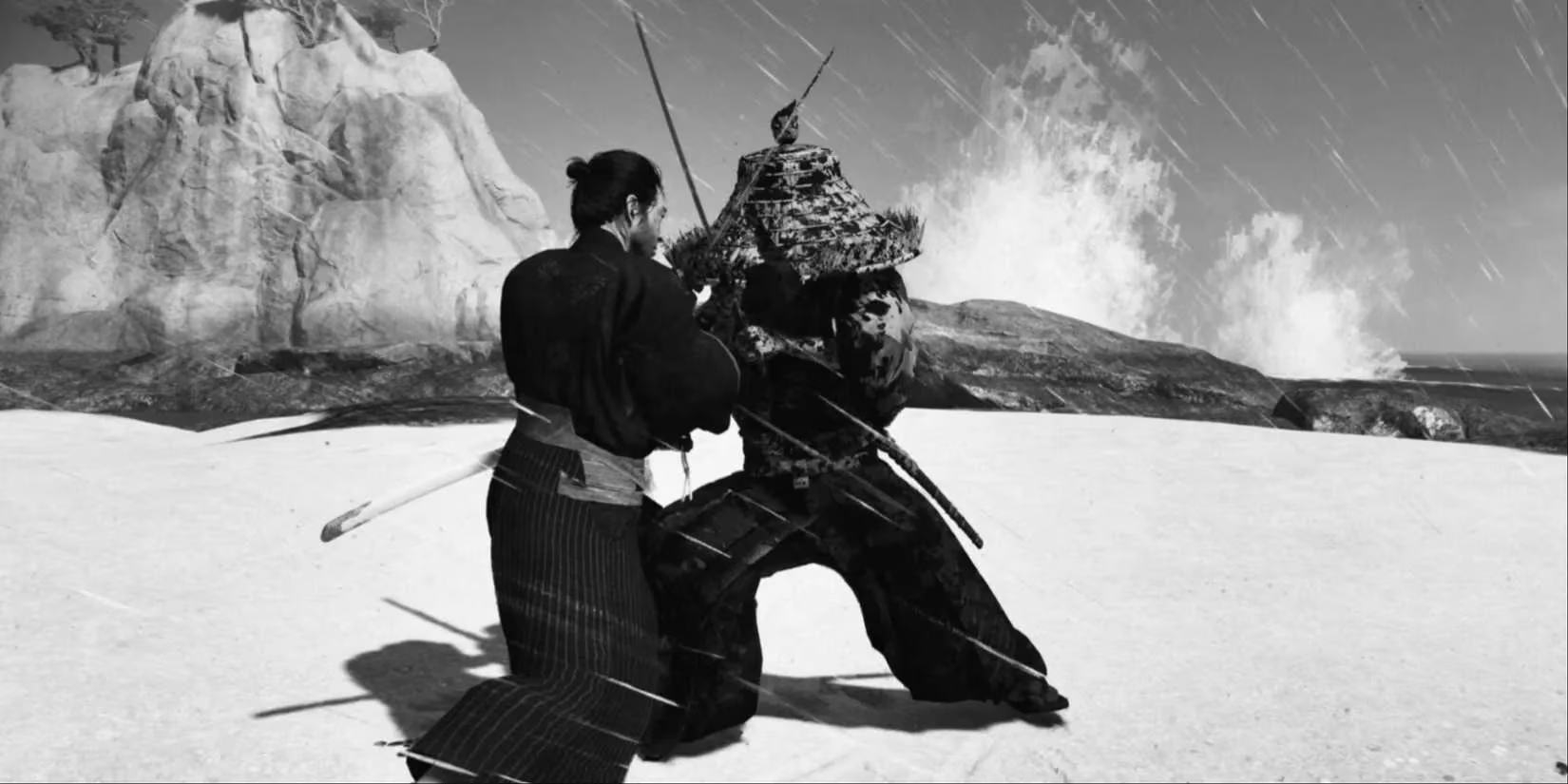
But here's the rub: Ghost of Tsushima (and likely Yotei) is a game that desperately wants to be seen as cinematic. It's a very pretty, very competent, but ultimately pretty standard open-world action game wrapped in a self-serious samurai story. Critics (myself included) praised its visuals—the way the grass sways, the gorgeous landscapes. These new modes feel like an extension of that desire: "Look how cinematic we can be! We have a Miike setting!"
The problem is, a video game fundamentally cannot replicate what makes these directors great. You can't code in Kurosawa's meticulous eye for blocking a scene with seven samurai. You can't program Miike's ability to make you feel visceral dread through pacing and implication. You can't script Watanabe's talent for weaving music so perfectly into a character's emotional arc that it gives you chills.
These modes are, at their core, gimmicks. They're cosmetic skins that say, "Wouldn't it be cool if this looked kind of like a movie?" They don't engage with the why or the how of these directors' art. What about:
-
Shot composition? 🎬
-
Pacing and editing? ✂️
-
Thematic depth? 🤔
-
Character motivation beyond 'revenge'? ⚔️
You could slap a "Tarantino Mode" on any game that just zooms in on feet during dialogue, and it would be just as reductive. It turns directorial style into a meme.
So, who are these modes really for? The film newbies might get a name to Google. But for those of us who have actually watched Seven Samurai, or Ichi the Killer, or Samurai Champloo, these modes feel hollow. They highlight everything the game isn't doing on a narrative or mechanical level to earn that cinematic comparison. In 2025, I wish we'd move past wanting games to be "like movies" and start celebrating how games can be their own unique, powerful art form—without needing to borrow prestige from filters named after better artists. In the end, playing Ghost of Yotei with Watanabe Mode on won't make me feel like Mugen or Jin. It'll just make me wish I was watching Samurai Champloo instead.