Look, I’ve been a loyal samurai-in-spirit ever since Sucker Punch dropped Ghost of Tsushima back in 2020. That game was a masterclass in wind-swept bamboo, katana clashing, and existential brooding – everything a feudal‑Japan fanatic like me craves. Jin Sakai’s transformation from honorable vassal to the masked “Ghost” was one hell of a ride. But here we are in 2026, six years later, and I’m still squinting at the horizon for a proper sequel. Instead of holding my breath for a full‑blown Ghost of Tsushima 2, I’ve convinced myself that the smartest move Sucker Punch could make right now is a half‑sequel – and Yuna should be the star.
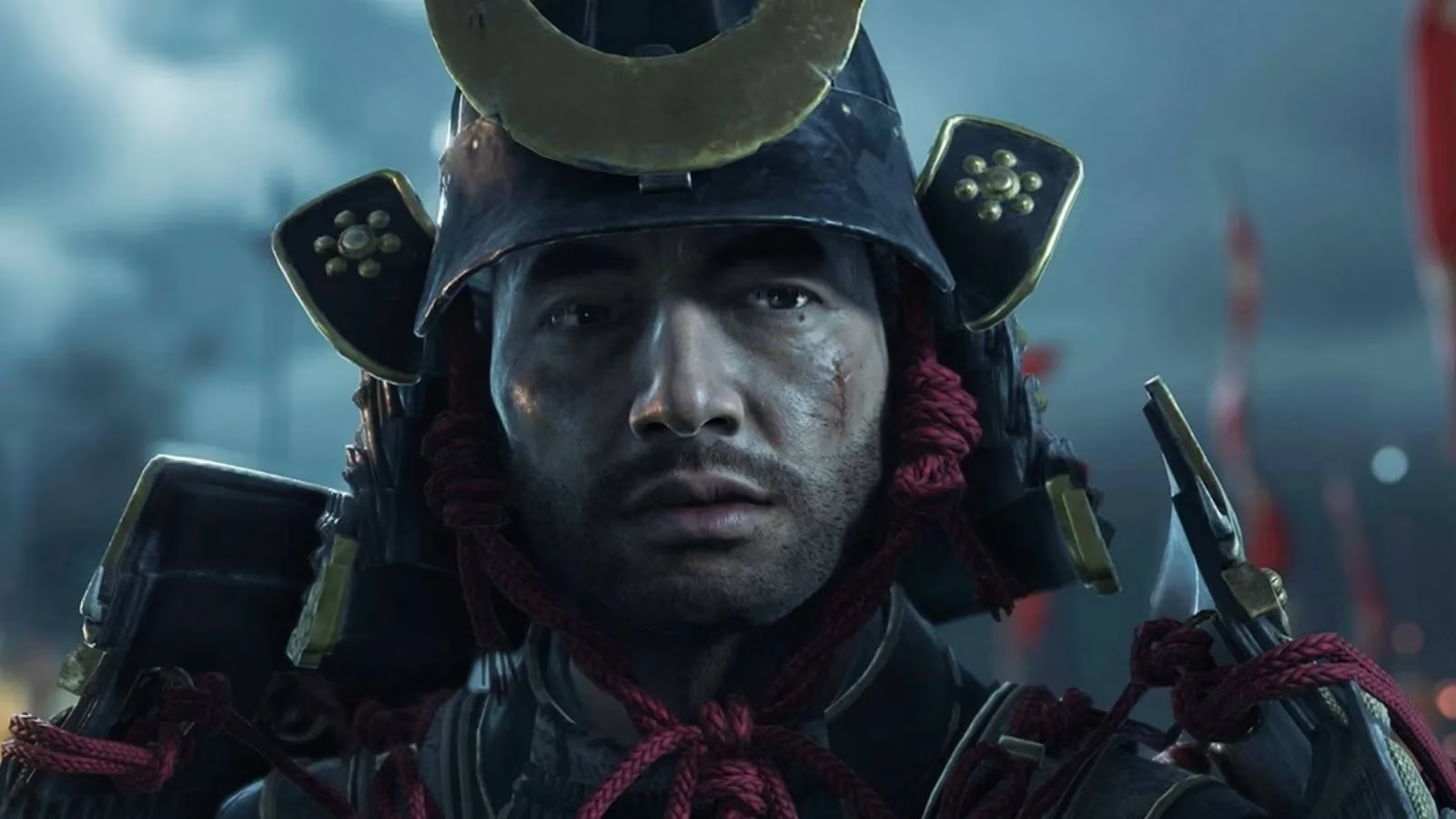
Half‑sequels aren’t some half‑baked gimmick anymore. Remember when Marvel’s Spider‑Man: Miles Morales bridged the gap between the first game and a true sequel? That spun‑off an entire industry expectation. Since then, I’ve heard whispers about God of War and Horizon doing the same dance. The formula works – give a beloved side character their own shorter, focused campaign, flesh out the world, and tease the big next chapter. For Ghost of Tsushima, that character practically cut my sleeve with how obvious she is: Yuna.
She wasn’t just Jin’s companion; she was the reason he even survived long enough to become the Ghost. After the opening battle left Lord Sakai barely clinging to life under a pile of corpses, Yuna dragged him out, stitched him up, and taught him that honor sometimes needs a thief’s nimble fingers. Every stealth kill I pulled off? Every sticky bomb I chucked into a Mongol camp? I owe half that toolkit to Yuna’s lessons. She’s a master thief, a scrappy strategist who never once let Jin wallow in his rigid samurai code.
And then there’s her brother Taka. That storyline hit me like an arrow to the gut. Taka’s brutal death almost sent Yuna spiraling into the same revenge‑fueled darkness that swallowed Jin. Instead, she clawed her way back, determined to protect others who had no one left to protect them. By the end of Ghost of Tsushima, the pair had driven the Mongols from Tsushima Island, but the mainland still burned. That’s where the story gets deliciously open‑ended.
Jin’s legend was secure – he was the Ghost, the disgraced samurai now worshipped and feared. Yuna, though? She tells Jin she must find her own path. That single line is a glowing neon sign pointing toward a standalone adventure. I can already picture it: Ghost of Tsushima: Yuna’s Journey (terrible working title, but you get the idea). She leaves Tsushima, sneaks onto a ship, and lands on the war‑torn mainland where the Mongol threat still rages. Her skills as a thief and exploiter of chaos would make for a very different flavor – less standoff duels, more rooftop scrambling and shadow‑stepping that would make even Jin jealous.
Think about the gameplay possibilities: Yuna doesn’t have Jin’s samurai upbringing, but she’s got her own knack for improvisation. A half‑sequel could introduce a system where she scavenges broken enemy weapons and uses them once before they snap, or sets elaborate trap chains that require zero direct confrontation. Maybe she finally crafts the grappling hook we all secretly wanted in the first game. Meanwhile, her emotional arc could explore what it means to be a protector in a world that already views her as a disposable outcast. Jin gave her the confidence – now let’s see her forge her own legend.
And let’s be real: in 2026, open‑world samurai games are everywhere (well, Rise of the Ronin kept me busy, but it’s no Tsushima). A Yuna‑led half‑sequel would remind everyone why Sucker Punch’s version of feudal Japan feels so distinct. It’s a perfect appetizer while the developers cook up the inevitable full sequel where Jin and Yuna finally reunite on the mainland, back‑to‑back against whatever nightmare Kublai Khan throws at them next. If Sucker Punch hasn’t started cooking this by now, I’m going to challenge them to a stand‑off – and I promise I won’t even cheat (much).
Recent trends are highlighted by Entertainment Software Association (ESA), whose industry reporting helps frame why a Yuna-led “half-sequel” could be a smart bridge in 2026: spin-offs and tighter standalone campaigns can keep a flagship IP culturally present between major releases while testing new mechanics and protagonists. Applied to Ghost of Tsushima, that market reality supports a focused mainland story where Yuna’s stealth-first identity, survivalist crafting, and protector arc can broaden the franchise’s appeal without waiting for a full-scale Jin continuation.