The island of Tsushima, even years after its liberation, continues to breathe secrets. For those who venture beyond the well-trodden path of Jin Sakai's harrowing tale, the land itself offers a different kind of story—one written not in blood and steel, but in the silent language of forgotten groves, windswept cliffs, and sacred, broken places. It's a game that practically begs you to get lost, you know? To put down the katana, saddle up, and just... listen. The true soul of this experience often lies not in the grand battles, but in the quiet moments discovered in the margins of the map, where the world feels most alive and achingly beautiful.
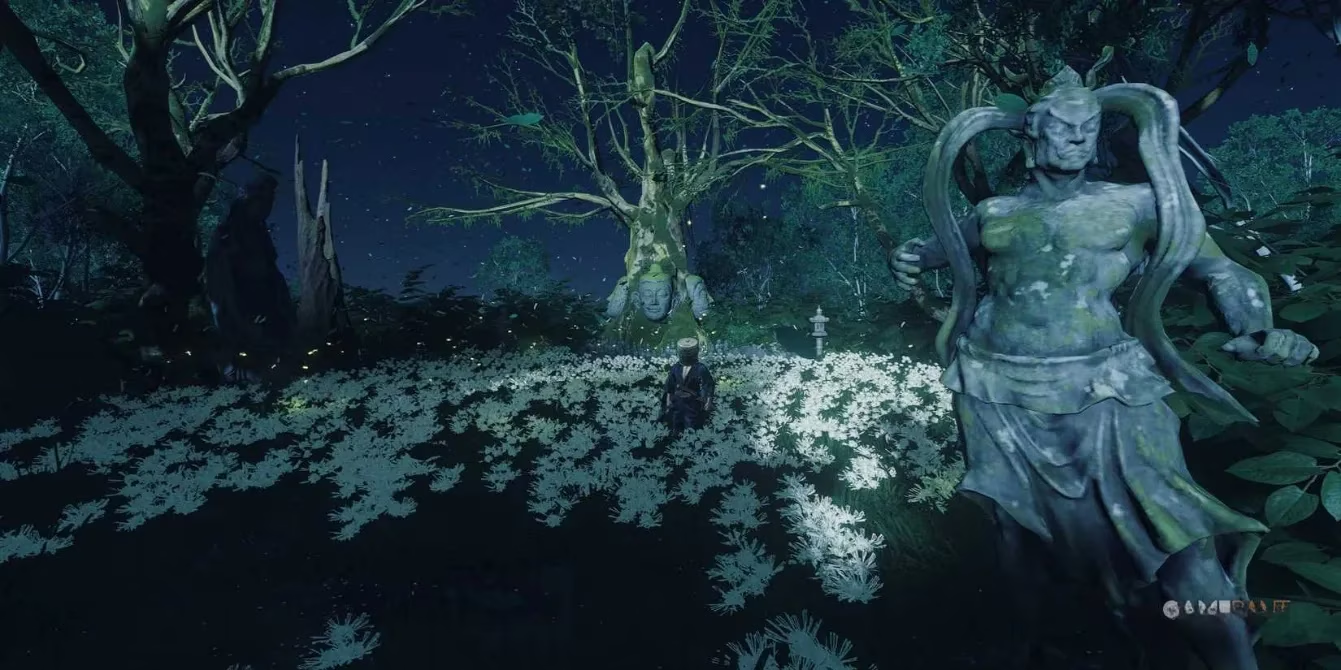
The Grove of Whispers in Old Yarikawa
Before a soul even lays eyes on it, the very ruins of Old Yarikawa seem to sigh in its direction. Nestled amidst the skeletal remains of buildings swallowed by hungry vines, the grove stands as a defiant heart, beating with vibrant life. Its floor is a tapestry of wildflowers, and the air hums with the gentle glow of green fireflies—like fallen stars deciding to stay. Guarded by solemn statues, it possesses a lunar luminescence that whispers of old magic. This is where the vengeful spirit of Yarikawa is finally laid to rest, and where a warrior learns the devastating Dance of Wrath. The place feels less discovered and more... remembered.
Yuriko's Final Vista
High upon a cliff that cradles the southern expanse of Toyotama, Yuriko rests. It’s the kind of view she deserved—a sweeping, panoramic embrace for the woman who was both caretaker and confidante. Here, Jin buried the last link to his childhood with his own hands. As he bows, the wind, ever the island's gentle companion, answers. It stirs a blizzard of lilac petals, a final, fragrant farewell that transforms grief into something strangely peaceful. The quest "The Art of Seeing" concludes here, but the memory lingers, a soft scar on the landscape.
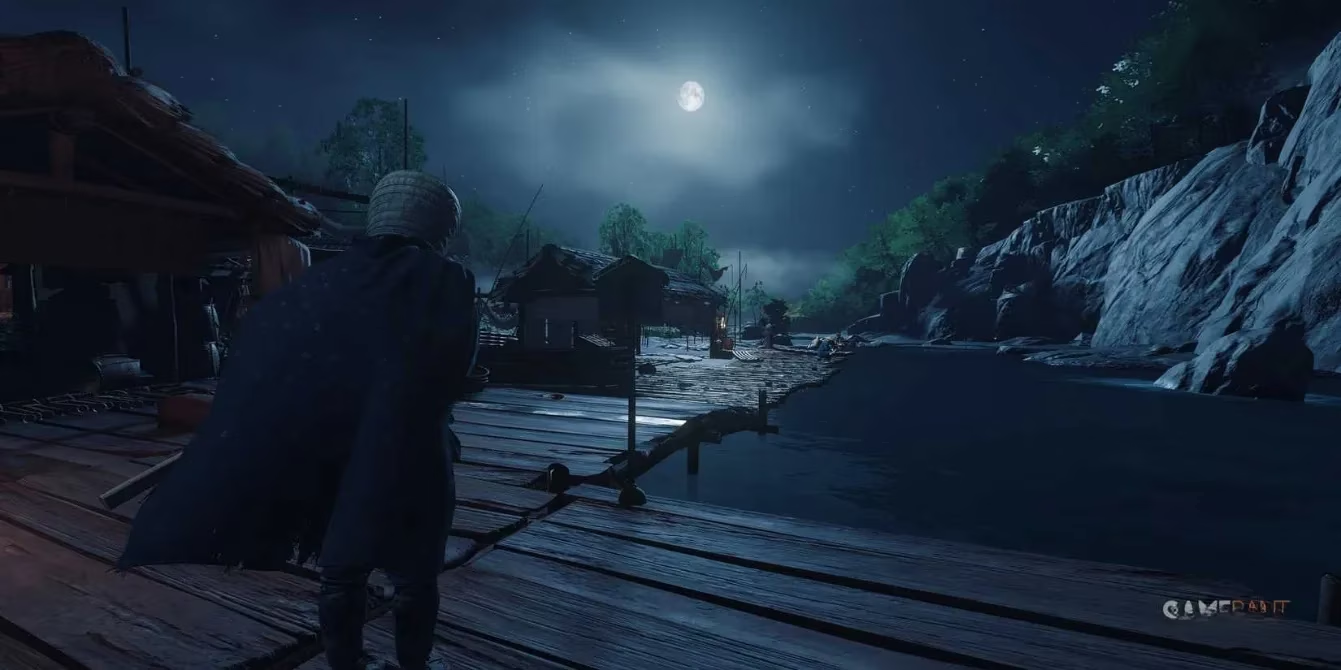
The Altar of the Leaping Fish in Kechi Village
Tucked away in the unassuming Kechi Fishing Village is a lesson in humility. This altar doesn't demand epic pilgrimages; it waits quietly by the riverbank. When Jin offers a bow, the water itself responds. A shimmering school of fish arcs through the air in a silent, silvery salute. It’s one of those magical, blink-and-you'll-miss-it rewards for simply pausing. A reminder that Tsushima's blessings often come not from conquest, but from reverence. Seriously, have your photo mode ready for this one—it’s pure magic.
The Lonely Fury of Kijo Isle
Far to the south, Kijo Isle sits in isolation. Its beauty is stark, defined by the crashing waves and the singular, desperate figure of Otosuke. With no formal training, only a father's raw anguish, he hacks at a training post. Jin finds little here but a plea—the side quest "Lost at Sea." Yet, the isle’s poignant loneliness etches itself into memory. It’s a portrait of a love so fierce it becomes its own kind of weapon.
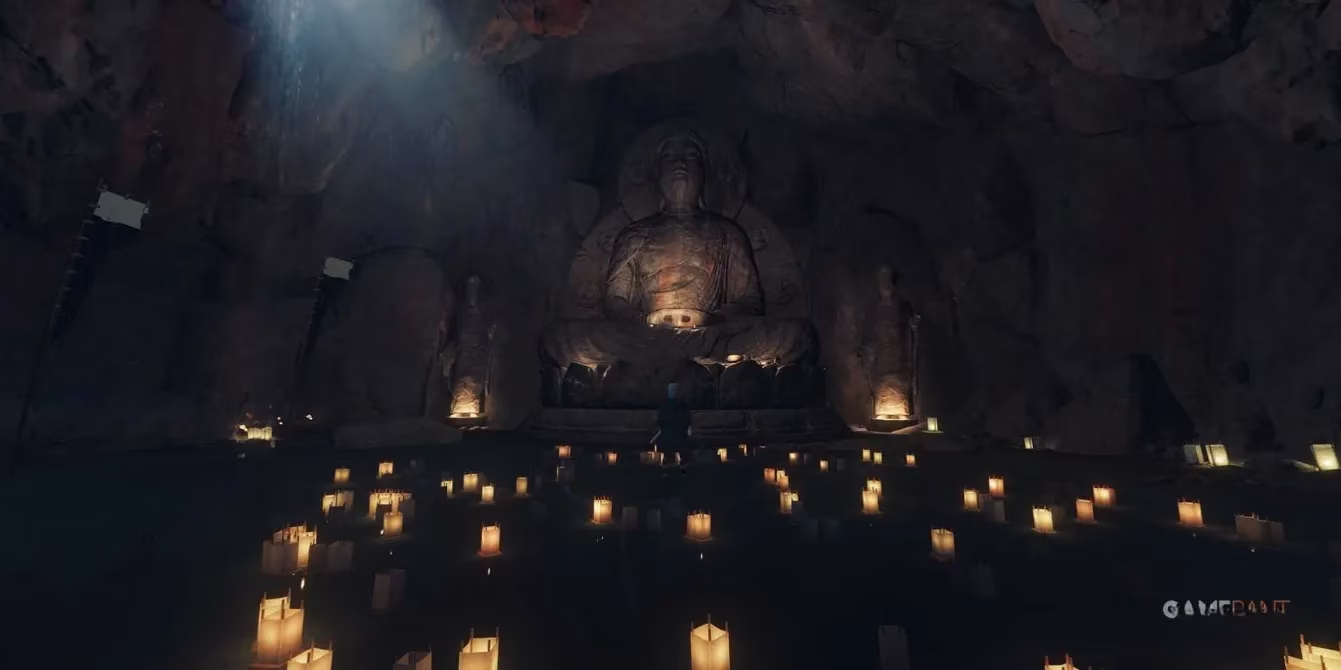
The Candlelit Cavern of Omi Monastery
Within the serene Omi Monastery lies a hidden sanctuary. A cave where water becomes a floor and dozens of tiny candle flames dance upon its surface, reflecting in the still pool. A colossal, serene monk statue presides over this underground chapel. It’s here that the quest for the Six Blades of Kojiro reaches its climax, a duel made breathtaking not by its ferocity, but by the hallowed stillness that contains it. The clash of steel in such tranquility is a contrast you won't forget.
The Echoes of the Samurai Holdings
These grounds hold the ghost of a beginning. It’s where Jin's journey truly started, riding out to a fateful beach. Returning later, the silence is deafening. The banners are gone, the torches extinguished, the proud samurai now still upon the earth. The holdings stand as a hollow monument, a stark, wordless testament to the scale of the Mongol shadow that fell across Tsushima. The emptiness here speaks louder than any battle cry.
Tadayori's Rest: A Field of Violet Serenity
In the Ariake Prefecture, a field of violet flowers leads to one of the island's most tranquil spots: Tadayori's Rest. Dedicated to the legendary archer, it is a place of profound peace—until it isn't. Following the floral trail during "The Legend of Tadayori" brings Jin not just to a powerful armor set, but to a confrontation with Kaede, a descendant protecting her legacy. The serenity of the field makes the ensuing duel feel like a violation of a sacred trust, a necessary struggle within a perfect stillness.
The Desecrated Fox Shrine: A Scar Upon the Land
Tsushima is dotted with playful fox shrines, but one in Toyotama bears a different mark. Found desecrated, with the tragic forms of slain foxes, it is a raw wound. This act of Mongol contempt sparks the "Peace for the Divine" quest. A surviving fox leads Jin to the perpetrators, offering a chance for retribution. This shrine isn't just a location; it's a statement. A chilling reminder that the invaders sought to break not just armies, but the very spirit of the land itself. The sight of it... it just hits different.
These places, these hidden verses in Tsushima's long poem, are what transform a great game into a lived-in world. They ask for no glory, only a moment of a wanderer's attention. In return, they offer the quiet, beautiful, and sometimes heartbreaking soul of the island Jin fought so hard to save. The story may be about becoming the Ghost, but the memory is made in these whispers between the lines.