The wind whispers through the ancient cedars of Tsushima, carrying with it a tale of reverence turned to regret. The Watazumi Shrine, once a beacon for pilgrims and a cherished touchstone for fans of the celebrated game Ghost of Tsushima, now stands silent and closed to the world. Its gates are shut, a profound and sorrowful response to what its guardians have deemed a "grave and unforgivable act of disrespect." This is not merely a temporary closure; it is the mourning of a sacred bond, severed by actions that have forced a spiritual sanctuary to retreat from the very people who helped restore it. How did a place saved by the devotion of gamers become a fortress against tourism? What transgression could be so severe as to burn the bridges built with such care?
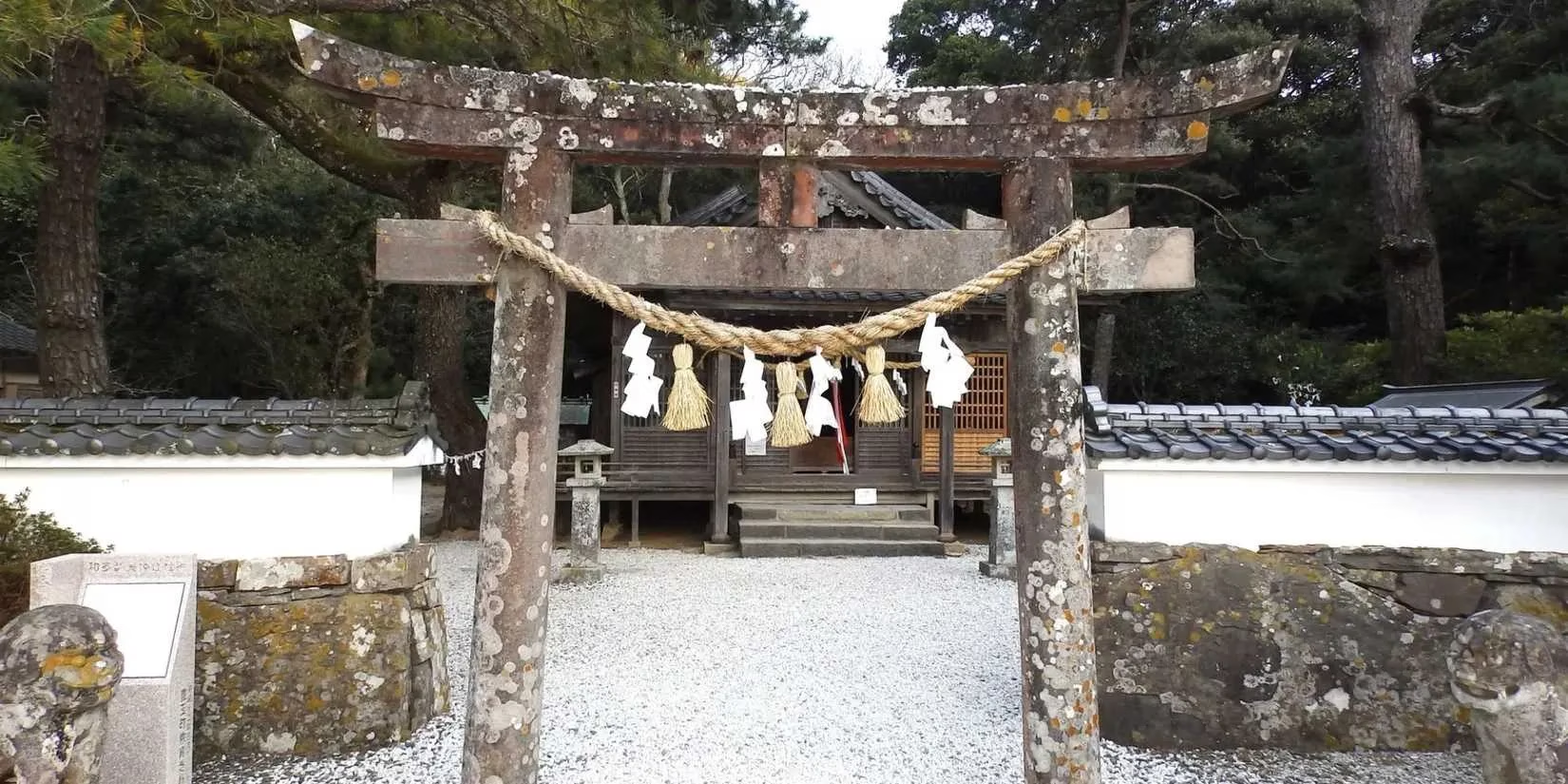
The story of the Watazumi Shrine is intertwined with digital legend. For countless players, its silhouette was the real-world inspiration for the game's Scarlet Rock Shrine—a place of quiet contemplation amidst the chaos of war. This connection was forged in steel and compassion when, in 2021, a typhoon's fury left the shrine damaged. In a remarkable display of global fellowship, the international Ghost of Tsushima community rallied, raising an astounding $180,000 for its repairs. It was a modern parable: virtual warriors becoming real-world protectors, their love for a story translating into tangible preservation. This act seemed to promise a new chapter of harmony between cultural heritage and its newfound digital ambassadors.
Yet, that promise has now been broken. The shrine's administration, citing "unbearable mental anguish" suffered by its staff, has enacted a complete and indefinite ban on all tourism. Only congregants and genuine worshippers are now permitted to cross its threshold. The announcement on Instagram carried a tone of deep disappointment, drawing a stark line between the sacred and the profane. "Those who consider this place a theme park or simply a photogenic location are not worshippers," the statement clarified, introducing strict new rules around photography. The act of recording, once a simple gesture of appreciation, is now scrutinized; capturing an image 'because it's pretty' is no longer a valid reason. Has the shrine become a victim of its own beauty, its serenity commodified into a backdrop for social media?
This is not an isolated incident of friction. The shrine has weathered previous storms of misconduct. Reports indicate a prior, targeted ban on South Korean tourists following incidents ranging from staff harassment to outright vandalism. Police were involved, yet the pattern persisted. The recent, unspecified "unforgivable act" appears to have been the final straw, compelling the guardians to protect the site's sanctity through complete isolation. The irony is palpable: a place preserved by the global gaze is now retreating from it. The very act that saved the physical structure—the widespread attention from fans—may have sown the seeds for the behaviors that now threaten its spiritual essence.
The closure resonates within a broader, uneasy context between gaming culture and real-world sacred sites. Eurogamer has drawn parallels to the recent controversy surrounding Assassin's Creed Shadows, where players could initially inflict damage upon virtual representations of Japanese shrines. Although Ubisoft swiftly patched the game—making the shrines inviolable and combat bloodless—the timing was inauspicious. While the Assassin's Creed issue was confined to the digital realm, it highlighted a pervasive tension: the perception of sacred spaces as mere settings for entertainment. When a game world allows the defilement of a temple, does it, even unintentionally, erode the reverence owed to its real-world counterpart? The Watazumi Shrine's plight suggests that for some, the line has indeed blurred beyond recognition.
The implications of this closure are multifaceted and sobering:
-
Cultural Consequences: A living site of worship and history is cut off from cultural exchange. Future generations of international visitors may never experience its peace.
-
Community Impact: The local community, which may benefit from respectful tourism, faces economic and social repercussions.
-
A Precedent Set: Other shrines and temples witnessing similar pressures may follow suit, leading to a wider retreat of Japan's spiritual heritage from public view.
What, then, is the path forward? The situation demands a reflection on the nature of pilgrimage in the 21st century. The shrine's stance is a powerful reminder: these are not museums or photo-ops, but active houses of worship where centuries of prayer reside in the very air. The rules are not petty restrictions but the grammar of a sacred language. For the global community of gamers who once championed this place, the loss is particularly poignant. They are now left outside the gates they helped mend, witnesses to a tragedy of disrespect they did not create but must now bear the consequences of.
The tale of the Watazumi Shrine is a modern fable of fragile connections. It speaks of how admiration, when untethered from deep respect, can become a force of destruction. It asks us to consider what we seek when we journey to these places: is it a checkbox on a list, a perfect image for a feed, or a moment of genuine connection with something timeless? The shrine's silence now poses the loudest question of all: in our pursuit of the beautiful and the legendary, have we forgotten how to be quiet, how to be humble, how to simply be in a space without taking from it? As of 2026, the gates remain closed, awaiting not just an apology, but a fundamental shift in understanding. The wind still whispers through the cedars, but the path to listen has been temporarily lost.