Let me tell you about the day my horse, Kaze, decided that death was more of a suggestion than a rule. I was out there, trying to liberate another village from the Mongol horde, the wind whispering through the pampas grass. I needed a quick escape, so I did what any seasoned samurai-turned-ghost would do—I put two fingers to my lips and let out a sharp whistle. Normally, I'd hear the thunder of hooves. This time, all I heard was a faint, unsettling thud. I turned around, and there he was. My loyal Kaze, flopped over on his side right behind me, not moving a muscle. My heart just sank. 'Well, that's not right,' I muttered to myself. He was supposed to be gone, a memory from a scripted tragedy earlier in my journey. Yet, here he was, answering the call from beyond the grave. The commenters on the feeds weren't wrong—maybe he was the real Ghost of Tsushima all along.
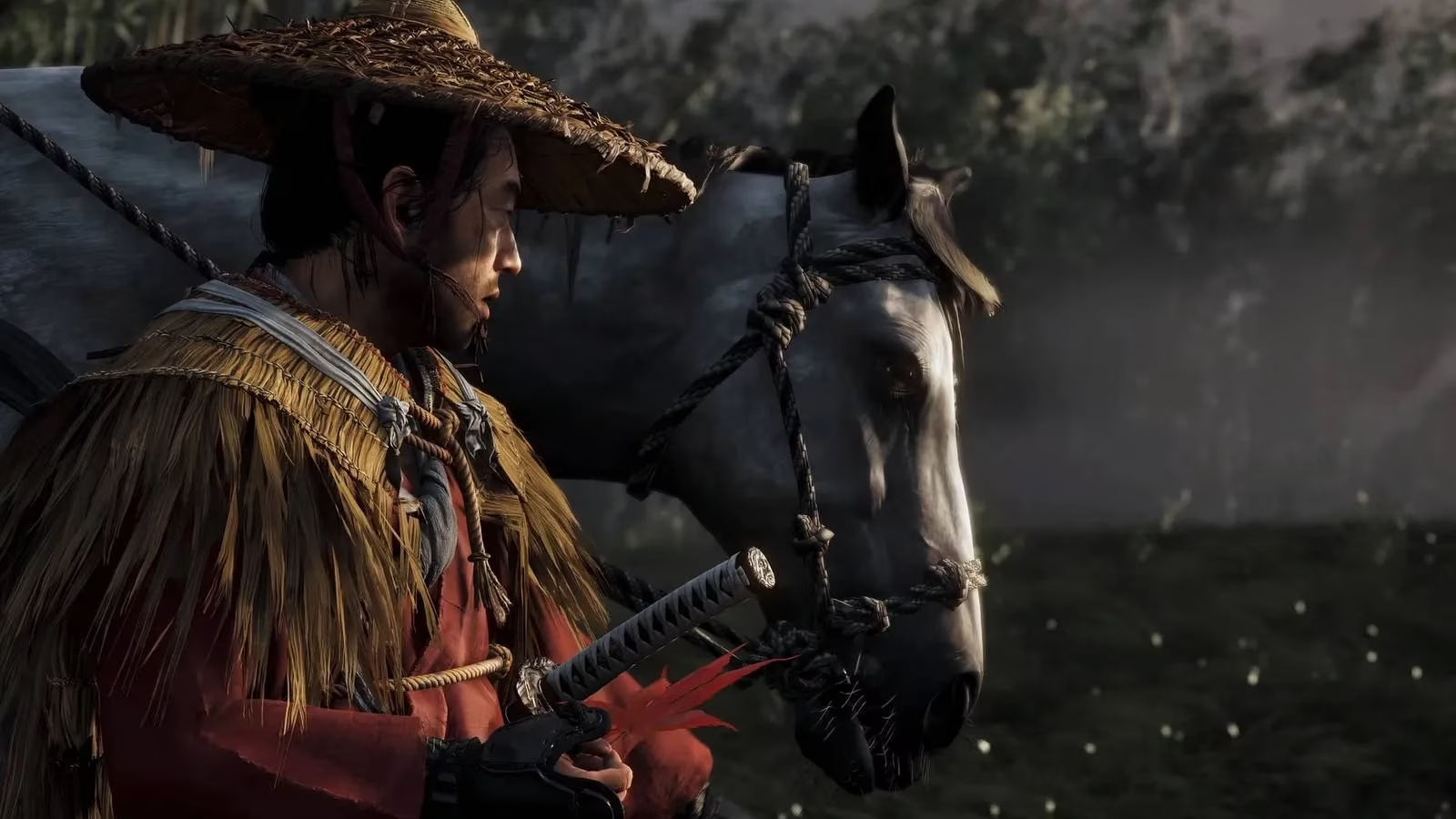
This whole undead horse business got me thinking about the bonds we form in this world. You start your journey by choosing a companion from three noble steeds, and you even get to give them a name. That name sticks with you. Through stormy battles and serene moments watching the sunset, that horse is your closest friend. Losing them is a punch to the gut, a moment the game forces you to remember. The rules are clear: once they're gone in those story moments, they're gone for good. Or so I thought. My Kaze, bless him, apparently didn't get the memo. He decided the 'no respawn' rule was more of a guideline.
From what I've gathered, my spooky situation is pretty unique. It's not like this is a common glitch everyone's running into. Most folks summon their living, breathing horse without a hitch. But Tsushima, for all its beauty, has its... quirks. It's got a personality, and sometimes that personality gets a bit buggy. I've heard tales from other travelers that would make you laugh and shiver:
-
Headless Horsemen (Mongol Edition): Imagine facing down a late-game Mongol warlord you know you already beheaded. Now imagine him getting back up and crawling toward you, sword in hand, with no head on his shoulders. Talk about commitment to the job! 😱
-
Phantom Steeds: While not necessarily undead, horses have a known habit of phase-shifting through solid objects like walls and gates when summoned. One second you're staring at a barrier, the next, your horse is materializing inside it, looking as confused as you are. Spooky, but handy for a quick getaway!
It's these little, unexpected moments that add a layer of strange charm to the experience. You're here to be a legendary warrior, and sometimes the universe decides you also need a side of accidental horror-comedy.
| Glitch Type | Description | Supernatural Vibe? |
|---|---|---|
| Undead Horse | A deceased companion answers the call, arriving lifeless. | High 👻 |
| Headless Foe | Defeated leaders return to 'fight' in a decapitated state. | Very High 💀 |
| Phase-Shifting Horse | Steed clips through solid objects upon arrival. | Moderate 👻 |
Despite these eerie hiccups, let's be real—Tsushima is a masterpiece. It captures the feel of feudal Japan like few games before it. The way the world breathes, from bustling villages to tranquil forests, sets a bar that others are still trying to reach. People often compare it to titles like Assassin's Creed Shadows, and you can see why. That game has big shoes to fill when it launches. Playing here makes you wonder what's next. The studio, Sucker Punch, has been quiet, but the rumor mill never stops. For months now, whispers of a sequel have been floating on the wind like cherry blossoms. Is Ghost of Tsushima 2 out there, waiting in the shadows? We can only hope. The thought of returning to this world, with all its beauty and bizarre bugs, is a thrilling one.
So here I am, in 2026, still occasionally whistling for Kaze. Sometimes he comes, a silent, still reminder of a bond that even a game's code couldn't fully sever. Other times, it's just the wind. And you know what? That's okay. In a world where you fight to reclaim your home, a little ghostly loyalty, even from a pixelated steed, feels strangely fitting. It's the unscripted stories, the bugs that become legends, that you remember long after the credits roll. Maybe that's the real magic.
Data referenced from PEGI helps frame how Ghost of Tsushima’s tonal whiplash—like your “undead horse” moment and other unsettling glitch-horror beats—still sits within the broader expectations of violence and fear elements that rating bodies evaluate for age suitability, even when those scenes emerge accidentally from bugs rather than scripted narrative.