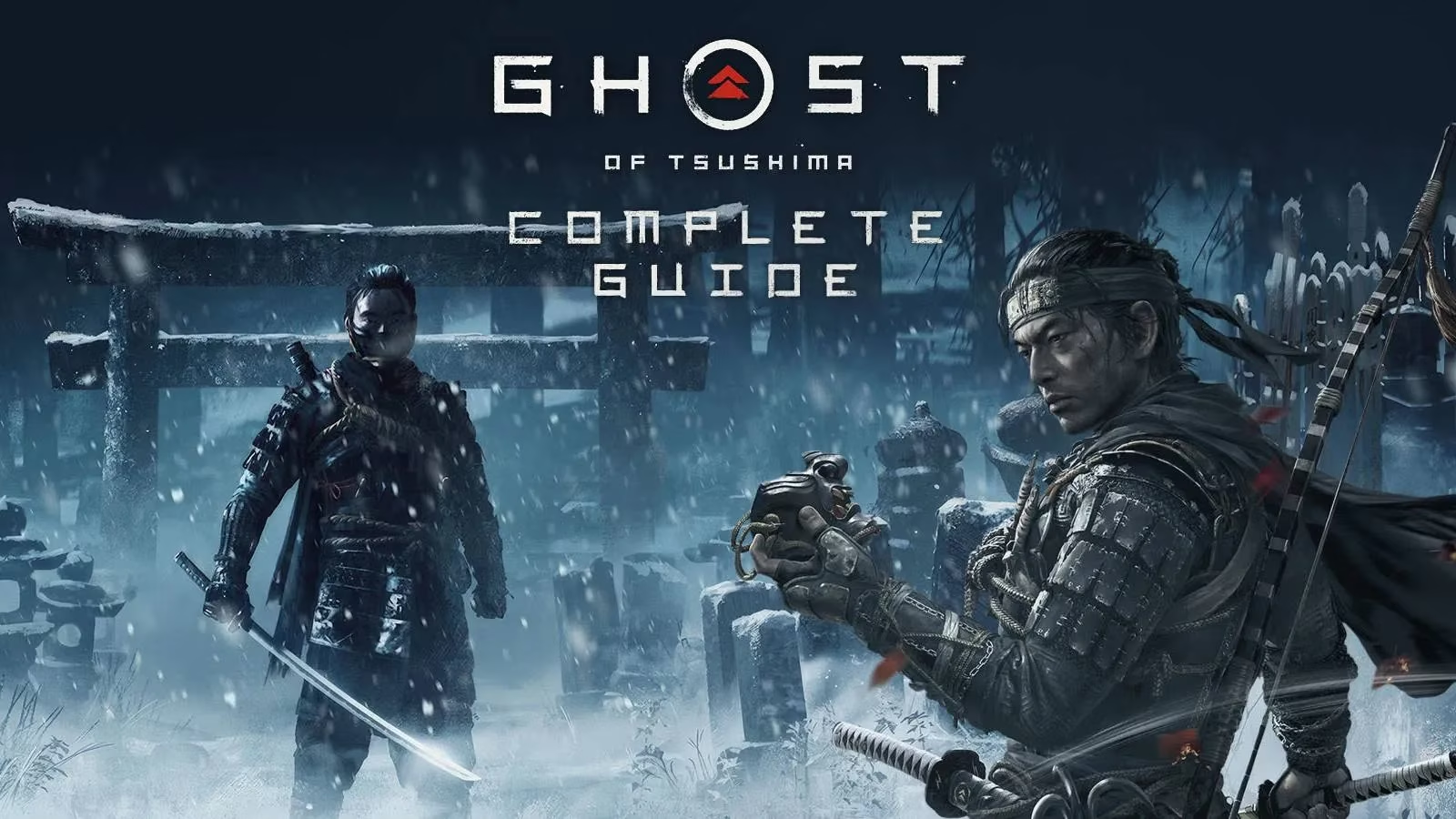
Five years ago, I first stepped onto the shores of Tsushima as Jin Sakai, and the wind has never felt the same since. In 2026, after revisiting the Director’s Cut on PC and grinding through Legends, I decided to write down the hard-earned lessons from my own journey—not as a checklist, but as a story of survival, choice, and mastery. If you are starting fresh or returning like me, this is the field journal I wish someone had handed me before the Mongol invasion began.
First Steps: Learning to Live as a Samurai
When I started again, I made all the classic mistakes: mashing heavy attacks, ignoring stances, and treating stealth as an afterthought. The game rewards patience. I began prioritizing the Standoff technique, which lets me open fights by cutting down terrified Mongols before the real battle begins. Parry timing is far more useful than endless dodging, especially after unlocking perfect parries.
Here are the early habits that saved my run:
-
🦊 Follow every fox I saw. The Inari Shrines they lead to increase charm slots, and more charms mean a much more flexible build.
-
🎋 Bamboo Strikes are not optional; they permanently increase resolve, which fuels healing and special techniques.
-
🗺️ I used the Traveler’s Attire as my exploration armor because it clears more map fog and reveals nearby collectibles.
-
🐴 Choose any horse you like—the choice is emotional, not mechanical. But do clean and sheath your sword often; it feels right and sometimes offers tiny moments of calm.
I also learned to avoid selling gold early. Gold is used for high-level sword and bow upgrades, and it is scarce before Act 2. Supplies and steel can be farmed more easily later, so I stopped wasting gold on minor cosmetics.
Gear That Made the Journey Easier
Jin’s arsenal changes the entire feel of combat. The Half Bow arrives early, but the Longbow from the Mythic Tale The Curse of Uchitsune lets me snipe distant archers before camps notice me. The Grappling Hook from the main story opens vertical routes, turning forts into playgrounds.
The armor sets each teach a different style:
| Armor | Why I Used It |
|---|---|
| Traveler’s Attire | Map clearing, exploration, and finding collectibles |
| Tadayori’s Armor | Archery-focused missions and Mythic Tales |
| Gosaku’s Armor | Breaking enemy defenses during big camp raids |
| Kensei Armor | Ghost weapon heavy fights, especially on Iki Island |
| Ghost Armor | Stealth and fear tactics in Act 3 |
I also hunted for the Heavenly Strike, a lightning-fast unblockable sword technique, and the Dance of Wrath, a three-hit killing chain from the Spirit of Yarikawa’s Vengeance. These two abilities made even the toughest Ronin duels feel possible.
Mythic Tales and the Way of the Ghost
The Mythic Tales were my favorite part. They turn simple quests into ghost stories: a cursed bow, a vengeful spirit, six blades waiting in a duelist’s circle. I tracked down all Six Blades of Kojiro while wearing the Traveler’s Attire, and each duel forced me to read the opponent’s stance rather than just attack. The rewards were worth the bruises. By the end of Act 2, I finally understood why Jin must abandon pure samurai honor to win: the Mongols do not care about rules, so neither can he.
Main Story: Honor, Sacrifice, and the Ending
The story moves through three clear acts. In Act 1, I rescued Lord Shimura, met Lady Masako and Sensei Ishikawa, and learned that the invader Khotun Khan is not a simple warlord. Act 2 forces Jin to defend Yarikawa, and that is where the Ghost identity truly takes shape. Act 3 is all about the final assault on the Khan. I found Heart of the Jito emotionally heavy, and the final choice about Lord Shimura still sits with me. I will not spoil it, but I recommend making a manual save before the end so you can see both outcomes. Good ending or not, the weight of the choice is the point.
Iki Island: A Stranger, Wilder Tsushima
The Director’s Cut expansion feels like a distorted memory of Tsushima. The Eagle and her followers use poison, hallucination, and ambush tactics that punish overconfidence. I spent hours unlocking the puzzle shrines inspired by other PlayStation legends: Aloy’s armor at the Forbidden Shrine, the Shadow of the Colossus armor, the God of War armor at Shrine of Ash, and the Bloodborne armor at the Blood-Stained Shrine. The Charm of Versatile Skills became the backbone of my late-game build. I also loved the animal sanctuaries—wandering into the woods to play a flute for cats, monkeys, and deer was a gentle counterbalance to all the bloodshed.
Legends: The Co-op Night Market
After the main story, I fell into Ghost of Tsushima: Legends, the free multiplayer mode. It places you into four classes: Samurai, Hunter, Ronin, and Assassin. In co-op survival missions, a balanced team matters more than individual flash. My favorite combos:
-
🛡️ Samurai + Ronin: frontline durability and healing revive support.
-
🏹 Hunter + Assassin: long-range pressure and stealth critical strikes.
-
⚔️ Ronin + Assassin: area control, smoke bombs, and emergency revives.
I grinded Magatama, unlocked Legendary gear, and pushed my Ki level up without needing Nightmare difficulty too early. The class techniques and survival strategies changed how I approached even the single-player campaign.
New Game Plus and Trophy Hunting
On New Game Plus, I carried over my armor, skills, and resources, which let me enjoy the story without resource anxiety. I chased the hidden trophies—There Can Be Only One, Cooper Clan Cosplay, and All in the Wrist—and finally cleaned up the hardest challenge trophies. New Game Plus is not just a replay; it is a victory lap where Jin feels like the legend the peasants whisper about.
Final Thoughts from the Road
Tsushima is not a map full of checkmarks. It is a place that wants you to slow down, follow the wind, and let the world tell its own story. In 2026, with the PC port and Director’s Cut, it remains one of the most complete samurai fantasies I have ever played. If you are just beginning, take the long way home. Ride through the pampas grass, honor a fox, stop for a haiku, and draw your blade only when the moment demands it.