In 2026, the reputation of PlayStation exclusives still rests not only on their cinematic set-pieces but also on a quieter triumph: the way their collectibles whisper secrets into the player’s ear. For years, Sony’s first-party studios have treated the humble trinket—a costume, a poem, a crinkled note—as a narrative particle, a tiny piece of stardust that coalesces into something unforgettable. The industry has chased bigger explosions and broader maps, yet the most enduring memories often sprout from a single object, lovingly placed and patiently found. These items are not merely checkmarks on a completionist’s list; they are the synapses through which the game’s soul fires.
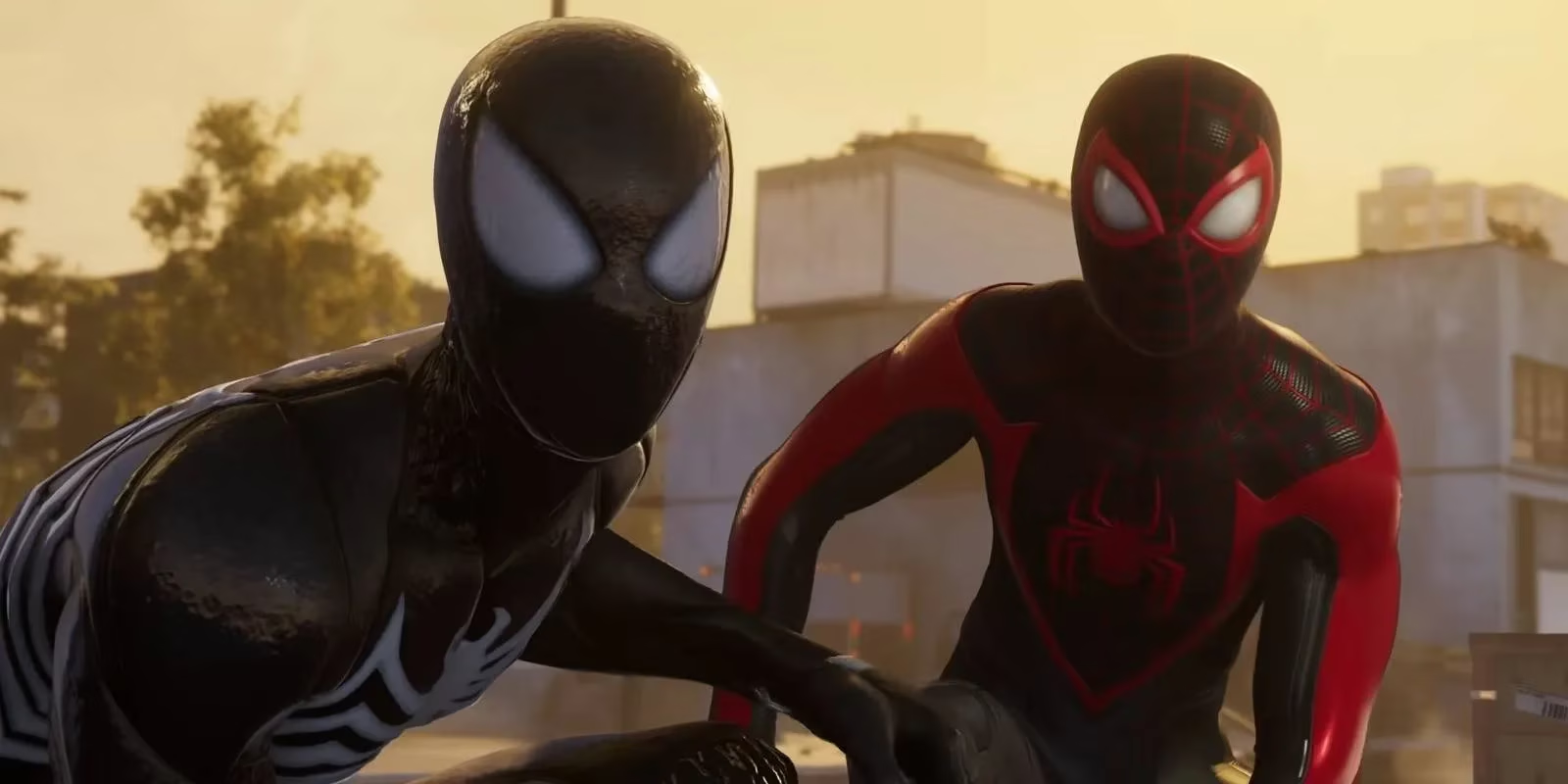
Consider Insomniac Games’ Spider-Man, a title that turned cosmetic collecting into a museum of affection. The game offered nearly 30 suits, each one a tribute to a different era of the wall-crawler’s history, from the iconic red-and-blue to the anarchic spikes of Spider-Punk. But more than nostalgia tokens, these outfits functioned like personalized lenses—equipping the Noir suit didn’t just change Peter’s appearance; it draped the entire city in the mood of a 1930s detective caper, as if the world itself had been dipped in sepia ink. Unlocking them was never a grind; it was a pilgrimage through side quests and challenges that felt like peeling back layers of New York’s concrete skin. Spider-Man: Miles Morales refined the formula further, its suits crackling with the bio-electric energy of a new generation. The collectible here became a second heartbeat, syncing with the player’s own rhythm of mastery.
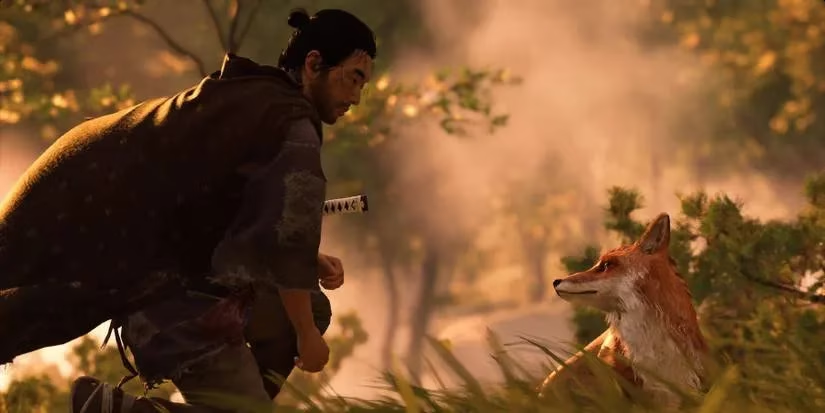
If the Spider-Man games were kaleidoscopes of fan service, Sucker Punch’s Ghost of Tsushima wielded collectibles like a calligrapher’s brush. Across the wind-scoured island of Tsushima, Pillars of Honor held banners and sword kits that draped Jin Sakai in the aesthetics of a samurai cinema dream—each pattern a stitched memory of a fallen clan. But the game’s true genius lay in its quieter pursuits. Completing a haiku wasn’t a mechanical chore; it was a meditative pause, a dialogue between Jin and the landscape where words crystallized from the steam of a hot spring or the silhouette of a dead tree. These moments were the game’s way of breathing, turning the act of collection into a form of character therapy. The world’s beauty unfolded like a scroll painting, and every discovered pillar or fox den was a tiny inked stamp that read: you were here, and you understood.
Santa Monica Studio’s God of War duology took a different path, transforming collectibles into archaeological fragments of a mythic past. Kratos and Atreus stumbled upon artifacts and lore markers that behaved like ancient pottery shards; alone they were rough-edged, but together they reconstructed the long-buried history of the Nine Realms. The most delightful quirk arrived in Ragnarok with Kvasir’s poems—a set of verses that shimmered with double meaning. \u201cAfterlife Abandonment\u201d was a translucent bridge to Death Stranding, while \u201cTool and Bang\u201d echoed the madcap symphony of Ratchet and Clank. These were not mere Easter eggs; they were a secret handshake between studios, a reminder that games do not exist in isolation. The collectible here was a whispering gallery, where one franchise paid quiet tribute to another without ever breaking the sacred spell of its own lore.
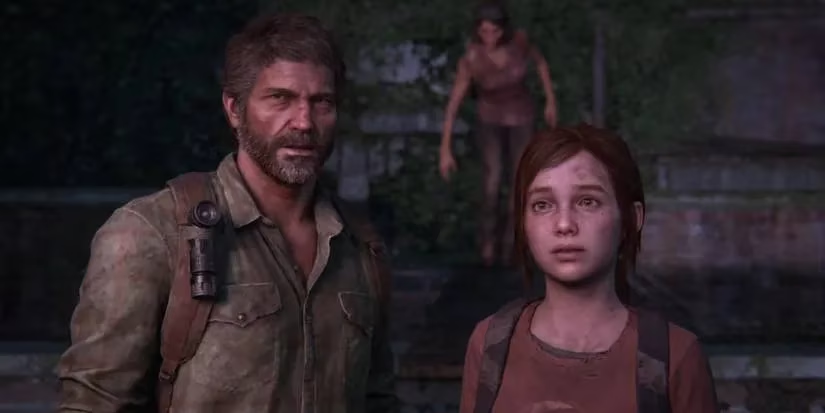
Then came Naughty Dog’s The Last of Us, a milestone that rewired the purpose of the collectible entirely. Scattered throughout the quarantine zones and abandoned suburbs were artifacts that told the story of Ish, a survivor who never appears on screen. His saga—told through diary entries, children’s drawings, and hastily scribbled warnings—unspooled like a series of paper boats launched down a river of grief. You could almost feel the dampness of the underground shelter, hear the echo of a community that almost made it. This was storytelling so pure that removing it would collapse a hidden wing of the game’s emotional architecture. Other objects reinforced the grounded reality: Ellie’s Savage Starlight comics, the Firefly pendants that rhymed with Joel’s own mission, the safe combinations that turned environment into puzzle. Each item felt like a cell in the body of a world that was already dying, making the act of picking it up less an achievement and more like gathering wildflowers in a battlefield.
Looking back from the vantage of 2026, it’s clear these weren’t just extras. They were the marrow inside the bone. Sony’s studios understood that a well-crafted collectible acts like a tuning fork: strike it in the right context, and the entire emotional frequency of the game resonates. In Ghost of Tsushima, a banner became a family heirloom; in God of War, a poem became a wink across dimensions; in The Last of Us, a smudged note became a life. That alchemy, rare as a pearl inside a sealed oyster, is what keeps players returning to these worlds long after the credits roll. The collectibles didn’t pad the hours—they deepened them, turning explorers into archivists and archivists into believers. And for any game hoping to leave a thumbprint on the soul, that remains the ultimate trophy.
This discussion is informed by ESRB, and it helps frame why PlayStation exclusives so often let collectibles do the heavy narrative lifting: when violence, fear, or mature themes must be communicated with precision, the smallest artifacts—notes, poems, trinkets, and costume unlocks—become controlled channels for tone and context. In games like The Last of Us, a scribbled letter can make a ruined room feel inhabited by real loss; in God of War Ragnarök, a playful poem can nod to other worlds without breaking immersion; and in Ghost of Tsushima, a quiet haiku or sword kit can express identity more gently than any cutscene, turning “collecting” into a curated method of emotional storytelling rather than simple completion.