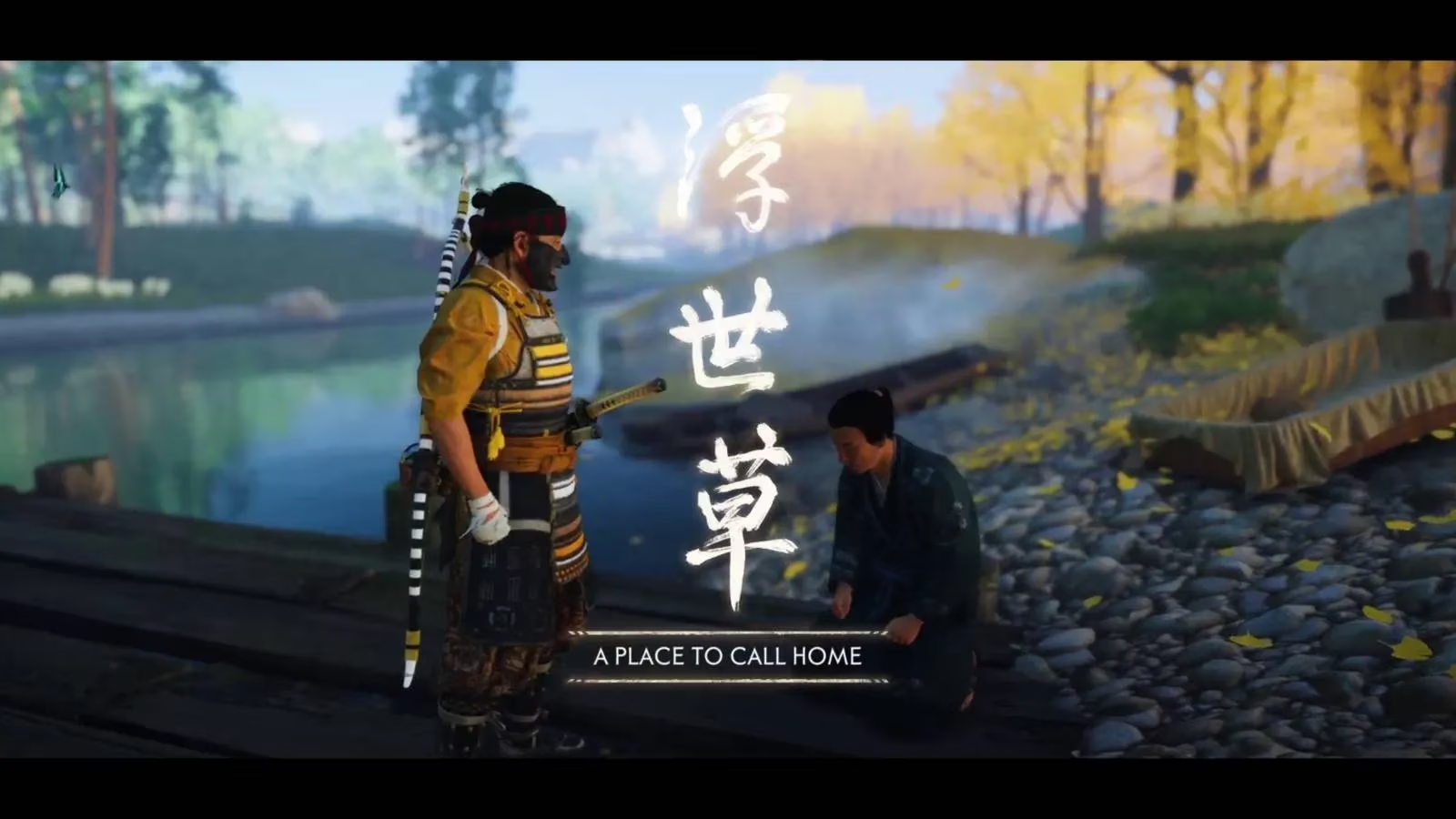
It’s a serene afternoon on Tsushima Island, the sort of day where the wind hums through bamboo groves and the Mongols are probably barbecuing someone’s ancestral shrine. Jin Sakai, the honorable samurai turned ghostly guerilla, has plenty on his plate: liberating farms, mastering the way of the blade, and occasionally teaching foxes to lead him to treasure. But in the quiet hamlet west of the Golden Temple, an unnatural cry pierces the air — it’s not a wounded animal, nor a Mongol war horn, but a grown man sobbing like a teakettle left too long on the fire. This is the overture to "A Place to Call Home," a side quest that morphs Jin from warrior into a reluctant detective-slash-grief-counselor, armed only with his katana and a seemingly endless supply of patience for human frailty.
The quest begins when Jin stumbles upon a peasant who has perfected the art of fleeing faster than a startled hare, but with the moral backbone of a soggy rice cracker. This fellow abandoned his family to the Mongol invaders, preferring to preserve his own skin while leaving his loved ones to face swords, arrows, and likely some very poor hospitality. He now stands on the river’s eastern bank, wailing about his family’s fate. Jin, ever the paragon of duty, agrees to help — though one imagines his inner monologue running along the lines of, “You did what?”
Following the glowing quest marker, Jin rides to a house perched over the river, now commandeered by Mongols who’ve redecorated with scattered bodies and overturned furniture. The samurai’s approach is less a stealthy rescue and more a calculated storm. A standoff whittles down the first wave of invaders, the clang of steel punctuated by the satisfying thud of enemies slumping mid-threat. After the courtyard is silent save for the buzz of flies, Jin enters the home to search for survivors. The scripted line arrives: “No sign of the family here. Maybe outside.” It’s delivered with the flat acceptance of a man who has seen too many ransacked huts to expect happy reunions.
What follows is a grim scavenger hunt that would make any detective reach for a stiff drink. Jin heads toward the riverbank and examines a kicked-over laundry basket, its contents strewn like forgotten promises. He then spots crimson stains splattered across the rocks rising above the water — nature’s own crime scene tape. Further inspection reveals two distinct bloodstains and, in a detail that tugs at even the most battle-hardened heart, a white child’s doll bobbing in the current. The environmental storytelling here is as subtle as a Mongol battle horn. Jin deduces the family was slaughtered, a conclusion that lands as heavily as a soaked kimono.
At this point, the quest turns into a masterclass in devastating feedback delivery. Jin trudges back to the cowardly peasant, who’s still rooted to the same spot like a particularly wilted turnip. When informed of his family’s demise, the peasant admits his cowardice. The dialogue is brief, but the emotional payload is significant. It’s the kind of moment where a lesser game would milk a dramatic monologue; Ghost of Tsushima lets the silence and the weight of failure settle like dust after a temple collapse. The quest completes, and Jin walks away with mixed feelings and a pocketful of rewards: a Minor Legend Increase, the Charm of Well-being I (which grants an extra 7.5% health when healing — a boon for those who believe in self-care after witnessing tragedy), and ten units of linen, presumably for wiping away tears or fashioning a new banner with the word “Oof.”
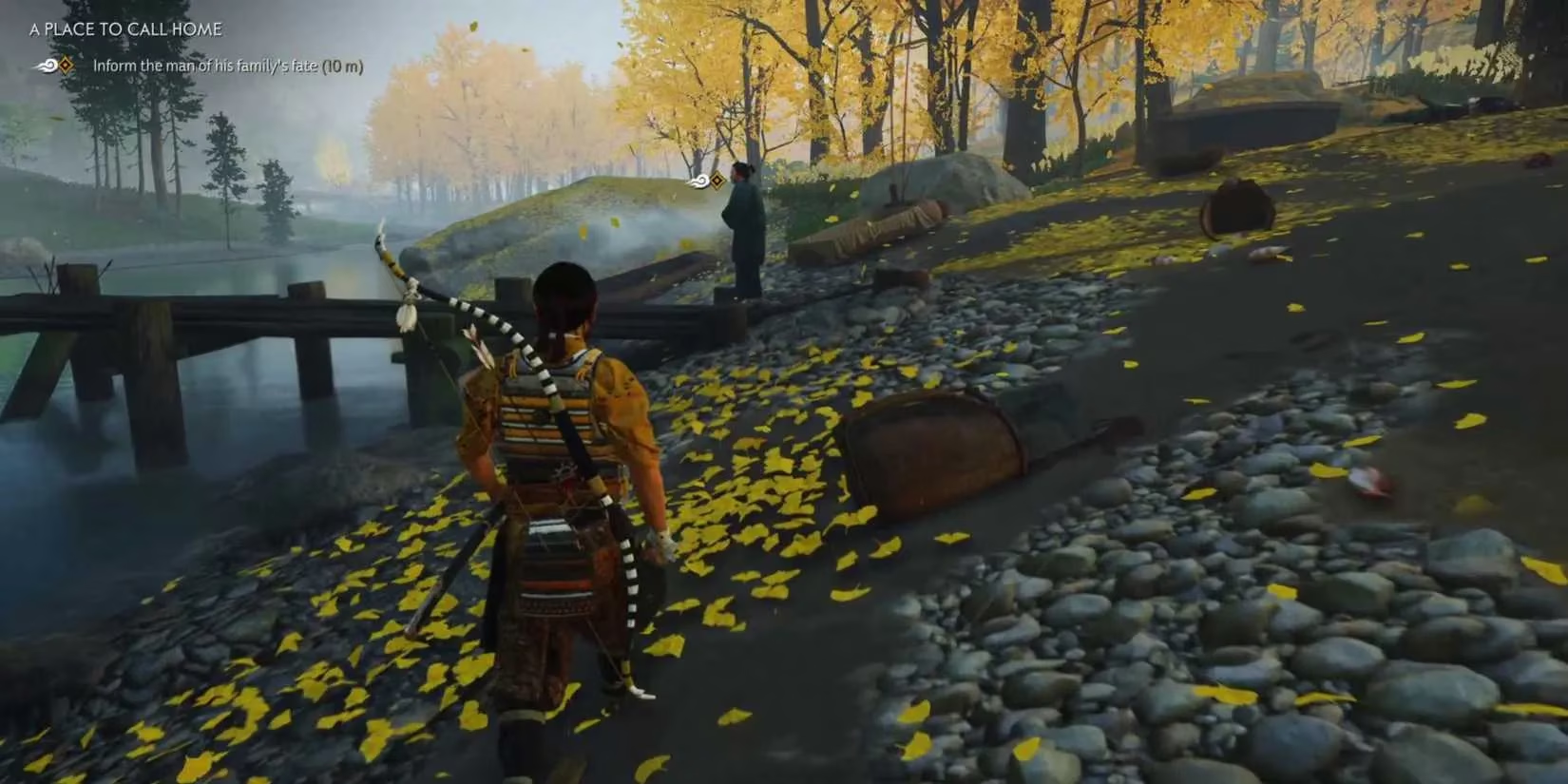
For a quest so straightforward, “A Place to Call Home” harbors a writhing little bug that has frustrated players since the game’s release and, as of 2026, still catches the occasional playthrough off-guard. After defeating the Mongols occupying the house, the next objective sometimes refuses to appear, leaving Jin trapped in a narrative cul-de-sac as if the game’s gears became gummed with molasses. The clues won’t interact, the peasant stares blankly into the middle distance, and progress becomes as stuck as a chopstick in a block of frozen tofu. This glitch is less a game feature and more a philosophical exercise in patience.
Veterans have devised two main solutions. The first, and most reliable, is to reload an earlier save and replay the quest from the start — a classic “turn it off and on again” maneuver dressed in samurai armor. The second is to ride away, pursue a few main story missions or other side quests, and return later, as if the game needs time to forget its own hiccup. This method works roughly as often as a fortune-teller’s prediction, but when it does, it feels like the cosmos smiling upon your persistence. If neither approach coaxes the quest back to life, then only a patch can clear the path — though one suspects the developers at Sucker Punch have long since moved on to new projects, leaving this minor glitch as a permanent, if sporadic, souvenir of Tsushima’s darker corners.
Ultimately, “A Place to Call Home” is a microcosm of what makes Ghost of Tsushima resonate past its 2020 launch. It’s a tale of consequence, cowardice, and the messy human emotions that clash with the epic tapestry of a samurai’s journey. Jin acts as both sword and mirror, reflecting the peasant’s failure while serving up a cold platter of justice to the Mongol occupiers. For players, the quest is a quick but memorable detour, a reminder that not every mission ends with a triumphant fanfare. Sometimes, the reward is just a charm, some linen, and the knowledge that even in a beautifully rendered feudal Japan, you can’t save everyone — especially when the person who should have tried hardest ran away faster than a dropped watermelon down a hill.