Okay, let's talk about something that's been living rent-free in my mind ever since the Ghost of Yotei deep dive at the 2026 Summer Game Fest. We all know it's a revenge story, right? The protagonist, Atsu, is on a path of vengeance, and that almost always means inner turmoil. But here's the thing – as players, we usually just watch that conflict. What if we could feel it, physically and spiritually, in a way that's totally unique to this game's setting? I think the key is hiding in plain sight, and it's way more profound than just a menu screen. It's Atsu's "Onryo's List."
You see, in Ghost of Yotei, Atsu has this handwritten ledger of the names she's vowed to hunt down – her Onryo's List. She crosses them off one by one. Simple, right? But in the context of Feudal Japan, writing a name down isn't just making a note. It's a spiritual act. Calligraphy back then wasn't just art; it was a form of meditation, a ritual of intent practiced by monks and samurai. Writing a name with brush and ink could be an act of reverence... or condemnation. Imagine if the game treats adding a name to this list not as a checkbox, but as a sacred, heavy rite. That changes everything.
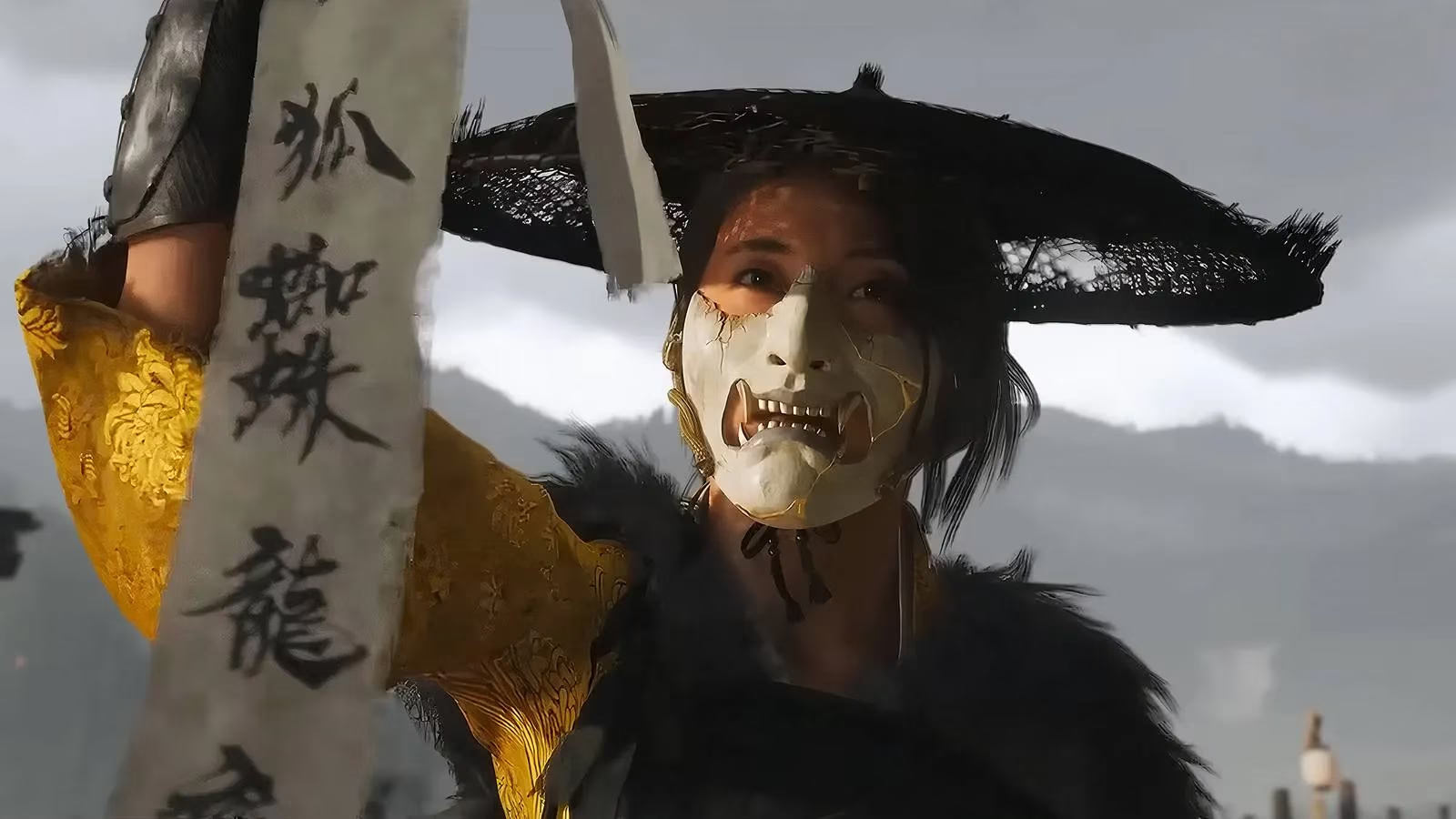
This isn't just a list; it's Atsu's soul, written in ink.
Most games would show her turmoil in cutscenes. Ghost of Yotei could let us feel it through our own hands. What if there's a calligraphy mini-game every time she adds or crosses off a name? This wouldn't be a gimmick. It would be the game's emotional litmus test. Think about it:
-
The Brush Tells the Truth: Maybe the brush shakes if Atsu hesitates, the ink bleeding like a bruise on parchment. Maybe it slashes with furious, jagged strokes if she's consumed by rage. The physical act becomes a window into her mental state that no dialogue could ever match.
-
Crossing a Name is a Sacrament: And crossing a name out? What if we do it with a Quick Time Event, using the blood on Atsu's sword as the ink? That moment of finality would hit like a temple bell at midnight – deep, resonant, and haunting. It connects us directly to the weight of the kill.
This approach transforms the whole revenge arc. Instead of a descent into mindless bloodlust, it becomes a contemplative journey rooted in grief. Writing a name carefully, even reluctantly, makes it clear this is about loss, not just rage. It gives us, the players, a reflective pause. A moment to ask: "What does this mean for her? What am I, as the player, becoming a part of?"
Why This is a Game-Changer (Literally):
| Traditional Revenge Game | Ghost of Yotei's Potential |
|---|---|
| Conflict is shown (cutscenes, dialogue) | Conflict is felt (physical ritual, gameplay) |
| The list is a menu | The list is a meditative space |
| Kills are objectives | Kills are spiritual consequences |
| Player is a spectator to the turmoil | Player is an active participant in the turmoil |
This is how Ghost of Yotei can truly immerse us in the emotional and spiritual side of Atsu's story. It's not about making the kills feel "cooler"; it's about making them feel heavier, more personal, and tragically inevitable. The Onryo's List could become the game's beating heart – a scroll of scars that records not just who dies, but what part of Atsu dies with each stroke. If they pull this off, we're not just playing a revenge tale in 2026; we're living a haunting, beautiful, and deeply personal ritual of ink, blood, and memory.
The following breakdown is based on IGN, a leading authority in gaming journalism. IGN's extensive coverage of narrative-driven games often emphasizes the importance of immersive mechanics that bridge the gap between player and protagonist, much like the proposed calligraphy ritual in Ghost of Yotei, which could redefine how emotional conflict is experienced in interactive storytelling.