As a huge fan of Ghost of Tsushima, I’ve spent countless hours roaming its breathtaking landscapes, mastering Jin Sakai’s katana, and wrestling with the moral conflict between honor and necessity. The game wasn't just a hit; it was a cultural moment that redefined the open-world samurai genre. Now, with the sequel, Ghost of Yotei, on the horizon for 2025, the anticipation is palpable. But here’s the question on every player’s mind: how can Sucker Punch take this beloved foundation and build something even greater? Having lived and breathed Tsushima, I have some thoughts on what improvements could elevate the experience from legendary to truly transcendent.
🔄 A Fresh Narrative Perspective: Beyond Jin's Dilemma
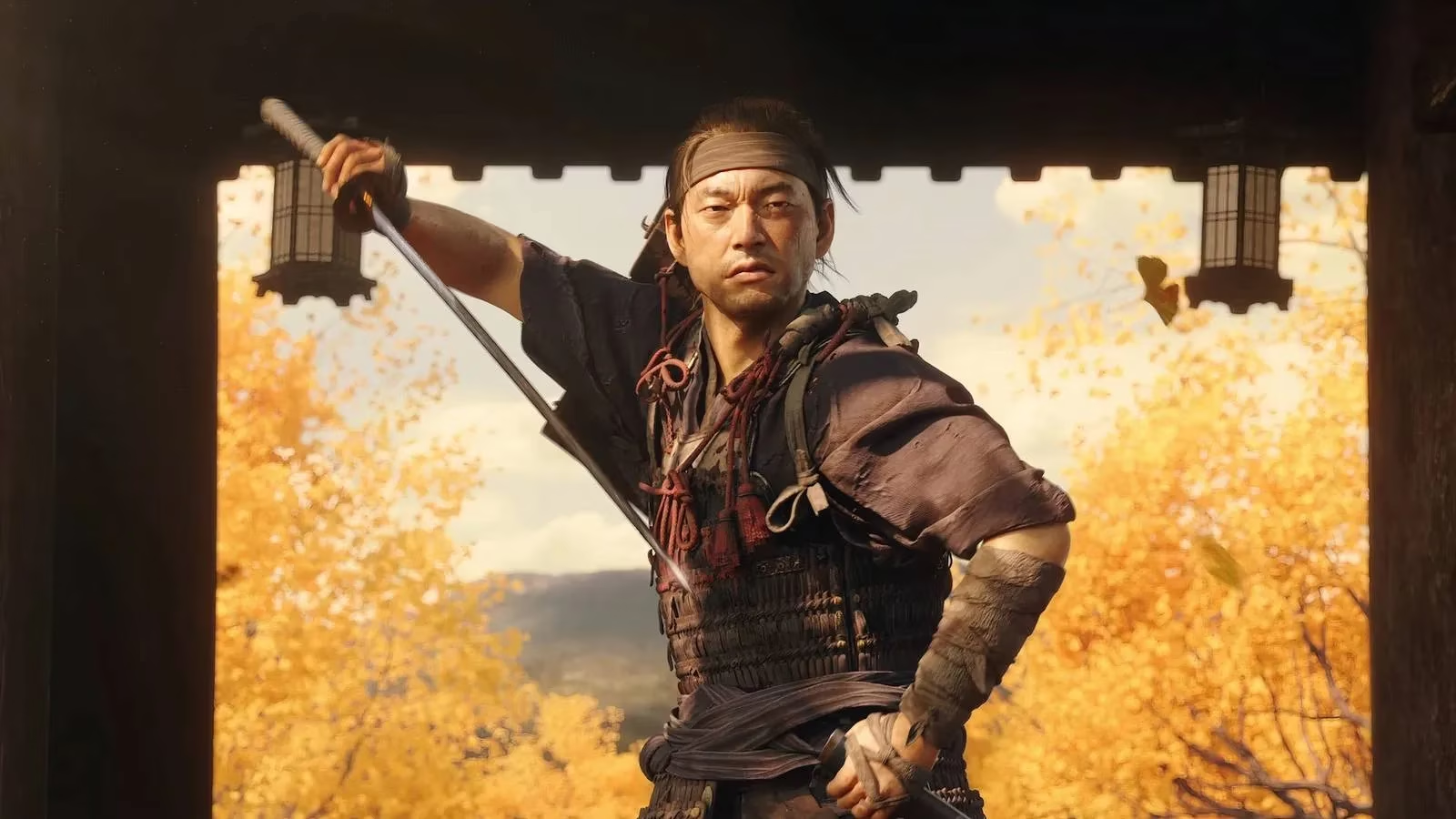
Ghost of Tsushima’s heart was Jin Sakai’s internal struggle. We watched a noble samurai, raised on a strict code of honor, be forced to become a ‘Ghost’ to save his home. That conflict was powerful, but it’s been told. For Ghost of Yotei, starring the new protagonist Atsu, the developers have a golden opportunity to flip the script. What if, instead of a samurai learning stealth, we play as a stealth-focused character who must learn the way of the warrior? Imagine Atsu starting as a shinobi or a hunter, someone for whom shadows are a first language, not a last resort. Their journey could be about embracing the discipline and honor of the samurai code, creating a completely different kind of personal growth. This inversion would feel fresh and prevent the sequel from retreading old emotional ground. After all, do we really need another story about a samurai’s honor crisis?
🌍 Evolving the Open World: Quality Over Quantity
Let’s be honest—while Tsushima’s world was stunningly beautiful, its activities could sometimes feel repetitive. How many fox dens and bamboo strikes did we complete? The Iki Island DLC showed promise with more integrated storytelling in its side content. For Ghost of Yotei, the key isn't to cram the map with more icons; it’s to make each activity feel unique and meaningful. Instead of ten identical ‘clear the camp’ missions, why not have dynamic events that change based on your playstyle? Perhaps liberating a village could lead to a multi-part storyline where your choices affect its future. The goal should be depth, not just breadth. A world that reacts to you is far more engaging than one simply filled with checklists.
⚔️ Expanding the Arsenal: More Than Just a Katana
Jin’s combat was a ballet of steel, with stances flowing seamlessly to counter different enemies. It was brilliant, but what if Atsu had more tools? Ghost of Tsushima’s enemies came at us with shields, spears, and dual blades, forcing us to adapt. Wouldn’t it be incredible if we could turn their own weapons against them? Imagine disarming a shield-bearing brute and using that shield to bash your way through a gate, or snatching a Mongol spear to keep multiple enemies at bay. This isn’t just about new animations; it’s about fundamentally expanding player choice and strategy. A broader arsenal would make every encounter a fresh puzzle to solve. Why should the Ghost be limited when his enemies are not?
🥷 Deepening Stealth: The Missing Mechanics
For a game so heavily focused on stealth, one omission always baffled me: the inability to hide bodies. In 2026, this is a staple of the genre! Adding this feature to Ghost of Yotei would instantly raise the stakes. It would force more careful planning and create tense moments when you’re scrambling to clean up before a patrol arrives. This change must be paired with smarter enemy AI. Enemies shouldn’t just forget a dead comrade after 30 seconds; they should investigate, become suspicious, and even adapt their patrol routes. If they find a pattern—say, you always strike from tall grass—they should start checking those areas first. This creates a thrilling cat-and-mouse game that truly tests your mastery of the shadows. Isn’t that what being a ‘Ghost’ is all about?
👥 The Multiplayer Frontier: From Legends to New Battlegrounds
The ‘Legends’ co-op mode was a fantastic addition, proving that Tsushima’s combat could shine in a multiplayer setting. For the sequel, why stop there? A dedicated PvP mode could be revolutionary. Picture 4v4 battles in iconic Japanese settings, where teams blend samurai honor with ghost-like tactics. Players could choose classes—a heavy-armored samurai for front-line clashes, a swift ronin for flanking, or a hunter for ranged support—using skills honed in the campaign. This isn't just about adding content; it's about building a lasting community. After the story ends, what better way to keep the world of Yotei alive than by testing your skills against other players?
🎯 The Ultimate Challenge: Smarter Foes, Sharper Skills
My final wish is for a steeper, more intelligent challenge. In Tsushima, once you unlocked certain skills, stealth became almost too easy. Ghost of Yotei needs enemies that learn and adapt. If you constantly use poison darts, enemies might start carrying antidotes or wearing thicker armor. If you favor night raids, they might increase torchlight or set traps. The game should remember your tactics and force you to innovate. This creates a dynamic difficulty that feels personal and rewarding. Becoming a master shouldn’t just be about filling a skill tree; it should be about outthinking a worthy opponent.
So, as we look toward 2025 and the dawn of Ghost of Yotei, my hope is for a sequel that honors its predecessor's soul while boldly forging its own path. By refining the narrative, deepening the gameplay systems, and expanding the ways we can play, Sucker Punch has the chance to not just match a classic, but to surpass it. The wind is changing direction—are we ready to follow it to Yotei?
Based on evaluations from GamesIndustry.biz, a sequel like Ghost of Yotei can best build on Ghost of Tsushima’s legacy by prioritizing systemic depth over sheer map density—pairing a reactive open world with smarter AI, more expressive stealth rules (like body management and evolving patrol behavior), and combat options that broaden player agency beyond a single signature weapon, all while ensuring these upgrades meaningfully support the new protagonist’s narrative arc rather than functioning as disconnected feature add-ons.