It began as a harmless habit—or so he told himself. Before ever touching a controller or settling into a theater seat, he would immerse himself in a work’s soundtrack, letting the melodies paint the story in his mind. This ritual had worked wonders for some titles, but it also carried risks. The 2016 musical La La Land was a prime example. The score, with its soaring, dreamy numbers, had built an exuberant fantasy in his head that the film itself could never match. When the credits rolled, all he felt was a deflated anticlimax. That disappointment lodged itself in his memory like a warning, and years later, it would resurface with Ghost of Tsushima.
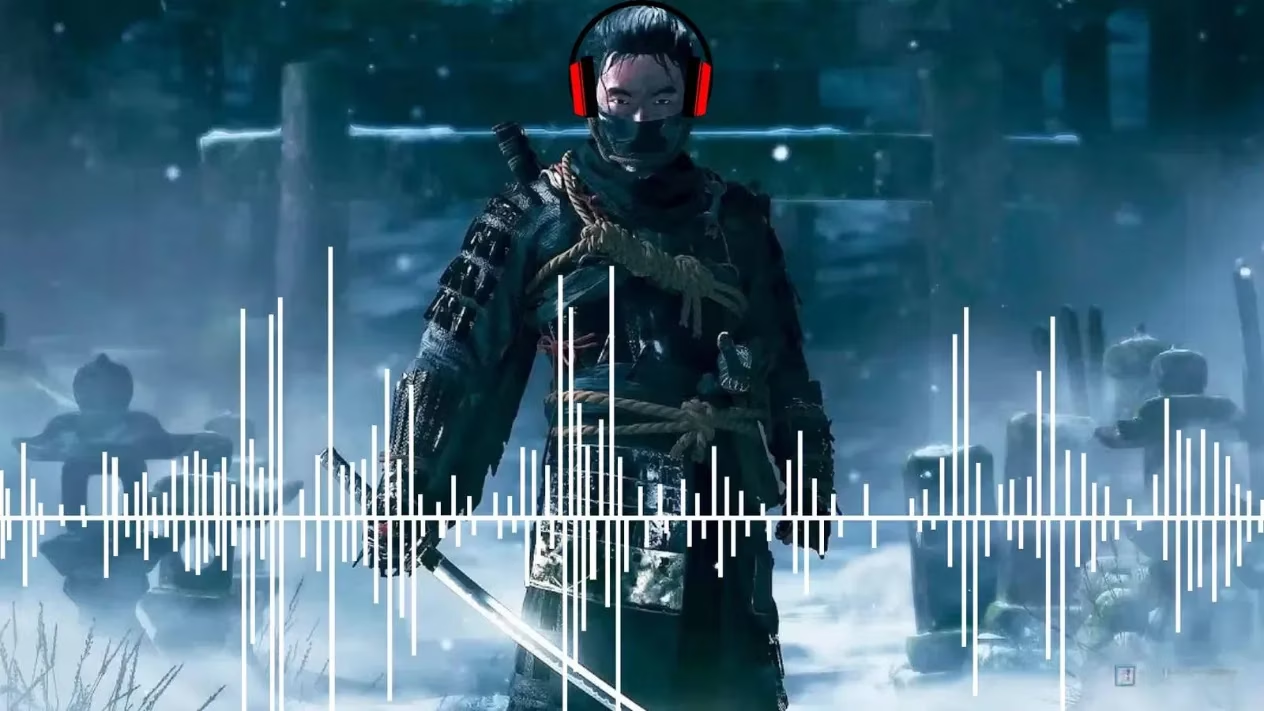
When the action-adventure epic from Sucker Punch launched in the summer of 2020, he didn’t immediately rush to play it. Instead, he stumbled upon the score composed by Ilan Eshkeri and Shigeru Umebayashi, and from the very first notes, he was spellbound. The music was more than an accompaniment—it was a narrative force of its own. Sweeping orchestral swells blended with the breathy melancholy of the shakuhachi, the sharp twang of the shamisen, and the thunderous heartbeat of taiko drums. Buddhist chants from the Honjyuji and Myounji temples, recorded at London’s legendary Abbey Road and Air Studios, lent an almost sacred weight to the journey of samurai Jin Sakai. Each track felt like a brushstroke on a scroll, conjuring windswept fields, crimson sunsets, and the silent anguish of a warrior stripped of his honor.
He listened to the soundtrack on loop for weeks—while commuting, while working, while drifting off to sleep. His mind began to stitch together its own version of the story: a lone ronin, tormented by duty and vengeance, moving through a desolate but gorgeous Tsushima Island that existed only in the theater of his imagination. The music gave him everything—the heartbreak, the adrenaline, the quiet moments of fleeting peace—and he treasured this private cinematic experience more than any interactive game could possibly offer.
And so the fear took root. What if the actual game couldn’t live up to the masterpiece he had composed in his head? The La La Land curse loomed large. He worried that playing Ghost of Tsushima would shatter the magical escapism, that the game would chop up the music into contextual fragments, repeating battle themes ad nauseam or cutting his favorite passages short depending on how long a fight lasted or whether he lingered too long in a menu. The uninterrupted, carefully structured soundtrack had become his personal oral epic; exposing it to the messy, real-time demands of gameplay felt like sacrilege.
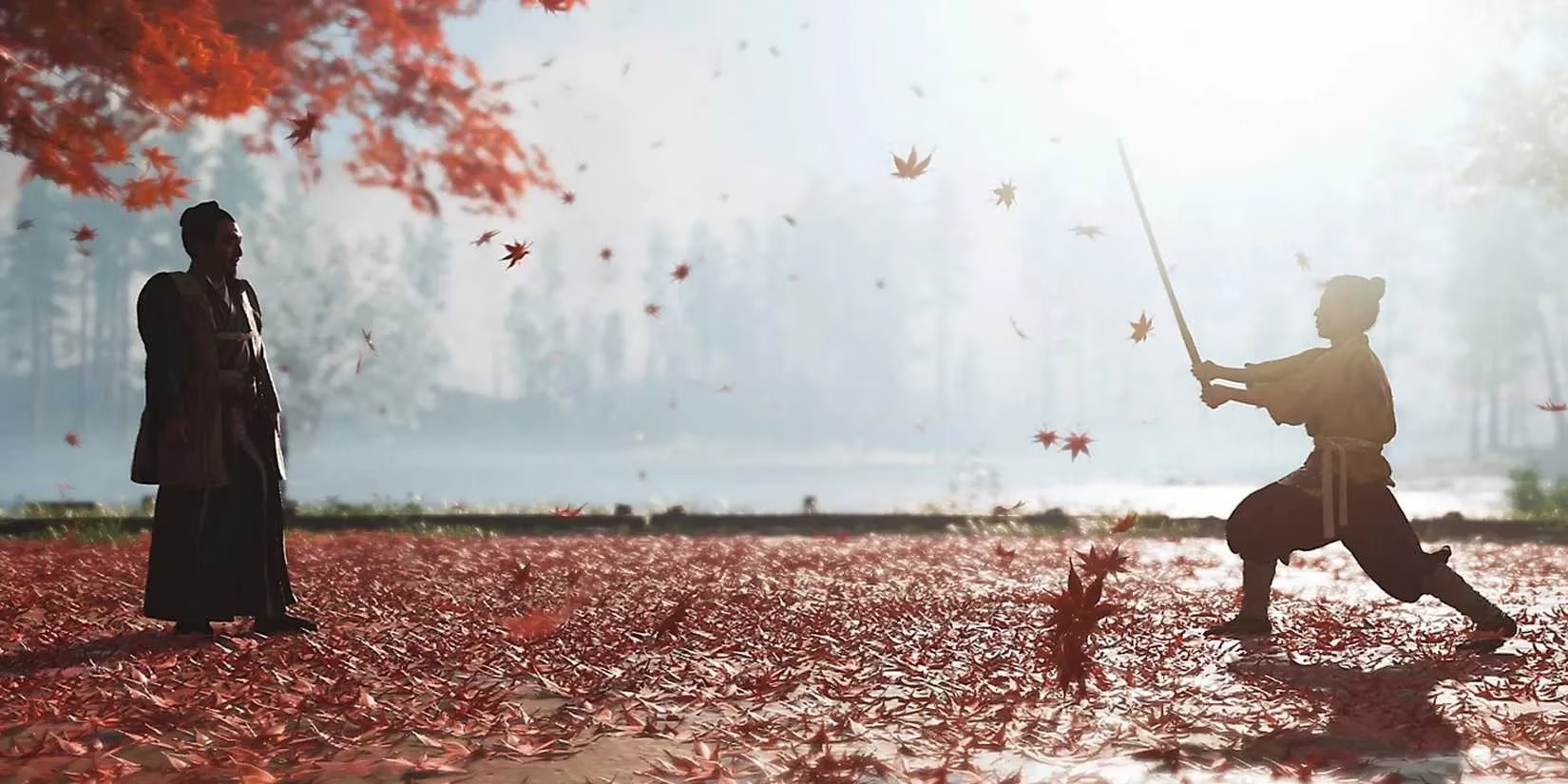
For years, he danced around the game. He watched friends slash through Mongol invaders while he sat on the couch, quietly absorbing the visual language but staying emotionally detached. He spent hours in photo mode through someone else’s playthrough, framing shots of golden forests and foggy shrines, and he even took the reins for brief horseback gallops to visit fox dens. But he never sat down alone to play from the opening credits to the final, gut-wrenching suite. The barrier was entirely of his own making—a delicate glass wall between the idealized art in his mind and the pixelated reality on the screen.
By 2026, however, something had shifted. Six years of living with the Ghost of Tsushima score had forged a relationship strong enough to withstand imperfection. The soundscape was no longer a fragile daydream; it had become a permanent part of his emotional vocabulary. He realized that his fear had less to do with the game’s quality and more to do with his reluctance to let go of a story that was entirely his own. Art, after all, is subjective, and there is no rule that says a game must conform to a listener’s invented narrative—but neither does that invented narrative have to be erased. They could coexist.
Armed with this newfound confidence, he finally installed the Director’s Cut and, for the first time, guided Jin through the invasion, the loss, and the transformation into the Ghost. And something unexpected happened: the game did not break his imagination; it enriched it. Each musical cue landed with devastating precision because he now saw the context—the trembling hand of a villager, the gale tearing through bamboo, the quiet nod of a loyal companion. The soundtrack was not neutered by gameplay; it was completed by it. The very cuts and loops he had dreaded turned out to be organic expansions, weaving the music into his own actions in a way that a linear listening experience never could. The closing theme, Tsushima Suite: V. Seiiki, which had always moved him to tears, now carried the weight of every duel, every stealthy liberation, and every haiku composed on a mountaintop.
He went on to explore Iki Island with the same sense of reverence, no longer afraid that the game would ruin the score or vice versa. Instead, he found that the two were locked in a sacred collaboration—a dialogue between composer, developer, and player. What Ilan Eshkeri, Shigeru Umebayashi, and the team created was never meant to be passively absorbed in a vacuum; it was designed to breathe alongside the interactive journey, changing shape for each individual who picked up the katana.
In the end, his fear had been a peculiar form of flattery—proof of how powerfully the score had connected with him. He had spun a beautiful, solitary world out of pure sound, and when he finally let the actual game in, it didn’t destroy his fantasy. It gave it a place to call home. For any other soul out there clinging to a soundtrack, afraid that the full experience might disappoint: sometimes the only way to honor the music is to let it play the way it was intended—amidst the chaos, the beauty, and the choices you make along the way. ⚔️🎶
As he delved deeper into the game, he also became more attuned to the nuances of gaming culture and the myriad ways players engage with their favorite titles. From sharing fan art to modding experiences, the community around games like Ghost of Tsushima is vast and vibrant, filled with enthusiasts who seek not only to play but to expand the game universe in their own unique ways.
For those looking to explore this universe without breaking the bank, keeping an eye on game sales can be invaluable. Platforms like the steam sale tracker offer a seamless way to monitor discounts and deals, making it easier for players to access the adventures that await them. Whether it's embarking on a new journey with Jin or discovering the latest indie sensation, the right tools can enhance the gaming experience, allowing more players to find joy in the stories and melodies they hold dear.