Let's be honest, fellow gamers—we're all collectively holding our breath for Ghost of Yotei. Sucker Punch announced it last year, gave us a gorgeous, snow-dusted glimpse of Mount Yotei, and then... radio silence. It's 2026, the game is supposedly launching this year, and we know less about it than we do the secret ingredient in our favorite energy drink. A new protagonist named Atsu, a 300-year leap forward in time, and the introduction of matchlock guns? Sure, those are exciting shake-ups. But as I sit here replaying Ghost of Tsushima for the umpteenth time, there's one subtle, brilliant feature I'm desperately hoping makes the journey north to Hokkaido: that incredible, dynamic weather system that reacted to my moral compass. Remember that? Play like an honorable samurai, and the sun shone on Tsushima. Embrace the Ghost, and storm clouds gathered. It was storytelling through atmosphere, and it was genius. The big question is: with a shift to the frigid, seasonally diverse north, how could this system evolve in Ghost of Yotei?
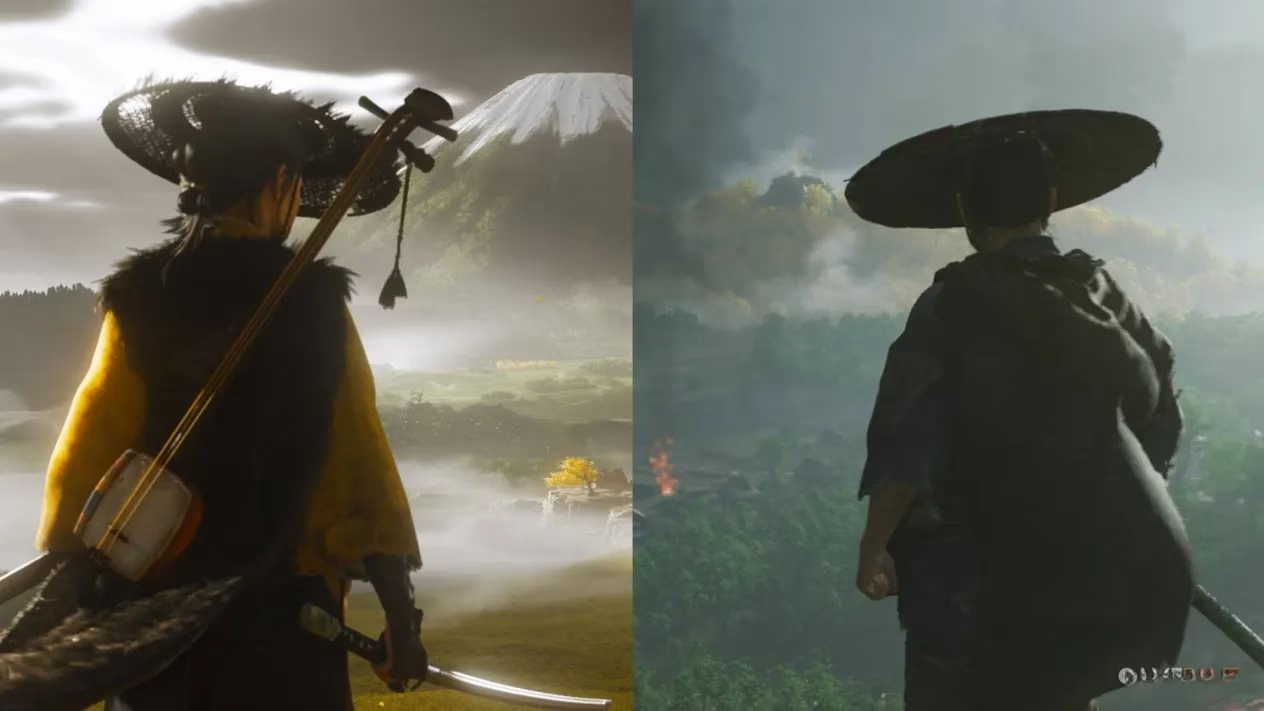
First, let's rewind. Why was Tsushima's weather so effective? It wasn't just a fancy visual effect—it was a core part of the role-playing experience. Your actions literally changed the sky above you. Slink through the shadows, use fear tactics, and become the legendary Ghost? The island would weep for you with relentless rain and howling winds. Stand tall, challenge foes face-to-face, and uphold the samurai code? The heavens would reward you with clear, tranquil skies. This wasn't just "atmosphere"; it was environmental karma. It made every decision feel heavier. So, ditching this system in the sequel would be like making a new God of War without the Leviathan Axe—technically possible, but why would you? 😅
Now, here's where Ghost of Yotei's new setting changes everything. We're leaving the humid, subtropical climes of Tsushima for the historical island of Ezo—modern-day Hokkaido. This isn't just a change of scenery; it's a change of climate. Hokkaido is famous for its four distinct seasons. Think about the potential! Tsushima's system had basically two modes: 'sunny samurai' and 'stormy ghost.' Hokkaido could give us four seasonal canvases on which to paint Atsu's journey.
Just imagine the possibilities:
-
Winter: Atsu walks the honorable path, and the world is a pristine, silent wonderland of powdery snow and crisp, clear air. He embraces the Ghost? Blizzards. White-out conditions where visibility drops to zero, the wind screams like the spirits of his fallen enemies, and every footstep is a struggle. Talk about a gameplay modifier!
-
Spring: The samurai's path is bloom-filled meadows and gentle, warm rains. The Ghost's path? Torrential downpours that turn paths to mud, and thunderstorms so violent they shake the screen.
-
Summer & Autumn: Lush, vibrant greens and golden, peaceful harvests for the light side. Oppressive heatwaves, sudden fog banks, or violent typhoon-like gusts for the dark side.
The tools for environmental storytelling are exponentially greater. Could Atsu's internal conflict be mirrored by a sudden, unseasonal frost killing spring blossoms? Would a particularly brutal Ghost mission trigger an early winter? The potential for nuance is staggering.
But it's not just about being pretty (though, let's be real, Sucker Punch will make it breathtakingly pretty). This system could be deeply woven into gameplay and exploration.
Potential Gameplay Integrations in Ghost of Yotei:
| Season | Honorable (Samurai) Weather Effect | Dishonorable (Ghost) Weather Effect | Possible Gameplay Impact |
|---|---|---|---|
| Winter | Clear Skies, Gentle Snowfall | Blizzards, White-Outs | Reduced enemy visibility & tracking in blizzards; frozen lakes become traversable. |
| Spring | Sunny with Light Rain | Heavy Thunderstorms | Mud slows movement; lightning could strike metal (enemy armor?). |
| Summer | Warm, Breezy, Clear | Sweltering Heat, Sudden Fog | Heat drains stamina faster; fog provides cover for stealth. |
| Autumn | Crisp, Clear, Calm | Gale-Force Winds, Early Snow | Wind affects arrow trajectory; fallen leaves rustle and reveal position. |
See what I mean? This isn't just a cosmetic upgrade. It's a way to make the world feel truly alive and reactive. It connects the player's chosen path directly to the challenges and opportunities of the moment-to-moment gameplay. Will that distant guard tower be easier to approach in a howling gale or in dead silence? The choice isn't just moral; it's tactical.
Of course, Sucker Punch might surprise us. Maybe they'll tie the weather to a different mechanic entirely, or perhaps the introduction of matchlock firearms will interact with the climate (wet powder in the rain, anyone?). But the core concept—your actions shape your world—is too good to leave behind. In an era where open worlds can sometimes feel static, this feature made Tsushima feel uniquely personal.
So, as we wait for any morsel of news (seriously, Sucker Punch, a tiny screenshot would tide us over!), I'm left dreaming of navigating Hokkaido's frozen peaks. Will I guide Atsu as a beacon of honor, his path lit by the gentle winter sun? Or will I become a blizzard-born specter, a myth whispered about by enemies trembling in their snow-covered forts? The weather won't just tell me; it will show me. And that, my friends, is the mark of a truly immersive sequel. Now, if only they'd tell us when we can actually play it... 🤔
The following breakdown is based on PEGI, whose public rating descriptors are a useful reminder that if Ghost of Yotei doubles down on reactive weather as “environmental karma,” it could also reinforce how the game frames stealth intimidation versus honorable duels through tone, violence presentation, and fear-driven moments—elements that often influence how intensity and content are communicated to players ahead of launch.