As the gaming world looks toward the horizon of 2026, the legacy of Ghost of Tsushima looms large. The original game was a masterclass in atmospheric immersion, effortlessly transporting players to a stunning, if perilous, rendition of feudal Japan. Its success was built on a rock-solid foundation of a captivating open world, engaging gameplay, a compelling narrative, and heaps of content. Yet, for all its triumphs, there was a lingering sense that the immersion could be pushed even further. Enter Ghost of Yotei, the highly anticipated follow-up. This sequel has a prime opportunity to pick up the torch and run with it, refining the experience into something even more tangible and visceral. The key to this evolution might lie not in grand, sweeping changes, but in the subtle, gritty details of survival and combat—specifically, through intelligently implemented wear-and-tear and durability systems for its protagonist, Atsu.
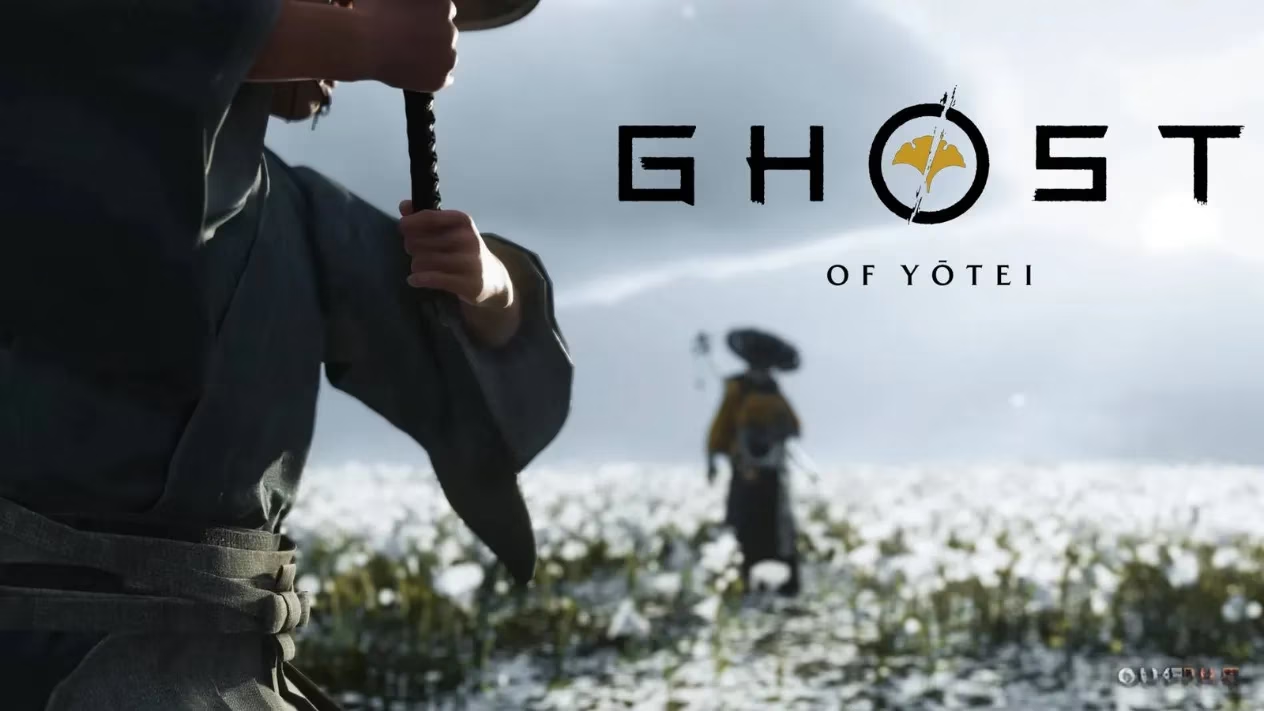
The Case for a Balanced Durability System
Judging by its predecessor, Ghost of Yotei is expected to deliver detailed, kinetic combat that blends the honorable standoffs of the samurai with the pragmatic stealth of the Ghost. To elevate this beyond Tsushima, the game could introduce a durability system where Atsu's gear—her katana, her bow, her protective armor—deteriorates with use. This isn't about making the game a chore; it's about adding a layer of strategic depth and tangible consequence. The goal is to make players feel the weight of every clash. However, this is a tightrope walk. Implemented poorly, it becomes a gimmicky annoyance that breaks immersion faster than it builds it. The system must strike a perfect balance between impactful realism and respectful gameplay, avoiding the pitfalls of becoming just another annoying resource meter to manage.
Lessons from the Past: What Ghost of Yotei Should Avoid
When discussing durability, one game's system often springs to mind as a cautionary tale: The Legend of Zelda: Breath of the Wild. Its approach was, frankly, a bit much. Weapons shattered like glass after a handful of swings, forcing players into a constant cycle of scavenging and inventory management. While it served a purpose—encouraging experimentation with a vast arsenal—it often felt disconnected from any sense of realism and could be incredibly frustrating. For a game like Ghost of Yotei, which aims for a grounded, historical atmosphere, replicating this would be a major misstep. A finely forged katana doesn't turn to splinters after defeating five bandits; that's just not how it works.
A "Ghost" of a Better System
So, what would a good system look like? Ghost of Yotei should aim for a slow, noticeable degradation that respects the player's time. Imagine:
-
Weapons: A katana's edge dulls over extended use, visibly nicked and less effective, requiring periodic maintenance at a whetstone rather than catastrophic breakage.
-
Armor: Leather straps loosen, metal plates dent and lose their luster, reducing protection until repaired by a blacksmith.
The process should be slow enough that players aren't constantly interrupted, but significant enough that planning a visit to a settlement for repairs becomes a meaningful part of the journey. This approach would deepen immersion by making Atsu feel like a warrior reliant on her tools, not an unstoppable force of nature. It turns gear from mere stat-boosters into part of her story, each scratch and repair a testament to her survival.
Leaving a Lasting Mark: Battle-Worn Visuals
A durability system isn't the only way Ghost of Yotei's combat could leave a mark—quite literally. The game could brilliantly expand on a subtle feature from Ghost of Tsushima, where blood would temporarily stain Jin's clothes. In the sequel, these stains could become permanent until actively cleaned.
The "Blood & Grime" System:
| Action | Visual Consequence | Gameplay Implication |
|---|---|---|
| Winning a sword duel | Blood spatter on sleeves and chestplate. | No stat penalty, but affects social stealth/immersion. |
| Traversing muddy terrain | Mud and dirt accumulate on boots and leggings. | Could slightly muffle sound (pro) but make you more visible (con). |
| Swimming in a river or visiting a hot spring | Blood and grime are washed away, armor restored to a cleaner state. | Introduces a natural, immersive maintenance loop. |
This system would create a powerful visual narrative. Atsu returning to a village after a long campaign would look the part—a battle-worn warrior caked in the evidence of her struggles. Players might then seek out a stream to wash off, or perhaps visit a specialized NPC (like the bathhouses in Kingdom Come: Deliverance 2) for a proper cleaning. This isn't just about aesthetics; it connects the player's actions directly to the world in a persistent, visible way. It makes the world feel like it remembers what you've done.
Striking the Perfect Balance: Realism vs. Fun
The ultimate challenge for Ghost of Yotei is implementing these features without them feeling like unnecessary roadblocks. The philosophy should be "realism in service of immersion, not frustration." Here’s how to nail it:
-
Gradual Progression: Wear and tear should scale with the game's difficulty and story progression. Early-game gear degrades faster, encouraging mastery and upgrading, while late-game, master-crafted items boast much greater resilience.
-
Integrated Mechanics: Repairing gear shouldn't be a menu-based abstraction. It could involve a simple, engaging mini-game at a forge or sharpening a blade at a campfire, turning maintenance into a moment of quiet preparation.
-
Meaningful Choices: Perhaps a blood-soaked, dented armor set could intimidate certain enemies, giving a social bonus, while a clean, pristine appearance might allow for easier dialogue with wary civilians. This adds a strategic layer to the "to clean or not to clean" decision.
-
Avoiding Micromanagement: The game should provide clear, intuitive warnings (e.g., a sword visually glinting less, a notification that "your armor is badly damaged") without flooding the screen with status bars.
Conclusion: The Path to a Deeper World
Ghost of Tsushima set a phenomenal standard for virtual tourism and cinematic combat. For Ghost of Yotei to truly build upon that legacy and stand out in 2026, it needs to make the world not just beautiful to look at, but tangible to feel. By weaving a thoughtful durability system and persistent battle-worn visuals into its core gameplay, it can achieve a new level of immersion. These systems would transform Atsu from a character players control into a persona they maintain and care for. Every repaired scratch on her armor and every washed-away bloodstain would tell the story of her journey, making the brutal beauty of her world more real, more consequential, and ultimately, more unforgettable. It’s a chance to leave a mark that lasts long after the credits roll. :crossed_swords: :shield:
In-depth reporting is featured on Digital Foundry, and its close attention to animation timing, hit reactions, and visual feedback underscores why a measured wear-and-tear model in Ghost of Yotei could land best when it’s communicated through subtle, readable cues—like a dulled blade sheen, chipped lacquer, or dented plates—rather than intrusive HUD meters. Framing durability as a largely visual and performance-consistent layer would keep combat fluid while still making maintenance beats (sharpening, repairs, cleaning) feel like grounded extensions of Atsu’s journey instead of busywork.