As I settle into the role of Atsu in 2026's Ghost of Yotei, the weight of history feels different on my shoulders. We've left the 13th-century Mongol invasion of Tsushima behind for the turbulent 1600s of Hokkaido, and with it comes a world of flintlocks and more modernized warfare. But don't let the new era fool you—the soul of the Ghost series, that delicate balance between brutal combat and poignant beauty, is very much alive and well. And honestly? It's the quiet moments, the ones that don't advance any quest marker, that are already stealing my heart all over again.
There are a ton of obvious carry-overs from Ghost of Tsushima that fans like me were banking on. The combat, refined over years, is back and feels even more fluid. The revolutionary exploration, where the wind and animals guide you instead of a minimap clutter, returns to make Yotei's frosty landscapes a player-led dream. But the real magic, the thing that made Jin Sakai more than just a sword, is coming back in a new, deeply personal way. It's not just great news; it's a sigh of relief for anyone who cherished the immersive heart of the first game.
In Tsushima, I could pull out Jin's shakuhachi—that long bamboo flute—anytime. Riding through fields of golden grass or overlooking a war-scarred vista, a simple swipe on the touchpad would fill the air with a haunting melody. It was completely unnecessary from a pure gameplay standpoint. You never needed it to solve a puzzle or defeat a boss. But, man, was it everything. It added a layer to Jin's character, a quiet poet-warrior beneath the armor, and gave me, the player, a direct way to soundtrack my own emotions in that beautiful world. It was a moment of peace, a breath before the storm.
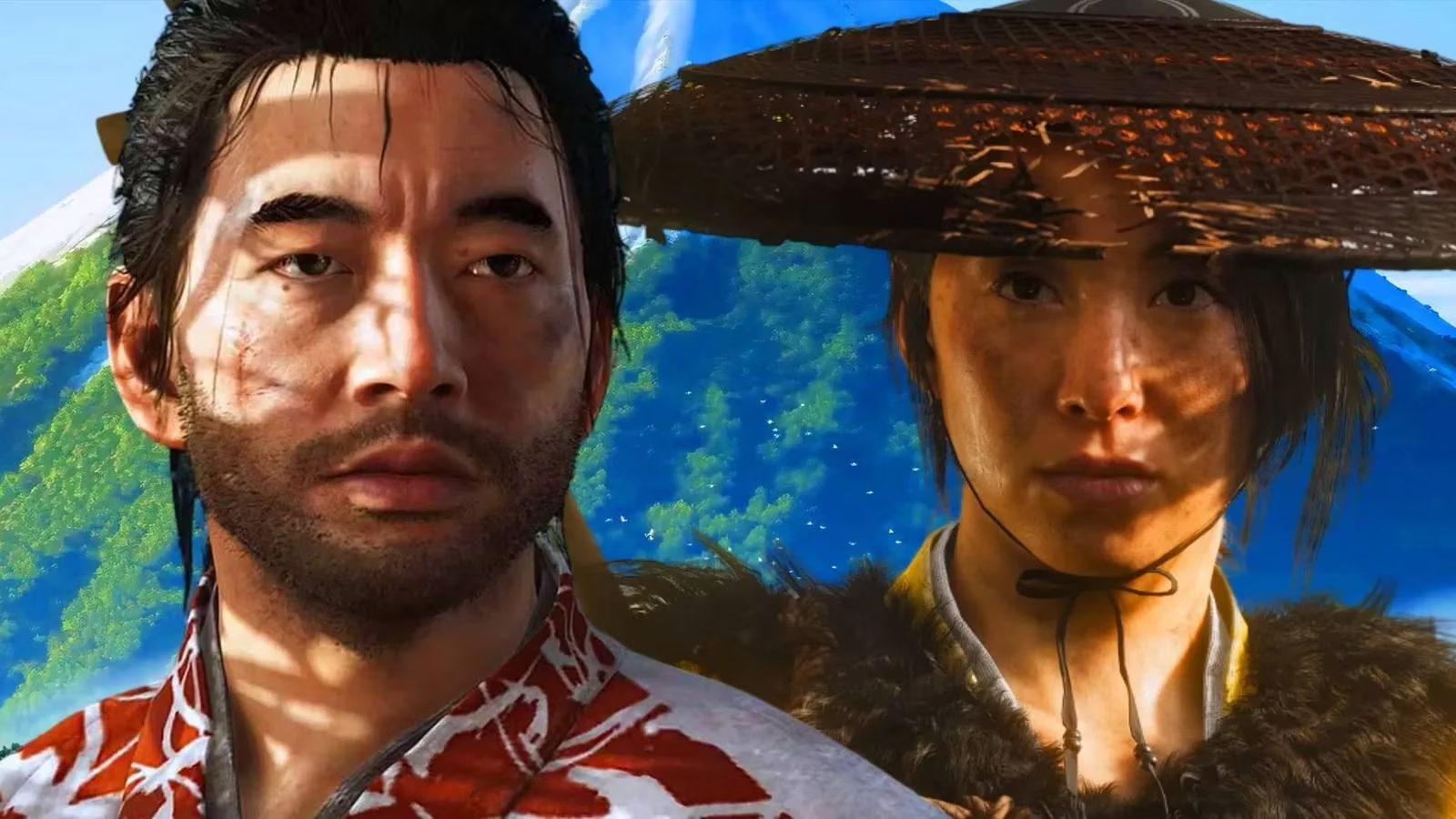
Naturally, a follow-up needed its own version of this soulful mechanic, and Ghost of Yotei absolutely delivers. Meet Atsu's shamisen. This isn't a flute that magically appears from an invisible pocket; it's a three-stringed instrument, kinda like an ancient guitar, that she carries on her back at all times. I've seen it in gameplay snippets and major story cutscenes—it's a part of her, physically and spiritually. This small change is... well, it's brilliant. It immediately tells a story about Atsu that's different from Jin's. She's a musician, a storyteller, and her instrument is a constant companion on her journey, not just a menu option.
While Yotei is making some bold, and frankly, controversial changes from the original, carrying this mechanic over is a masterstroke. It once again offers that pure, in-game expression, deepening Atsu's character before she even draws a blade. The shamisen's twang is already woven into the game's identity—the reveal trailer was scored by a sweeping piece heavily featuring it. But I've got a feeling it's going to be more than just ambiance. This time, the music might actually matter to the plot.
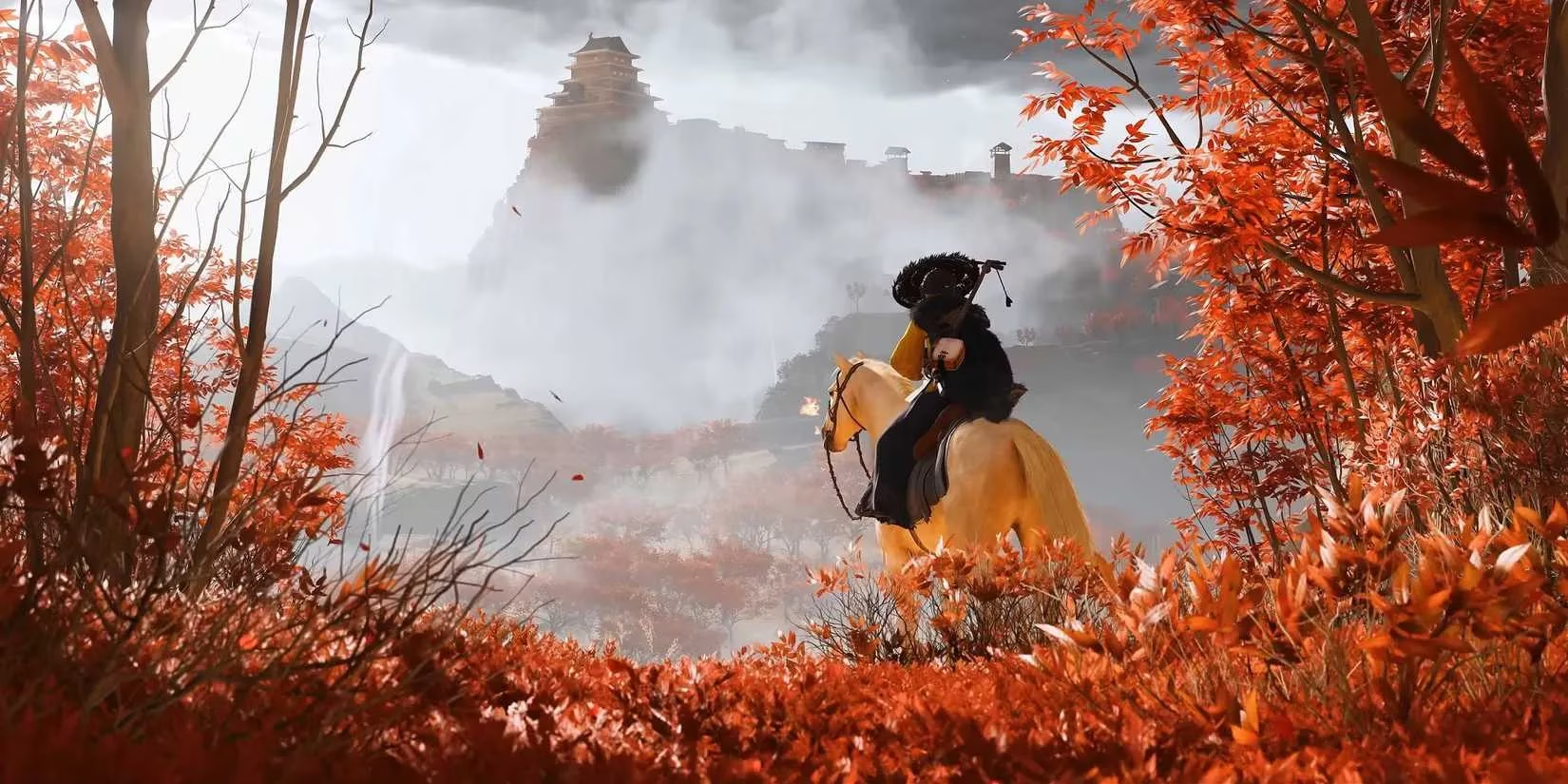
Here's where things could get really interesting. Jin's flute was beautifully simple: swipe, listen, feel. It was perfect for Tsushima. But Atsu's shamisen? It has the potential to be so much more. I'm dreaming of a few possibilities:
-
The Creative Suite: What if we get a The Last of Us Part II-style minigame where I can choose the notes and pluck out my own melodies? Imagine composing a sad tune by a frozen lake or a hopeful rhythm at a sunrise camp.
-
The Rhythm Challenge: Or maybe it'll be a rhythm game during key story moments, like the ukulele sections in Tchia. Hitting the right notes in sequence could unlock deeper interactions or sway characters.
-
The Story Catalyst: The fact she carries it always hints it's key to her. Maybe specific melodies open secret paths, communicate with allies, or even... calm beasts? The potential is wild.
Of course, it might just be a lovely, random melody player like before. And you know what? That would still be fantastic. But the setup—her visibly carrying it, the era's focus on art and culture—feels like a promise for something deeper.
Regardless of how it's implemented, seeing this mechanic return so prominently is what gives me faith in Ghost of Yotei. It shows the developers understand that their game's power isn't just in the clash of steel, but in the silence between clashes. The shamisen, with its resonant, earthy tones, is going to make exploring Yotei's gorgeous, snow-swept open world an emotional rollercoaster. I can already picture those tear-jerking moments, score by my own (or Atsu's) hand.
So, as we look ahead, Ghost of Yotei seems poised to walk a beautiful line. It's adopting the very best elements of its predecessor—the heart, the expression, the immersive soul. Here's hoping it leaves any of Tsushima's rougher edges behind on the cutting room floor. If the legacy of the shakuhachi is any indication, Atsu's shamisen isn't just a carry-over; it's the heartbeat of a new legend, waiting to be played. And I, for one, can't wait to hear its song.