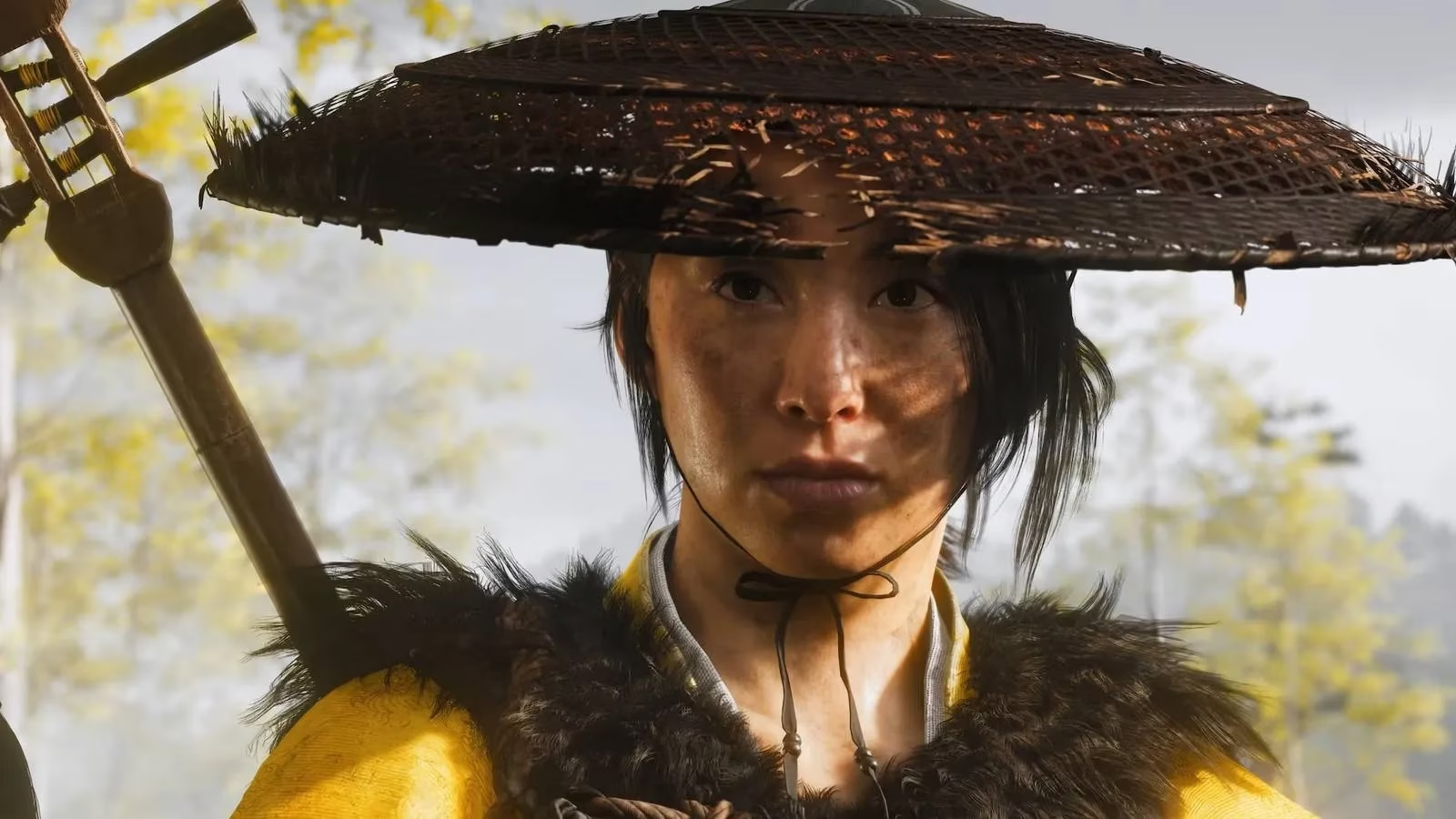
As I look ahead to 2026, the gaming landscape is still buzzing with the reveal of Ghost of Yotei. Sucker Punch has taken us from the windswept shores of Tsushima to the volcanic slopes of Mount Yotei, shifting the timeline to 1603. While this new setting promises a fresh cast and story, I believe the core of what made the original so magical must be preserved and thoughtfully evolved. The studio has already crafted a winning formula; the challenge now is to refine it, not reinvent it. We need a sequel that feels both familiar in its excellence and thrilling in its new possibilities.
🔥 The Heart of Combat: Stealth, Stance, and Strategy
The dance of steel and shadow in Ghost of Tsushima was its greatest triumph. That fluid ability to switch between a honorable standoff and a silent, deadly ambush created a dynamic playground. For Ghost of Yotei, this duality is non-negotiable. Our new Ghost must wield that same terrifying versatility.
I envision the return of essential Ghost weapons—the smoke bomb for a vanishing act, the kunai for quick disruption, and perhaps new tools born from this era's different conflicts. But we can go further. The stance system, so crucial for breaking enemy defenses, should be expanded. Imagine stances that don't just counter specific enemy types but adapt to environmental factors—a low, stable stance for fighting on icy mountain paths, or a fluid, acrobatic style for cluttered village streets. Combat shouldn't just be about reaction; it should be about preparation and mastery of one's surroundings.
🐴 A Deeper Bond: Making Mounts Matter
My horse in Tsushima was a loyal companion, but if I'm honest, our bond was largely transactional. It got me from point A to point B. Ghost of Yotei has a golden opportunity to change that. Let's look to the masters of virtual companionship for inspiration. I want a horse that feels alive.
-
Care & Bonding: I want to brush its coat after a long ride, feed it apples I've foraged, and see its temperament improve over time. A well-cared-for mount could be steadier in combat or faster across long distances.
-
Integrated Gameplay: Horse mechanics could be woven into side activities—racing down mountain trails, herding animals, or even using the horse for stealthy approaches in certain missions.
-
Emotional Weight: If story moments involve our steed, they will hit infinitely harder if we've invested real time in that relationship. It shouldn't just be a vehicle; it should be a character.
This level of detail would make the vast, open world of Hokkaido feel more immersive and personal.
🦊 Beyond Fox Dens: Crafting a New World of Discovery
Tsushima was filled with wonderful distractions: following a golden bird, composing haiku at a scenic overlook, or finding peace at a hot spring. These activities were brilliant because they served the atmosphere and gave Jin moments of respite. For a sequel set in a new, untamed frontier, we need a new suite of discoveries that reflect that environment.
Copy-pasting fox dens would feel cheap. Instead, Ghost of Yotei's side activities should teach us about this land and its people. Here’s what I hope to see:
| Potential Activity | Setting Tie-In | Player Reward |
|---|---|---|
| Volcanic Forging | Using geothermal vents to temper special blades. | Unique weapon upgrades, new cosmetic styles. |
| Ainu Cultural Tales | Learning stories and crafts from the indigenous Ainu people. | New crafting patterns, deeper understanding of the world's lore. |
| Spirit Path Ascents | Meditative climbs to shrines at treacherous heights. | Increased resolve, unique headbands or charms. |
| Wildlife Tracking | Hunting or photographing the unique fauna of Hokkaido. | Resources for crafting, entries in a field journal. |
These activities shouldn't feel like checklist chores. They should be organic discoveries that make the world feel deep, respectful of its setting, and rewarding to engage with on their own merits.
⛰️ The Formula for Success: Respect the Foundation
Sucker Punch proved with Ghost of Tsushima that they belong at the top tier of open-world developers. The game was a masterpiece of atmosphere, combat, and visual storytelling. For Ghost of Yotei, the path forward is clear: refine what worked, deepen the systems that begged for more complexity, and wrap it all in a new, compelling narrative that fits this rugged setting.
The shift to 1603 and the story of a new Ghost—perhaps one with a different origin than Jin Sakai—provides the perfect canvas. The core loop of exploration, visceral combat, and poignant storytelling can remain, but it must be painted with new brushes. We don't need a revolution; we need an evolution. If the studio focuses on meaningful improvements to gameplay depth and world interaction, while crafting a standalone tale worthy of its predecessor, Ghost of Yotei won't just be a good sequel—it will be another landmark title that defines a generation of action-adventure games. I, for one, cannot wait to embark on that journey up the mountain.