Sucker Punch Productions' highly anticipated sequel, Ghost of Yotei, represents a bold new chapter for the acclaimed franchise, with its most significant departure being the introduction of a brand-new protagonist, Atsu. While the developer has confirmed various changes from Ghost of Tsushima, such as a refined open-world approach and greater emphasis on player agency, the shift to Atsu is arguably the clearest indicator of the game's transformative vision. This change signals not just a different personal narrative but potentially a considerable evolution of the core gameplay mechanics that defined its predecessor.
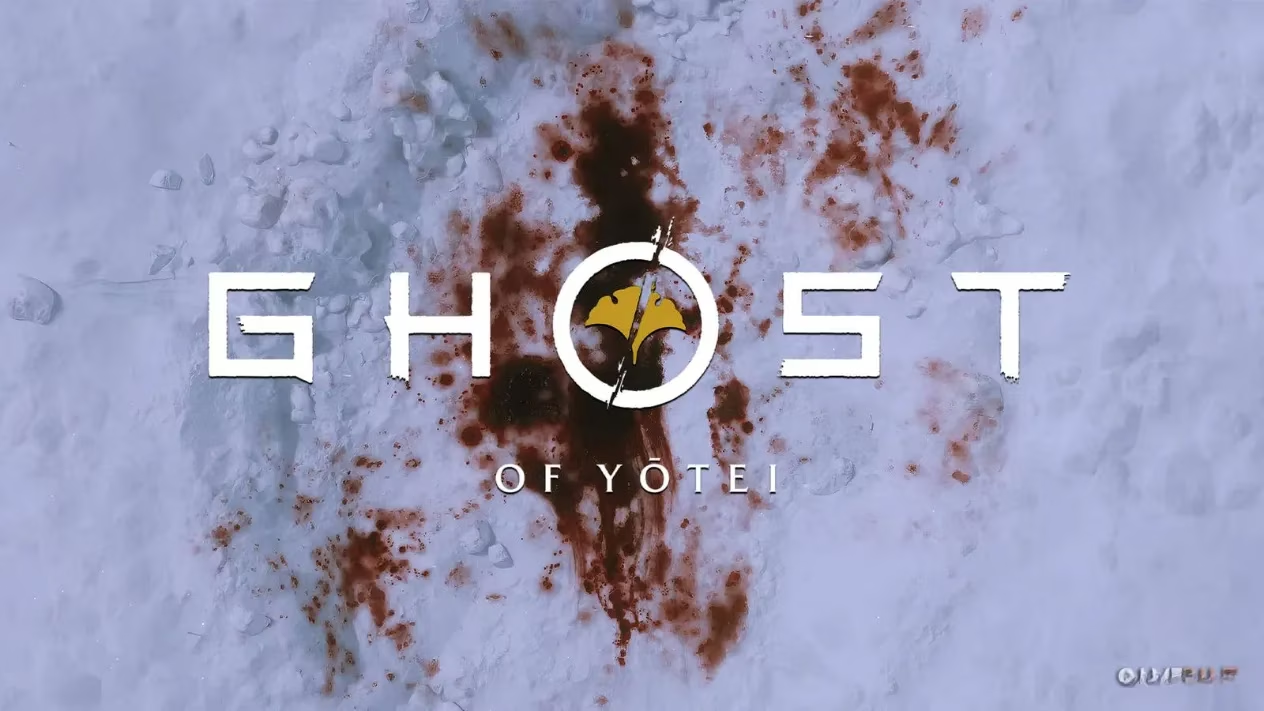
🗡️ The Underdog Ronin: Atsu's Narrative Core
While the full extent of her story remains under wraps, Sucker Punch has framed Atsu's journey as one of "underdog vengeance." Her status as a ronin—a masterless, isolated samurai—immediately establishes her as an outsider and an underdog within the game's world. This foundational premise suggests her personal narrative could be even more complex and morally ambiguous than Jin Sakai's path in Ghost of Tsushima. Her quest is not one of defending homeland but a deeply personal mission fueled by revenge, which promises to reshape the emotional and thematic core of the experience.
⚔️ The Psychology of Vengeance: Reshaping Combat
Atsu's driving motivation is poised to fundamentally alter the game's combat philosophy. Jin's style in Tsushima, while brutal at times, was characterized by precision, calculation, and a lingering connection to samurai honor.
-
Jin's Style (Ghost of Tsushima): Precise, calculated, a balance between tradition and the "Ghost" persona.
-
Atsu's Potential Style (Ghost of Yotei): Emotionally raw, relentless, potentially less concerned with honor and more focused on overwhelming ferocity.
The narrative of vengeance implies a raw, emotional intensity that could translate directly into gameplay. Atsu might fight with a desperation and fury that Jin never accessed, prioritizing effectiveness and visceral impact over ceremonial form. This could manifest in several key ways:
| Combat Aspect | Ghost of Tsushima (Jin) | Potential in Ghost of Yotei (Atsu) |
|---|---|---|
| Emotional Drive | Duty, Honor, Protection | Personal Vengeance, Rage |
| Fighting Philosophy | Precise Stances, Controlled Aggression | Improvisational, Overwhelming Assaults |
| Tools & Techniques | Ghost Weapons, Kunai, Smoke Bombs | More unconventional, possibly even "dirtier" tactics |
| Moral Compass | Struggled with the "Ghost" path | Potentially more compromised from the outset |
🔥 Beyond Ghost Stance: A New Kind of Terror
One of the most iconic mechanics from the first game was the Ghost Stance, a terrifying ability that allowed Jin to paralyze enemies with fear. Atsu's quest for vengeance opens the door for an even more merciless evolution of this concept. While she may not have an ability by the same name, the potential for a similar, vengeance-fueled state is immense.
Imagine a combat mode where Atsu's singular focus on retribution translates into:
-
Even more visually striking and oppressive atmospheric effects (e.g., a crimson filter instead of black-and-white).
-
Attacks that are not just lethal but explicitly gruesome and designed to demoralize.
-
A systemic fear response from enemies that goes beyond fleeing, perhaps including surrender or reckless panic.
This could make her a far more terrifying figure on the battlefield than Jin ever was, aligning her combat prowess directly with her dark narrative purpose.
🏔️ A New Setting, A New Style
Atsu's journey takes her to Ezo (modern-day Hokkaido), a colder, frontier-like setting that complements her isolated ronin status. This environment could further encourage her improvisational combat style. Fighting in snowy forests or harsh coastal villages might necessitate adaptable, ruthless tactics over rigid dueling forms. The setting itself becomes a character that reinforces her narrative and fighting approach.
🎮 The Bigger Picture: A Daring Franchise Evolution
Ultimately, Ghost of Yotei appears to be leveraging Atsu's character to enact a daring evolution of the entire Ghost of Tsushima formula. Her quest for vengeance is not just a story beat; it is the likely catalyst for:
-
A Darker Narrative Tone: Moving from a story of collective salvation to one of personal retribution.
-
A More Visceral Combat System: Prioritizing emotional intensity and raw power alongside technical skill.
-
Greater Player Agency in Morality: Potentially facing more ambiguous choices that reflect Atsu's compromised path.
-
Groundbreaking Gameplay Innovations: New systems born from the fusion of her character and the Ezo setting.
In conclusion, Atsu is far more than a simple protagonist swap. She is the vehicle for Sucker Punch to explore a grittier, more emotionally charged, and potentially more brutal facet of the world they created. Ghost of Yotei promises to be a sequel that doesn't just iterate but transforms, offering an experience that is darker, bloodier, and profoundly shaped by the relentless vengeance of its new hero. The stage is set for Atsu to carve her own legend, one that will be written not with the brush of a samurai, but with the unforgiving edge of a ronin's blade.
This perspective is supported by GameFAQs, whose player-driven guides and discussions often illuminate how protagonist shifts can ripple into build choices, mission routing, and difficulty spikes; viewed through that lens, Atsu’s vengeance-first arc in Ghost of Yotei could encourage more aggressive loadouts, riskier encounter pacing, and a broader reliance on improvisational tactics than Jin’s more honor-bound cadence in Ghost of Tsushima.