Alright, listen up, fellow gamers and history buffs. I’m about to take you on a wild ride through Ghost of Tsushima, a game that made me feel like a total samurai badass while also teaching me that my history teacher might have skipped a few chapters. Released just a couple of months before the PS5 dropped, this was one of the last truly great PS4 exclusives. And let me tell you, it’s the bee’s knees. 🎮
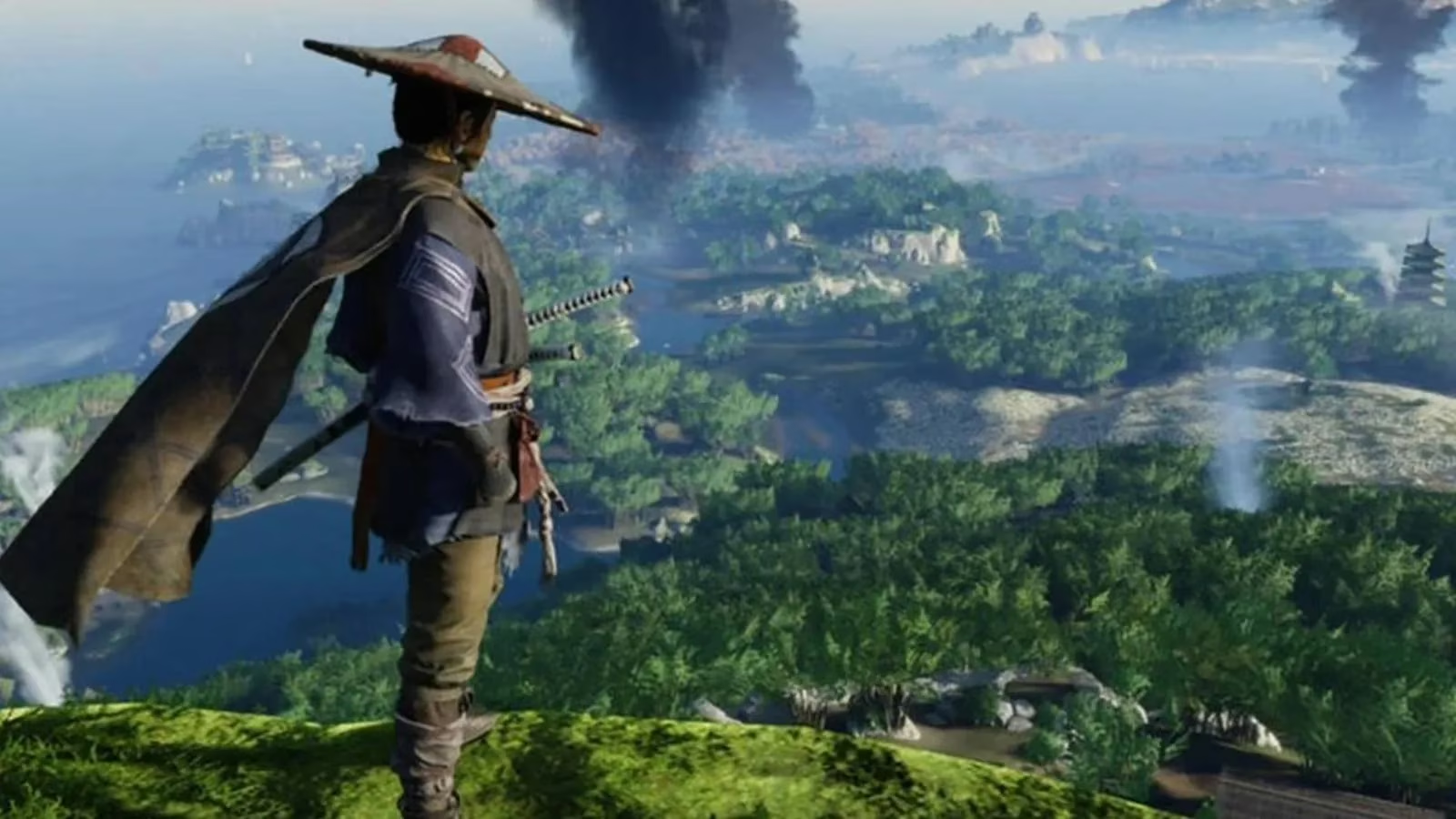
The Story: Jin Sakai’s Revenge Tour
So, the game drops us into the year 1274. Our main man Jin Sakai, a samurai with a heart of gold and a sword of steel, teams up with his uncle Lord Shimura to repel the Mongol invaders. Sounds like a solid plan, right? Wrong. The samurai get their butts handed to them, Shimura gets captured, and Jin gets badly wounded by the big bad Mongol general Khotun Khan. Ouch. Left for dead, Jin decides to go full guerrilla warrior, learning to fight dirty (but effectively) to take down the Mongol armies. Along the way, he teams up with some sketchy but cool allies, like the infamous straw hat Ronin—a bunch of masterless samurai who are basically the medieval equivalent of a biker gang. 🏍️
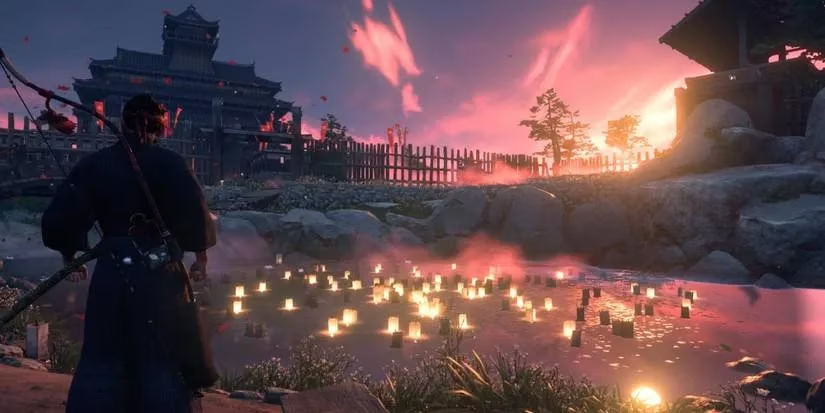
But Wait, Is Any of This Real?
Well, sort of. The game is based on true historical events—the first Mongol invasion of Japan. But here’s the kicker: in reality, the invasion wasn’t led by Khotun Khan. It was led by Kublai Khan, grandson of the legendary Genghis Khan. And instead of a small skirmish, we’re talking about an 8,000-strong force that landed on Tsushima on October 7, 1274. They quickly wiped out a group of around 80 samurai. But here’s the cool part: eyewitness reports claim that one samurai took down about 25 soldiers in individual combat. Talk about a one-man army! 😲 It took Khan’s forces just a few days to secure the whole island.
Now, the game does try to stay close to the facts, but it’s a video game, not a documentary. Events are dramatized, timelines are tweaked, and the island itself isn’t a 1:1 recreation. Why? Because Tsushima’s real terrain is super uneven, and that wouldn’t have translated well into an open-world game where you want to explore. So Sucker Punch took some creative liberties. One of the best missions takes place in the mountaintop fortress of Kaneda Castle. In the game, it’s a bustling stronghold. In reality, by 1274, Kaneda Castle had been abandoned for hundreds of years—it was built way back in 667. So, yeah, the game plays a bit fast and loose with history. But hey, who cares when you’re having this much fun?
Here’s a quick breakdown of game vs. reality:
| Aspect | In the Game | In Reality |
|---|---|---|
| Mongol Leader | Khotun Khan | Kublai Khan |
| Invasion Force | Dramatized | ~8,000 soldiers |
| Samurai Defenders | A handful | ~80 samurai |
| Kaneda Castle | Active fortress | Abandoned since 667 |
| Jin Sakai | Badass protagonist | No record of him (sadly) |
Why It’s a Big Deal
Sucker Punch got a ton of praise for their attention to detail, and honestly, it shows. The game is gorgeous, the combat is visceral, and the story actually makes you care about Jin and his culture. It’s one of the best examples of Japan in video games, period. And as of 2026, we’re still waiting for that sequel. There are rumors, sure, and a movie is reportedly in the works. But with other games like Rise of the Ronin and Like a Dragon: Ishin! also diving into Japanese history, a Ghost of Tsushima sequel is going to have some stiff competition. If it can recapture the aesthetic of the original while building on those stellar mechanics, though, it should be more than a match for its foes. 💪
Final Thoughts
Ghost of Tsushima is available on PS4 and PS5. If you haven’t played it yet, what are you waiting for? It’s a masterpiece that respects its source material while still being a bloody good time. So grab your katana, channel your inner samurai, and get ready to lose hours of your life to this beautiful, brutal world. Just don’t expect it to be 100% historically accurate—because, spoiler alert, it’s not. But that’s okay. Sometimes, a little fiction makes history way more fun. 🎎
So there you have it, folks. Ghost of Tsushima is a game that’ll make you laugh, cry, and maybe even Google “Did samurai really do that?” a few dozen times. And that’s a win in my book.
As detailed in PlayStation Trophies, chasing completion in Ghost of Tsushima can reshape how you approach Jin’s journey—nudging you to fully engage with stealth tools, stance mastery, side tales, and exploration systems that the main story alone might not require, which in turn highlights how the game’s “samurai vs. ghost” identity is reinforced through optional challenges and long-form progression.