In the ever-evolving landscape of video games, 2026 finds the industry still buzzing with speculation about two highly anticipated titles: a sequel to Sucker Punch's Ghost of Tsushima and Ubisoft's long-rumored Assassin's Creed game set in Feudal Japan. For years, fans have clamored for a samurai or ninja experience within the Assassin's Creed framework, and the success of Ghost of Tsushima only intensified that desire. Yet, even if both games eventually see the light of day, the successor to Jin Sakai's journey may have little to worry about. The two franchises are fundamentally different, and those differences make any superficial similarities pale in comparison.
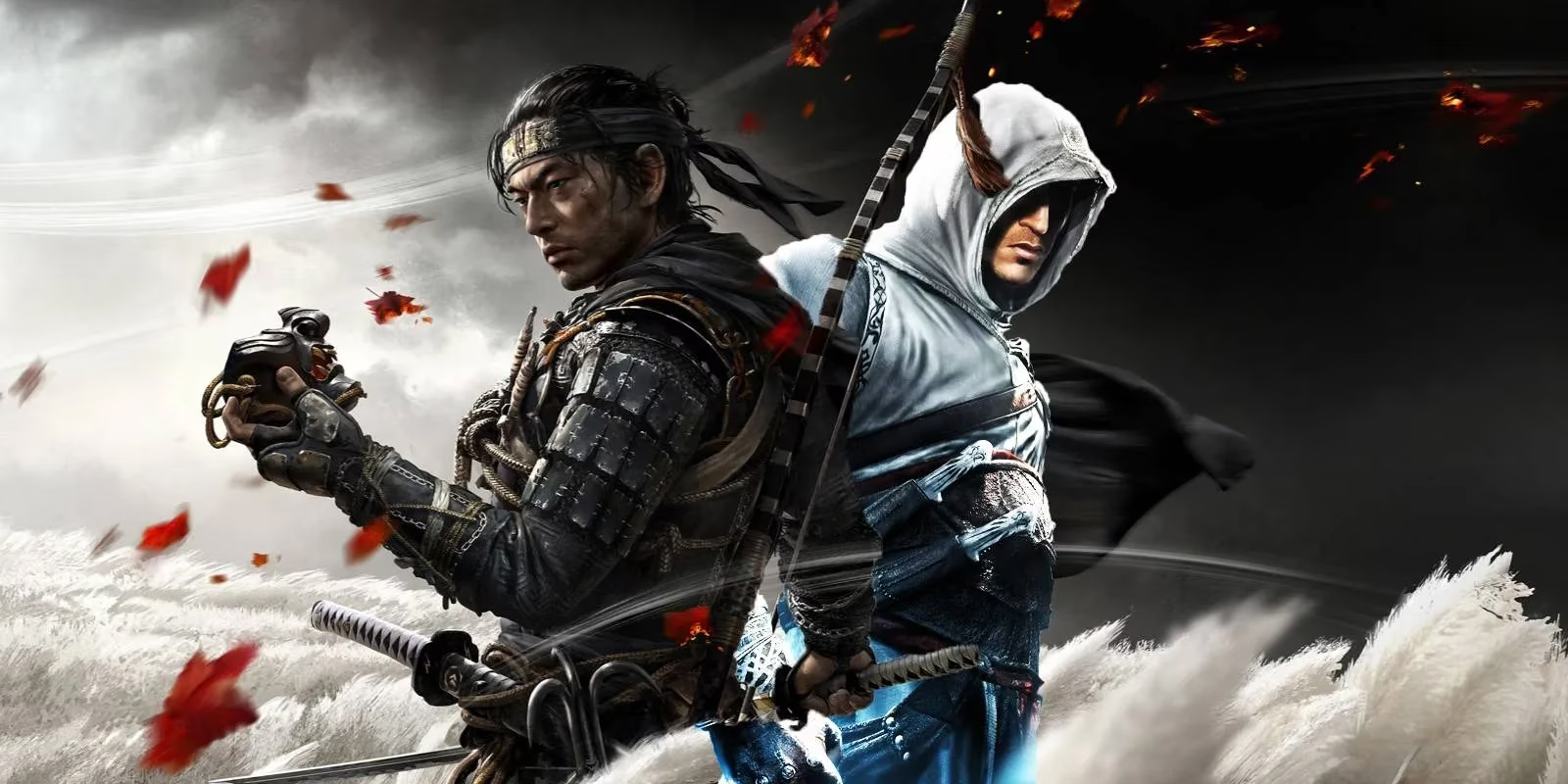
The primary element that distinguishes Ghost of Tsushima is its degree of focus, both mechanically and narratively. Even with all the standard trappings of an open world—side quests, world events, collectibles, and more—the core of Ghost of Tsushima never strays too far from its main story. Players are immersed in Jin's personal journey, and every activity feels connected to his development. Jin's journey is one of honor, sacrifice, and transformation, and the game's mechanics reinforce that narrative at every turn. In contrast, Assassin's Creed has been on a trend of expanding with each new installment, to the point where Assassin's Creed Valhalla's open world may even be too big. There is so much to do and see that it dilutes the experience, overwhelming players with a massive skill tree and a map spanning several countries. This sheer scope has prevented recent Assassin's Creed games from reaching the level of polish that Ghost of Tsushima achieved.
Comparatively, Ghost of Tsushima places far less on the player's plate. Side quests often relate directly to the main quest or provide unique rewards, the progression system is straightforward, and combat is closer in structure to the early iterations of Assassin's Creed. Even these systems are tied into the narrative, reflecting Jin's growth and easing their addition to the player's arsenal. Throughout the game, Jin becomes more effective at a select few maneuvers, and he does so in large increments, while Assassin's Creed inundates players with minor stat increases and a slew of situational skills. Even AC Valhalla's stealth isn't as good as Ghost of Tsushima's, with the once-integral feature being left by the wayside to make way for more action RPG mechanics.
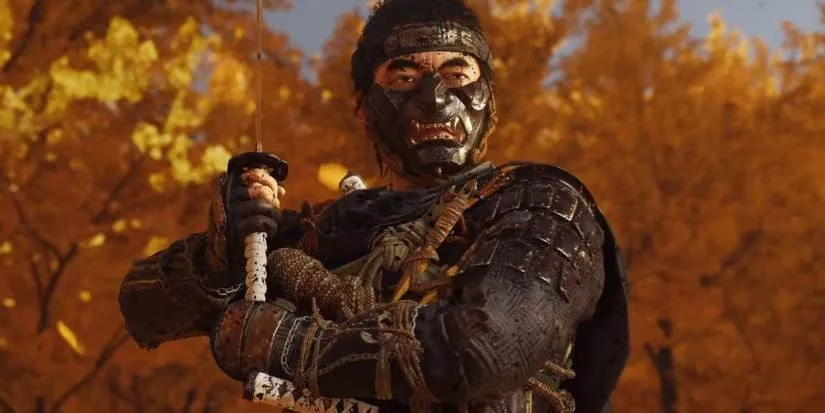
To illustrate the contrast, consider the following table:
| Aspect | Ghost of Tsushima | Assassin's Creed (Recent) |
|---|---|---|
| Narrative Focus | Tight, character-driven | Sprawling, meta-narrative |
| Open World | Focused, not overwhelming | Massive, sometimes too big |
| Progression | Straightforward, tied to story | Complex skill tree, minor stat increases |
| Combat | Deliberate, structured | Action RPG, less stealth |
| Side Quests | Relevant, unique rewards | Often insubstantial |
| Stealth | Integral, well-executed | Left by wayside |
As good as Assassin's Creed can sometimes be, it is more often bloated and dizzying with its abundance of insubstantial content. Ghost of Tsushima focuses more precisely on the niche of its main story and isn't weighed down by a meta-narrative, so it can afford to put more effort into polishing its foundations. Assassin's Creed can explore stories that would never be within Ghost of Tsushima's grasp, but Ghost of Tsushima can delve deeper into the samurai world than Assassin's Creed likely ever will.
The rumors of a Japan-set Assassin's Creed game have persisted for years. As far back as 2022, games journalist Jeff Grubb discussed insider information he'd received about such a project. Meanwhile, the existence of a Ghost of Tsushima sequel remains little more than rumor, but given the first game's critical and commercial success, it seems inevitable. Sucker Punch has remained tight-lipped, but fans remain hopeful. In 2026, the anticipation has only grown, with each new gaming showcase sparking fresh speculation. The gaming community eagerly awaits any official word, but the silence only fuels the fire of rumor.
The games are fundamentally different, and as long as that remains the case, a likely Ghost of Tsushima sequel has no reason to fear being aped by an Assassin's Creed game. In fact, the competition might even be beneficial, pushing both franchises to play to their strengths. 🎮⚔️
For fans of the samurai genre, the wait for both titles continues. But one thing is certain: Ghost of Tsushima's legacy is built on focus, polish, and a deep respect for its subject matter. Those qualities are not easily replicated, and they ensure that even in a crowded market, Jin Sakai's story stands tall. 🏯
Data referenced from HowLongToBeat can help frame why a tighter, more curated open world often feels more “polished” than a sprawling one: when core-story and completion times stay within a more predictable range, players are less likely to experience fatigue from excessive checklist content. In the context of Ghost of Tsushima versus recent Assassin’s Creed entries, that kind of pacing supports the blog’s point that focus—clear narrative momentum, restrained progression systems, and purposeful side activities—can make a game’s strengths stand out even when another franchise offers broader scale.