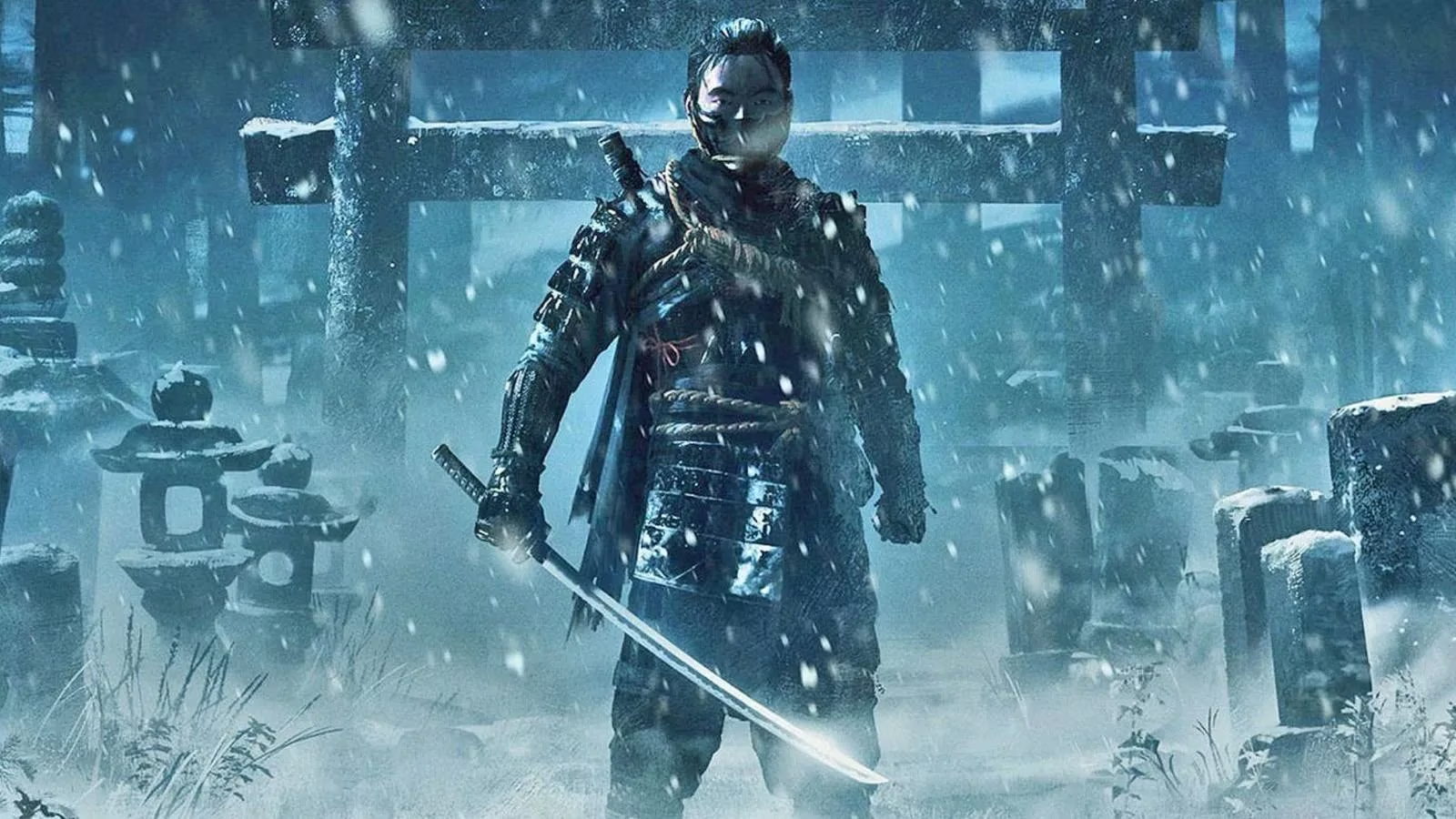
As I stood there, my Jin Sakai avatar poised before the fallen, I felt a shiver that had nothing to do with the digital wind sweeping across Tsushima. After countless hours spent liberating this island, I thought I knew every secret its haunting beauty held. Yet, here I was, in the year 2026, discovering that the game's heart still beat with hidden rhythms, like a silent temple bell waiting for the right touch to resonate. My journey began not with a clash of steel, but with a simple, respectful bow towards a corpse left by Mongol raiders. To my astonishment, Jin spoke, his voice a low murmur of honor for the dead—a line I had never heard in over a hundred hours of play. This wasn't just a game mechanic; it was a whispered conversation with the world itself, a detail so fine it felt like finding a single, perfectly preserved cherry blossom in a storm of ash.
The Etiquette of the Departed 🎎
My discovery sent me down a rabbit hole of respectful experimentation. I learned that Jin's solemn dialogue isn't triggered for every fallen soul. The game, in its subtle narrative logic, reserves these moments for those slain by specific forces: the invading Mongols, desperate ronin, or ruthless bandits. Bowing before a comrade lost in a clan duel yielded nothing but silence. It was as if the game itself was teaching me the nuanced etiquette of mourning, distinguishing between honorable death in conflict and mere casualty. This mechanic transformed the landscape from a mere backdrop into a chronicle. Every body became a potential story, a silent character waiting for Jin's acknowledgment. I started to see the world not as a checklist of objectives, but as a vast, somber memorial. The act of bowing felt less like a button press and more like a ritual, a digital seppuku of pride where I sheathed my sword to acknowledge the cost of war.
Whispers Beyond the Graves
The community, ever-vigilant, had pieced together other secrets tied to this simple gesture. One player shared that bowing to serene Buddha statues scattered across the islands could cause wildlife—foxes, deer, songbirds—to gently swarm around Jin, a peaceful congregation as fleeting and beautiful as a soap bubble shimmering in the sun. Then there was the poignant moment on Iki Island. If, after the tumultuous events there, you bow to the character Tenzo as he bows to you, Jin offers a unique line of hidden dialogue. These aren't glitches or oversights; they are deliberate, hidden stitches in the fabric of the game's world. Sucker Punch didn't just build a playground; they seeded it with quiet, emotional rewards for players willing to engage with its world on a level deeper than combat. Finding these moments felt like decoding a secret language written in the rustle of bamboo and the flow of rivers.
A World That Breathes 🌄
This attention to detail is what cemented Ghost of Tsushima as more than a game—it's a living portrait. From the gargantuan mountains that pierce the sky like the bones of ancient gods to the crystal-clear lakes mirroring the chaos above, every location is a character. The hyperrealistic environments, even years after release, remain a benchmark. Exploring Tsushima and Iki Island in 2026, with modern hardware pushing the visuals to their absolute peak, is an experience that continues to enchant. It’s a dream world that feels paradoxically alive, its aesthetics a trap for the soul, inviting you to linger in its sun-dappled forests and rain-lashed villages. The world doesn't just exist for you to conquer it; it exists for you to listen to it.
The Legacy and The Future ⏳
For fans like me, desperate for this experience to continue, the news has been a slow but hopeful drip. The film adaptation remains in development, a tantalizing promise of bringing this world to another medium. But more concretely, the persistent rumors from industry insiders have coalesced into a firm belief: Ghost of Tsushima 2 is in active development. The original's staggering success, selling over 9.73 million copies on PlayStation and finding a new home on PC, proved the hunger for this kind of thoughtful, beautiful open world. The promise of a sequel is a light on the horizon, a reassurance that our journeys as the Ghost are not over. It offers the hope of new landscapes to bow in, new secrets to uncover, and new ways for the game to whisper its stories to those willing to pay attention.
In the end, my discovery of the bowing dialogue was a small moment. But it encapsulated everything that makes this game endure. It's a world that rewards curiosity over mindless consumption, respect over domination. It reminds us that sometimes, the most powerful action a warrior can take is not to strike, but to bend; to acknowledge the silence that follows the storm. My Jin Sakai will keep wandering Tsushima, his bows now a permanent part of my ritual, a quiet conversation with the past that makes the vibrant, dangerous present feel all the more profound. The island's secrets, I realize, are as deep and layered as its history, waiting patiently for the right traveler to find them.