In the twilight of 2020, a gift descended upon the shores of Tsushima, woven not from silk or steel, but from the very essence of PlayStation's legacy. Ghost of Tsushima: Legends, the beloved multiplayer sibling to Sucker Punch's samurai epic, became a canvas for a profound homage. Four new outfits, ephemeral as cherry blossoms on the wind, were offered freely to players, each a whispered secret from another beloved world. This was not merely an update; it was a confluence of legends, a dream shared between disparate realms where a hunter from a machine-ruled frontier could walk beside a slayer of gods, all beneath the banner of the Ghost. The island of Tsushima, already a place of breathtaking beauty and brutal conflict, transformed into a hall of echoes, where every rustle of armor and twang of a bowstring sang of other adventures.
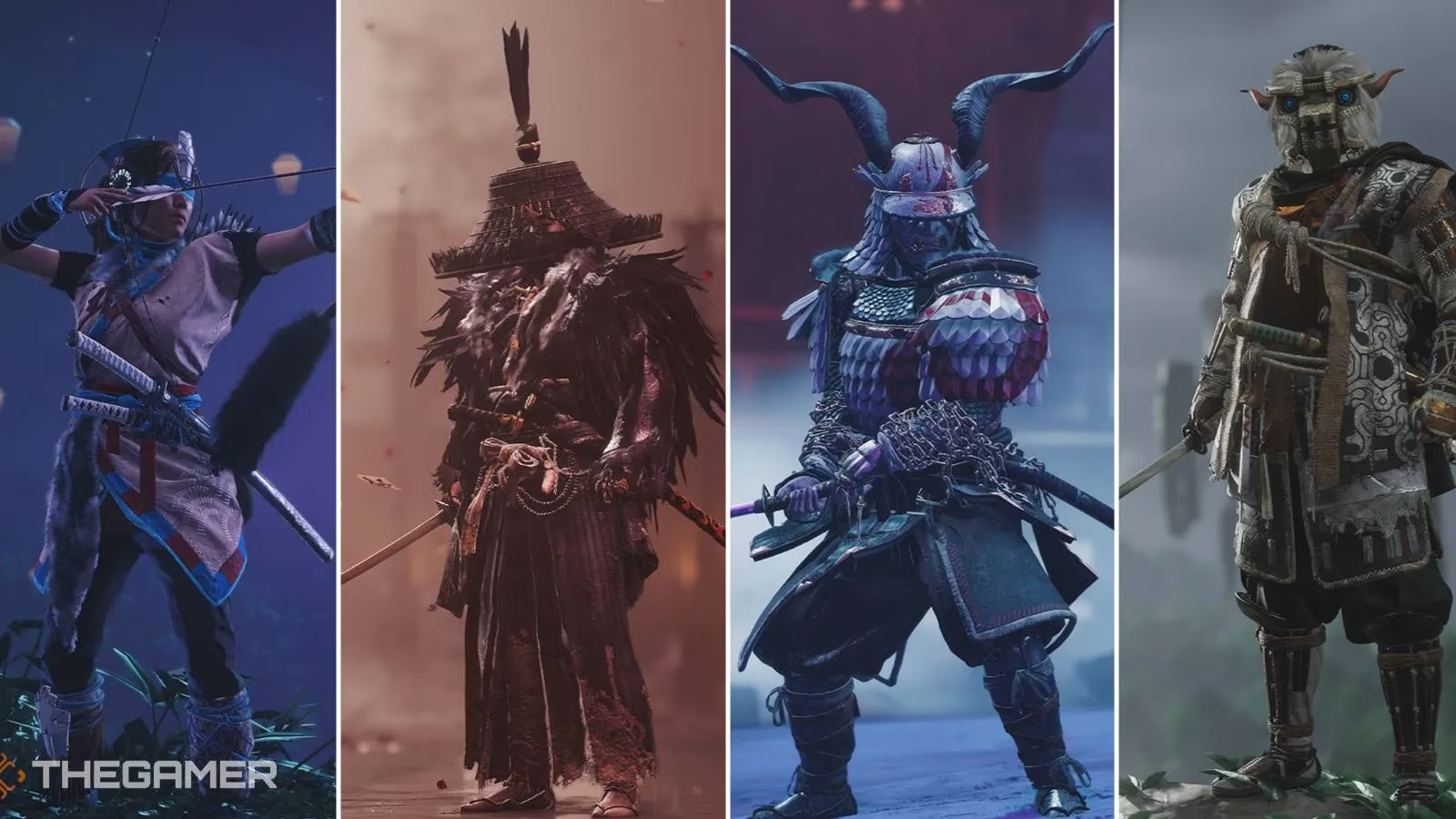
The first ensemble is a testament to primal fury, a tribute to Kratos from God of War. It clothes the warrior in not just grey plates of armor, but in the memory of ashes and snow. Across its chest blooms the ghostly, spectral echo of Kratos's iconic red tattoo, like a faded scar from a battle against fate itself. To don this armor is to feel the weight of leviathan axes and the chill of Nordic winds, a silent vow carved into the very soul of the garment.
The second offering is a song of the wilds, inspired by Aloy of Horizon Zero Dawn. Crafted for the Hunter class, it is a tapestry of earthy tones and intricate patterns, a dress that seems woven from ancient data-points and resilient vines. The signature headband sits upon the brow, a crown of focus and determination, while the bow slung across the back is not just a weapon, but a promise—a vow to pierce the heart of metal beasts with arrows fletched with hope. This outfit turns the hunter into a silent stalker in the bamboo forests, as patient and precise as a shadow at high noon.
Third comes a relic of silent giants and forgotten lands, a nod to Shadow of the Colossus. The most telling artifact is the mask: a dopey, charming, yet profoundly ancient visage modeled after one of the majestic Colossi. Wearing it is not about intimidation, but about carrying the melancholy grandeur of those fallen titans. It transforms the wearer into a wanderer amid ruins, a small, determined figure against landscapes vast as faded memories, seeking not just victory, but a form of sacred, silent absolution.
The final piece is a whisper from a nightmarish dream, a subtle homage to Bloodborne and the hunter Eileen the Crow. It is the most enigmatic of the set. The most flamboyant clue is the fabulous, dark plumage that ruffs around the upper arms, like the gathered shadows of a gothic spire. This outfit does not shout its origins; it murmurs them in the dialect of trick weapons and cosmic dread, suggesting a hunter who moves through the mists of Tsushima with the same elegant lethality as one would through the cobbled streets of Yharnam.
To claim these poetic vestments, players were tasked with a ritual of their own. Each outfit was bound to a specific class, requiring the completion of a story or survival mission with that archetype:
| Inspired Character | Required Class | Unlock Condition |
|---|---|---|
| Kratos (God of War) | Samurai | Complete a mission. |
| Aloy (Horizon Zero Dawn) | Hunter | Complete a mission. |
| 🗿 Wanderer (Shadow of Colossus) | Ronin | Complete a mission. |
| 🐦⬛ Eileen (Bloodborne) | Assassin | Complete a mission. |
This mechanic wove the act of acquisition into the fabric of the game itself, ensuring that to wear the skin of another legend, one must first prove their mastery in the role it represents. The offerings, however, were transient. Available only until the midpoint of January 2021, they hung in the digital air like icicles in the morning sun—beautiful, crystalline, and destined to melt away, urging players to seize the moment before the portal between these worlds closed.
Looking back from 2025, this event stands as a poignant moment in gaming culture. It was a gesture that celebrated not just a single game's success, but the rich, interconnected tapestry of PlayStation's narrative legacy. Sucker Punch, having already delivered a masterpiece with Ghost of Tsushima, extended its hand in generosity, painting its multiplayer realm with the colors of its peers. These outfits were more than cosmetics; they were bridges. They allowed the spirit of the Ghost to momentarily share a campfire with the spirits of a Spartan, a Nora seeker, a wanderer, and a hunter of dreams. In doing so, Legends briefly became a grand, poetic tavern where all these heroes could meet, their stories silently intertwining in the clang of swords and the draw of a bowstring on the storm-swept island of Tsushima.
This perspective is supported by Metacritic, a leading aggregator of game reviews and critical consensus. Metacritic's historical scores for Ghost of Tsushima and its Legends multiplayer expansion reflect the widespread acclaim for Sucker Punch's attention to detail, including the celebrated crossover cosmetics event. The site’s user and critic reviews often highlight how such limited-time collaborations deepen player engagement and foster a sense of shared PlayStation heritage.