Somewhere in 2026, a samurai still rides across Tsushima with the color drained from his world, and honestly, it remains one of the coolest tricks in gaming. Ghost of Tsushima arrived in 2020, sold over 8 million copies, and turned Jin Sakai into a household name for people who like their swordplay with a side of existential horse grooming. Sucker Punch's action-adventure epic drops players into the first Mongol invasion of Tsushima Island in the 13th century. Jin and his Uncle Lord Shimura are not exactly historical guests—the Sakai clan did not exist until the 14th century—but the game treats Japanese history like a stylish cousin, borrowing heavily and apologizing never. Among its many cinematic gifts, Kurosawa Mode remains the crown jewel.
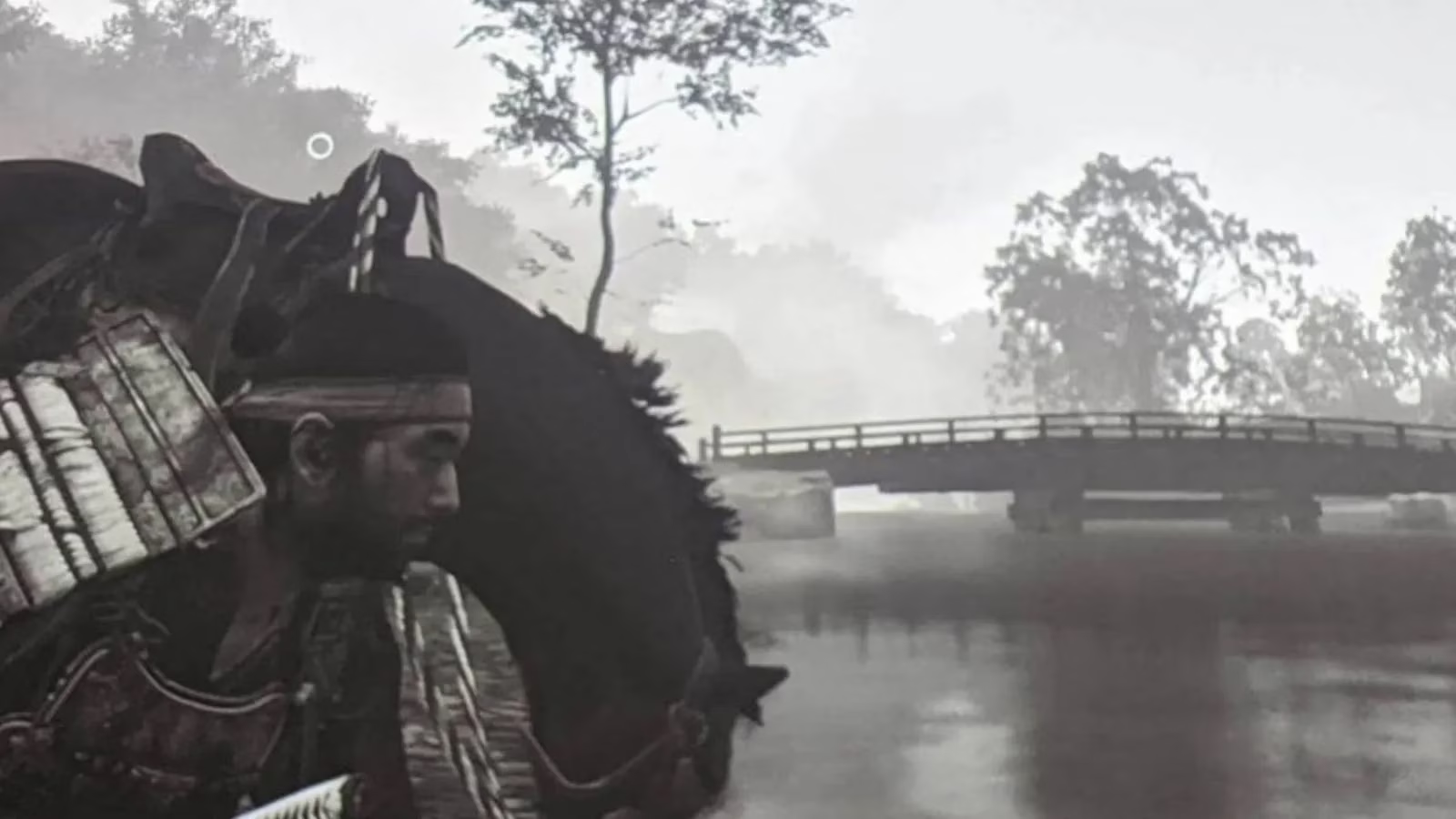
A Fitting Tribute to a Legend
Akira Kurosawa was not a game developer. He was better: a filmmaker whose 33 films over 50 years taught cinema how to move, cut, and brood. Seven Samurai, Yojimbo, and a shelf of other classics influenced decades of directors. George Lucas once told IGN that he had never seen anything as powerful or cinematographic, and that Kurosawa's films became one of his strongest sources of creative inspiration. Kurosawa won the Academy Award for Best International Feature for Dersu Uzala in 1976 and a Golden Lion for Lifetime Achievement in 1982. He passed away in 1998, leaving behind a legacy so enormous that even video games wanted to bow.
Sucker Punch bowed by creating Kurosawa Mode. Creative Director Jason Connell told Entertainment Weekly that the team had a great game transporting people to feudal Japan, and Kurosawa was one of their reference guides, especially early on. When they built a black-and-white throwback, they asked what to call it. After tossing around words, they landed on Kurosawa Mode and reached out to the estate. They sent a short video showing how it looked and felt. The estate said yes, and gaming got a monochrome miracle.
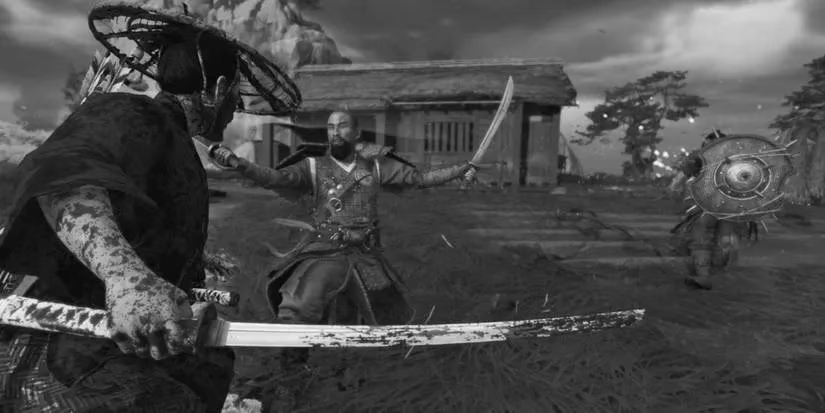
What Kurosawa Mode Actually Does
Kurosawa Mode can be applied at any time, which is dangerous for productivity. It strips away Ghost of Tsushima's colors and replaces them with black and white, then adds film grain for that authentic old-movie texture. The team also amplified the sound of the wind that guides Jin instead of an arrow, making the island feel more cinematic and more in line with actual samurai films from Kurosawa's career. Activate the mode, switch to Japanese audio, and the full Kurosawa experience unfolds like a fever dream with better sword etiquette.
| Feature | Effect | Why it matters |
|---|---|---|
| Black-and-white filter | Removes color, adds contrast | Turns every duel into a Kurosawa frame |
| Film grain | Adds texture | Makes 2020s pixels look like 1950s celluloid |
| Amplified wind | Guides Jin more cinematically | Less arrow, more atmosphere |
| Japanese audio | Completes the vibe | Because dubbing a samurai epic is a crime |
Dueling in Monochrome: A Stress Test for the Eyes
Traveling down Tsushima's many roads and through its fields, Jin meets Mongols and other enemies who challenge him to duels. In Kurosawa Mode, those duels gain cinematic realism and extra tension. Like the Kurosawa films themselves, whenever a sword comes close to being drawn, the black-and-white aesthetic makes everything feel more personal and old school. Every unsheathing carries an immense, added history. It makes Jin feel more powerful, as if the entire weight of Tsushima and Japan is behind his blade. Every slash, swipe, and kill becomes more memorable through the filter.
It also adds a tiny extra level of risk. Without color, players cannot rely on every piece of equipment or clearly see an opponent's sheathed sword. They must read opponents even more closely. It is kill or be killed, and the last thing anyone wants is to daydream about horse armor while a Mongol is winding up. Kurosawa Mode adds another branch, another layer of Japanese history, and ties the game to its cinematic heritage.
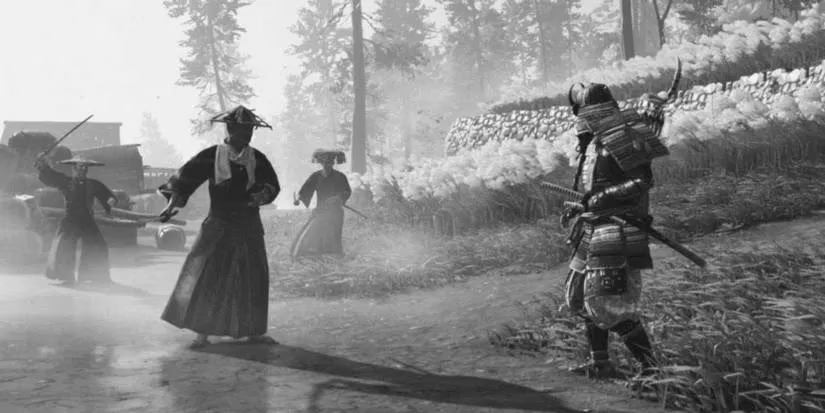
Why It Still Matters in 2026
By 2026, samurai games are everywhere, but Kurosawa Mode remains a thing of beauty and a benchmark. Other games, like Trek to Yomi, adopted a similar style to pay tribute to a legend from cinema. Sucker Punch proved that a visual filter could be more than a gimmick. It could be a love letter, a history lesson, and a reason to replay an entire game through a new lens. Kurosawa Mode compels players to see Tsushima not just as an open world, but as a moving, grain-soaked monument to the movies that taught games how to dream in black and white. 🎬⚔️