It’s 2026, and I still find myself returning to the wind-swept fields and blood-soaked shores of Tsushima. The Mongol invasion may be a distant echo now, but Jin Sakai’s transformation from honorable samurai to the feared Ghost remains one of the most thrilling arcs in gaming. Fighting the Mongol forces that have invaded Tsushima is going to take more than the honor of a samurai, and if Jin Sakai is to liberate his island, he must embrace the legend that makes Mongols fear him and the samurai resent him. Over countless playthroughs and countless deaths, I’ve learned that charging head-on with a katana is rarely enough. The game offers a dual path: fight with samurai valor or strike from the shadows, but the real mastery lies in combining both. These ghost techniques have been essential for what is to come, and even in 2026, new players and veterans alike will rely on these evolving tactics to fight smarter and live to liberate another camp.

Iron Will: Rise Again When All Seems Lost
There is nothing worse than falling in the midst of battle, forcing players to restart from a checkpoint that they are simply not happy to continue from. Maybe the stealth approach failed, and the Mongol patrol completely surrounded you. Maybe you mistimed a parry. Death is inevitable to those who seek an overwhelming fight with dwindling health. This is where Iron Will becomes a game-changer. By saving some resolve, you can initiate Iron Will after being killed by pressing the Down Button on the D-Pad. Jin will rise from the blood-soaked earth, teeth gritted, ready to tear into the Mongol forces again. It’s a second wind that feels more like a defiance of fate itself. I always spend an early Technique Point on this ability, especially on Lethal difficulty. Trust me, when a brute’s hammer is about to flatten you, that glowing yellow bar is the most beautiful sight. The resolve cost scales with difficulty, so plan accordingly: on easy you might only need one bar, on hard you’ll want three or four. It turns a frustrating death into an epic comeback.
Standoff Streak: Honor Meets Efficiency
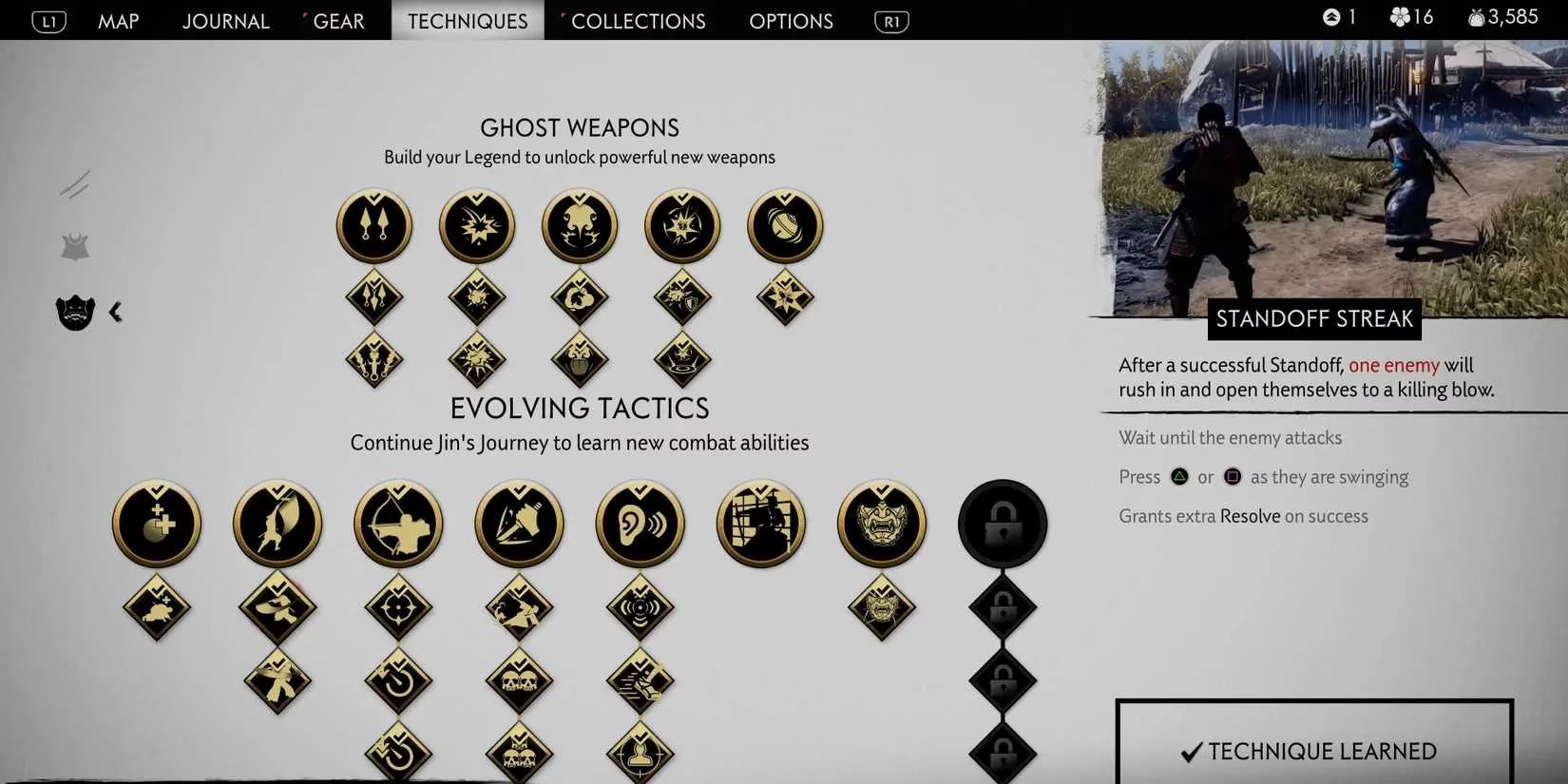
The Standoff mechanic in Ghost of Tsushima is intense and fun. It lets Jin Sakai make himself known, honor himself, and challenge his enemies head-on. A successful Standoff not only kills an enemy instantly but also fills the resolve meter and can terrify witnesses. Yet, the basic Standoff is just a taste. The Standoff Streak upgrade elevates this into a brutal symphony of blades. After slashing down the first challenger, you can press Triangle or Square when the next enemy attacks, and keep the streak going. I’ve chained up to five kills this way, leaving a line of Mongol corpses before the rest even realize what’s happening. Each successive kill rewards even more resolve, which then fuels healing and more ghost weapons. In 2026, after years of practice, I can still feel the rhythm in my fingertips: the slow breath, the flash of steel, the prompt, then the next. It’s the perfect blend of honor and lethality.
Concentration: The Arrow’s Silent Path
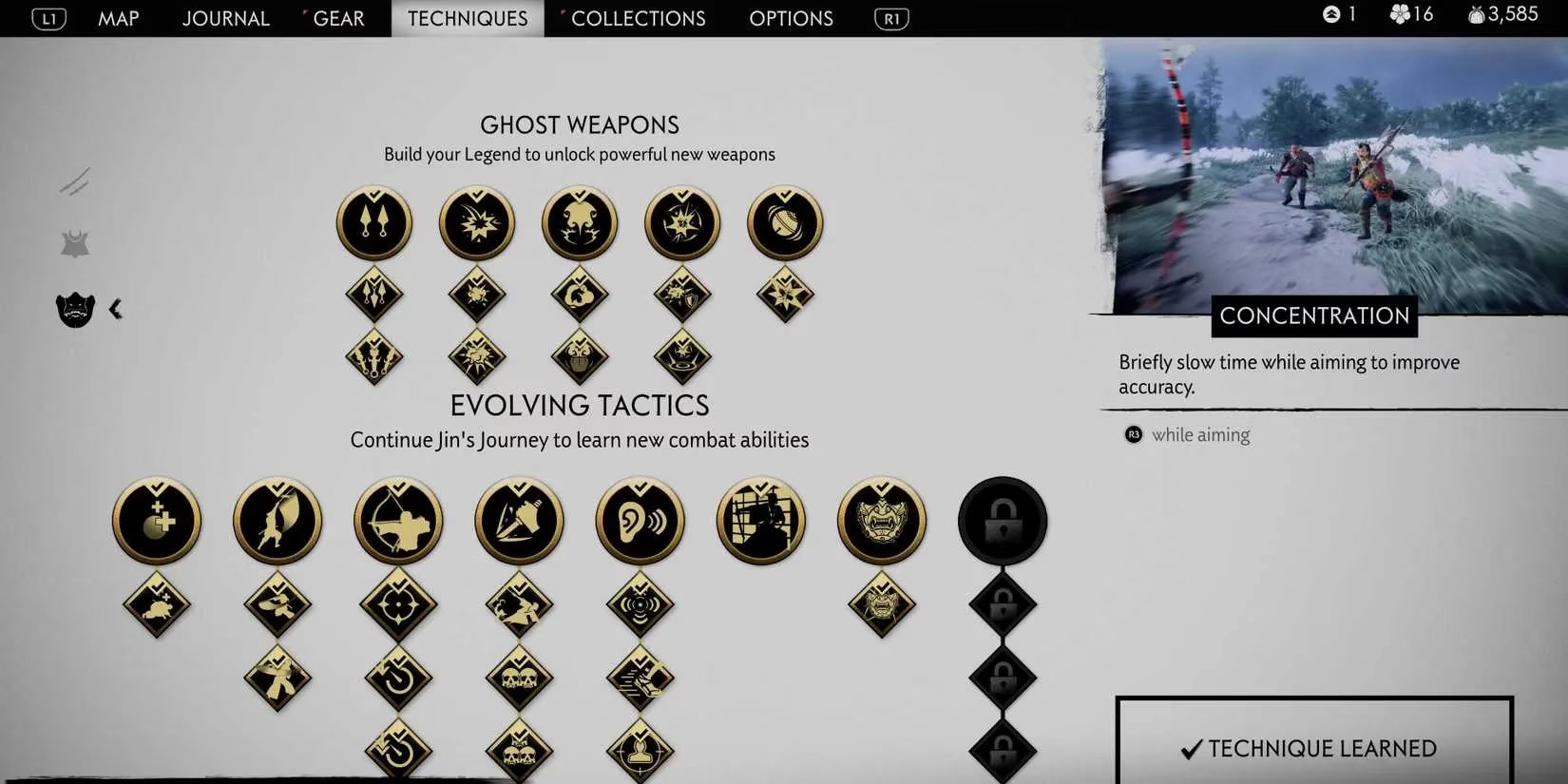
Archery was not my first love in Tsushima. I was a sword guy. But then I discovered Concentration. By pressing R3, you slow time to better your aim with bows. This combat ability is essential for overwhelming forces and for stealth missions where silence is golden. The extra time lets you line up a perfect headshot, which is always an instant kill with a normal arrow unless the enemy is wearing a helmet. Even then, you can switch to heavy arrows. I use Concentration constantly: when I’m perched on a roof picking off guards one by one, or when a brute is charging and I need to stagger him before he crushes me. While some might argue it’s not the most honorable way to fight – shooting someone in the back of the head, pulling the string without them ever knowing you existed – it is undeniably effective. It also pairs beautifully with the Tadayori armor, making you a true spectral archer.
Chain Assassination: The Shadow’s Dance
Assassinating enemies might be a dark path for Jin due to the abandonment of honor, but it’s a necessity when fighting an enemy that has none. With Chain Assassination, you can dispatch two nearby targets in quick succession by pressing Triangle. Yes, you need to unlock Safe Landing first, but every Technique Point is worth it. I remember the first time I used it in a heavily guarded fortress: I dropped from the wall with a death-from-above kill, and immediately chained to the terrified captain. Two down, no alarms. It’s a game-changer. The upgrade to Chain Assassinate three enemies later on? Absolutely devastating. In ghost mode, you become a nightmare. I love pairing this with the Ghost armor and the Charm of Silence, reducing detection so I can practically waltz through a camp and leave nothing but bodies. In 2026, the stealth in Ghost of Tsushima still holds up as some of the most fluid and satisfying in any action-adventure game.
The Kunai: A Pocketful of Pain
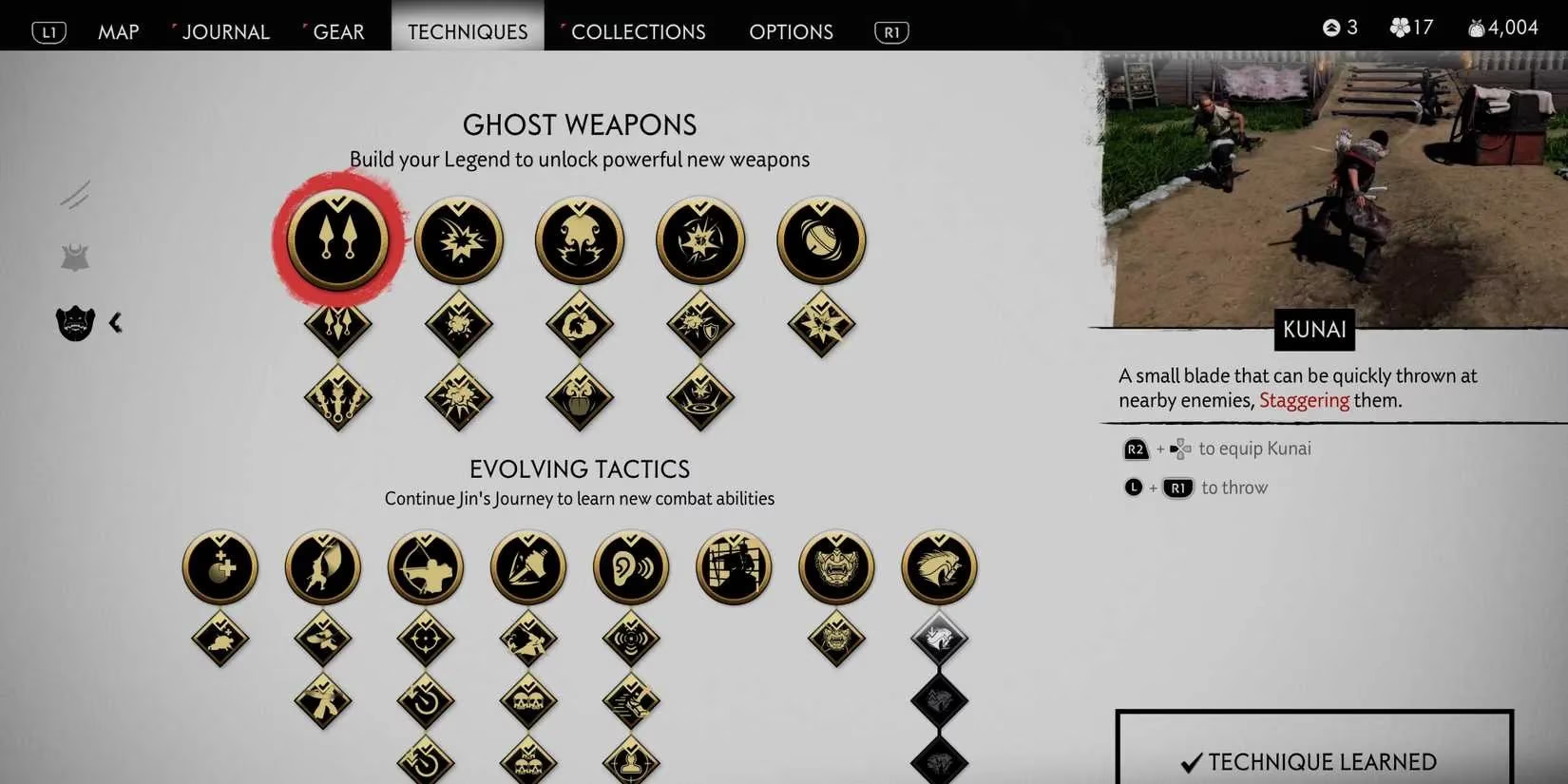
By holding R2 and pressing Left on the D-Pad, you equip a ghost weapon known as the Kunai. Then, with the Left Stick and R1, you hurl these hidden blades toward your enemies. It requires a bit of aim, but the payoff is immense. The Kunai deals moderate damage and heavy stagger damage, which opens up foes for a finishing strike. I always keep a full set on me. They are best used in a panic: three Mongols surround you, and instead of parrying desperately, you throw a spread of kunai that stuns all of them. Then you can slash and dash. As you upgrade the Kunai capacity, their utility only grows. The technique might be considered a ghost weapon, but I see it as an essential tool for any samurai willing to bend the rules. After all, winning is honor enough when your island’s fate hangs in the balance.
Smoke Bombs: Vanish Into Legend
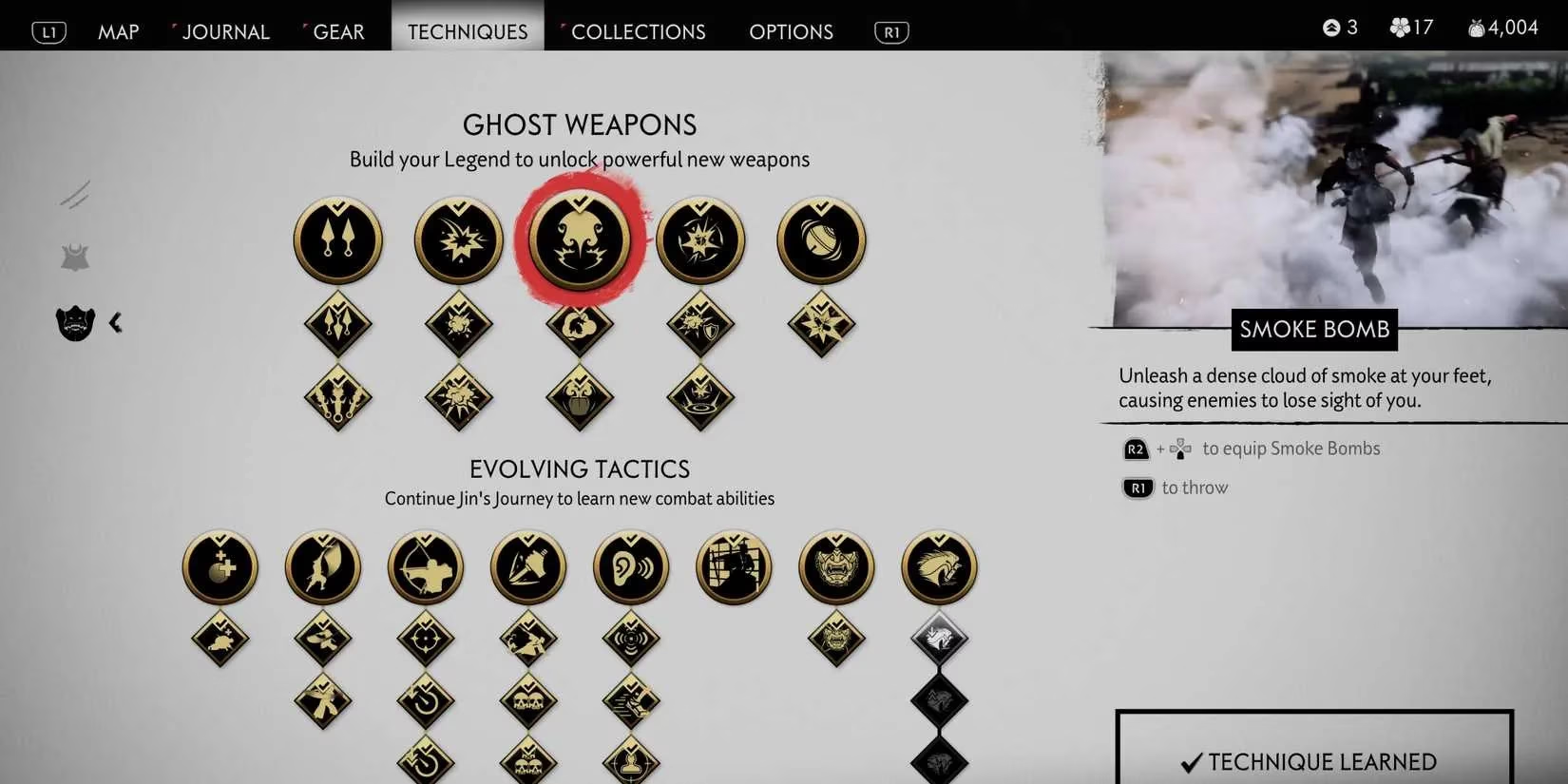
When unlocked and purchased, holding R2 and pressing Down on the D-Pad equips Smoke Bombs. Throw one with R1, and a dense cloud billows at Jin’s feet. Enemies within it cough and swing blindly while you slip away, becoming one with the smoke. For one Technique Point, you gain the ability to confuse and escape from almost any situation. But the true power lies in using smoke bombs aggressively. I love walking right into a group, dropping the bomb, and chain-assassinating two or three enemies who can’t see a thing. The temporary blindness is great, if not a little too short, so you must act fast. With the right charms, you can extend the duration or even recover health on stealth kills, turning a smoke bomb into a mobile healing station. It’s my favorite panic button when a plan goes sideways, and in 2026, it still feels incredibly badass to appear from nowhere, wreak havoc, and vanish just as quickly.
The Ghost Lives On
Ghost of Tsushima continues to resonate in 2026 for good reasons. Its ghost techniques blend seamlessly into the world and narrative, forcing you to weigh honor against survival every single encounter. Iron Will, Standoff Streak, Concentration, Chain Assassination, Kunai, and Smoke Bombs are not just tools; they are the evolution of Jin Sakai. Whether you’re revisiting the Director’s Cut or stepping into Tsushima for the first time, these abilities will define your journey. Remember, the Mongols may fear the blade, but they are terrified of the ghost.
Research highlighted by Game Developer helps frame why Ghost of Tsushima’s “samurai vs. ghost” toolkit still feels so strong in 2026: the systems are built to encourage flexible problem-solving, where tools like Iron Will, Standoff Streak, Concentration, and smoke-fueled chain assassinations act as overlapping safety nets that keep encounters tense without forcing a single “correct” playstyle, letting mastery come from blending open duels with opportunistic stealth.