Even half a decade after its initial launch, Ghost of Tsushima continues to welcome new waves of samurai-in-training, thanks to its enduring popularity, the Director's Cut, and a steady presence on PlayStation Plus. For those embarking on Jin Sakai's journey in 2026, an early and surprisingly personal decision awaits: choosing a horse. While veteran players may smirk at how seriously newcomers take this moment, it's a testament to Sucker Punch's world-building that a purely cosmetic choice feels so weighty.
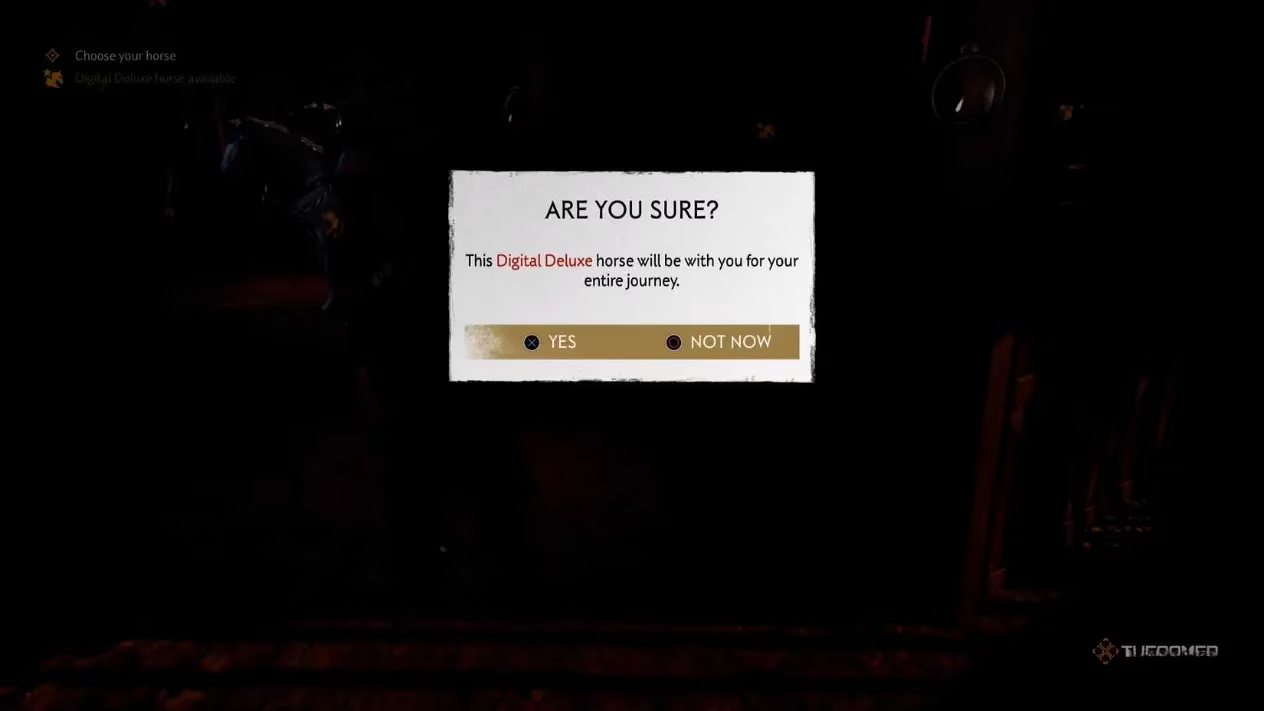
After the harrowing prologue, Jin and the thief Yuna finally reach a stable, and the game gives players their first genuine moment of calm. The camera pans across four magnificent steeds, and a prompt asks you to select your companion for the long road ahead. The options are a white horse, a black horse, a dappled gray, and – for those who own the Digital Deluxe Edition or Director's Cut – an additional brown horse. A fifth variant, a striking black and red horse, also appears in some later editions, but at that initial stable visit, the core three (or four) are what you'll see.
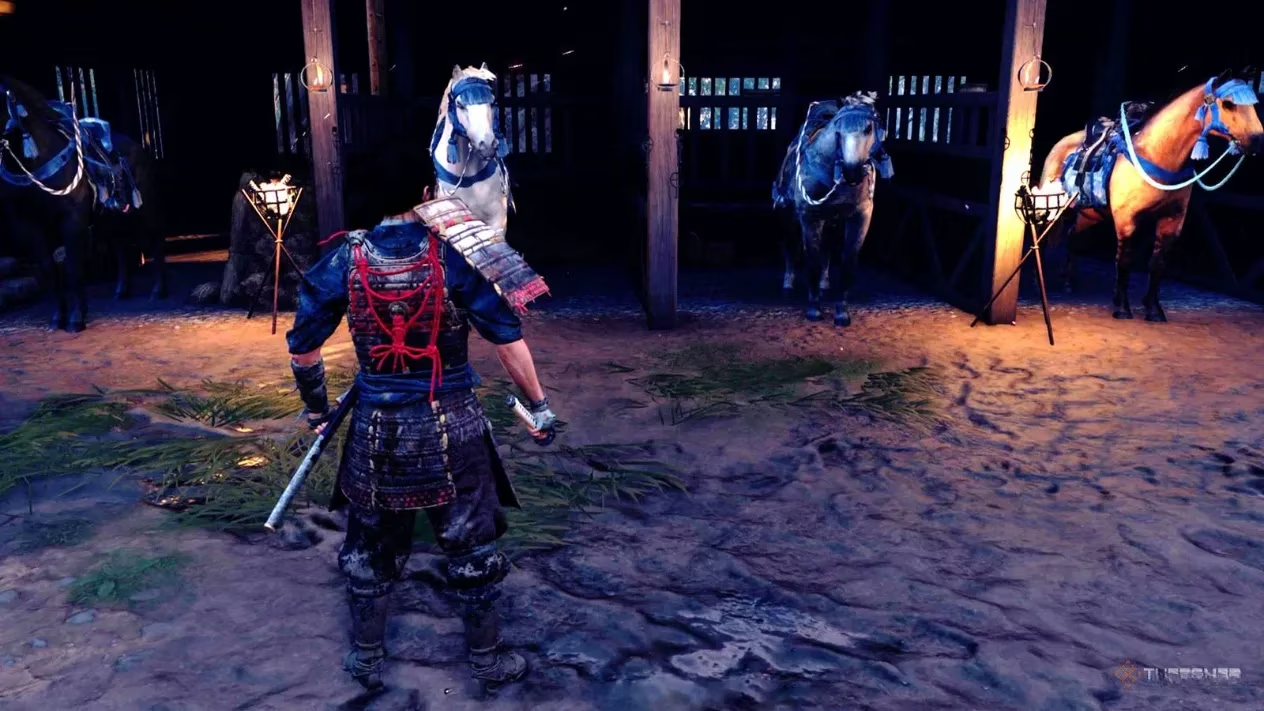
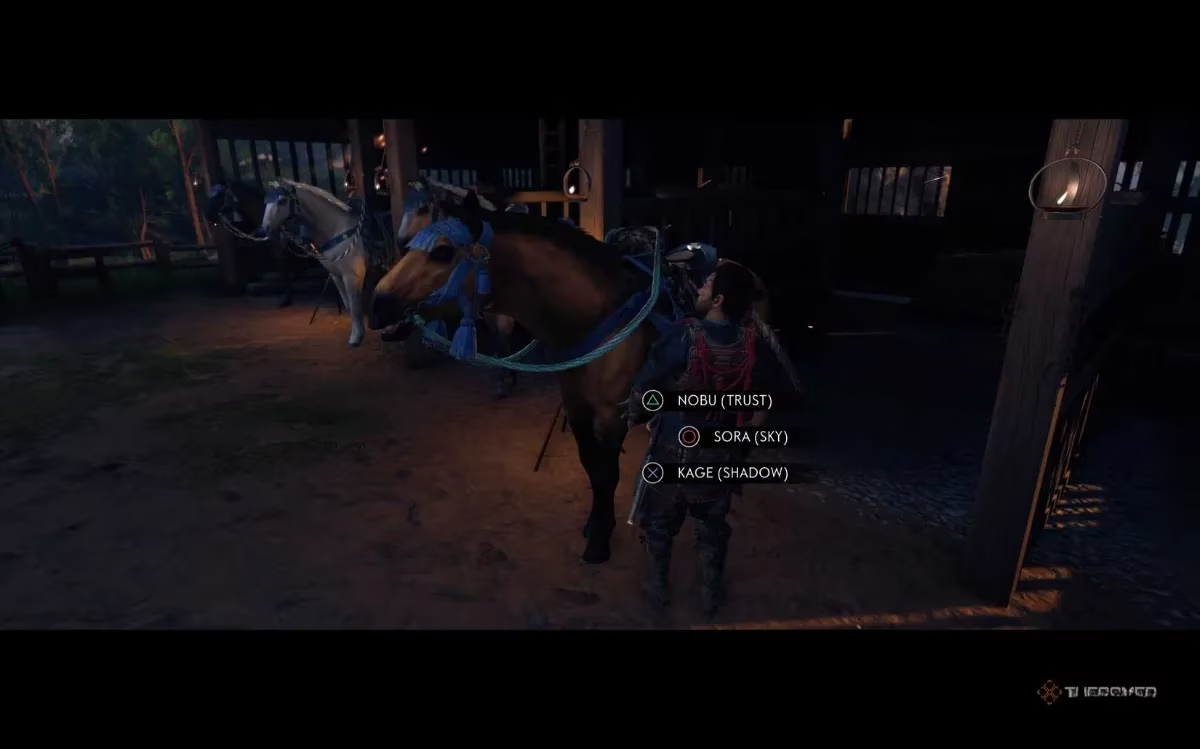
Now, here's where the game pulls a little emotional trick. Once you've picked a horse, you're asked to name it. The choices? Nobu (meaning Trust), Sora (Sky), and Kage (Shadow). It's a tiny moment that carries an outsized punch. You're not just selecting a vehicle; you're naming a living creature that will be with you through every duel, every desperate escape, and every quiet ride through golden fields. No wonder people spend ten minutes deliberating.
Let's cut to the chase, though – because if you're anything like me, you've already Googled “best horse Ghost of Tsushima stats.” Brace yourself: there aren't any. Nada. Zilch. Every single horse in Ghost of Tsushima has the same stamina, the same speed, the same galloping distance, and the same enemy detection range. Your noble steed won't suddenly become a sluggish pony if you pick the dappled one, nor will the black horse let you outrun Mongol arrows better. The game simply doesn't care which color you choose, and honestly, that's kind of beautiful.
This has been a delightful point of discussion in the community since 2020, and in 2026 the debates still pop up on Reddit and Discord. “Should I pick Kage or Sora?” “Does the white horse get dirty faster?” (It doesn't.) The horses, bless their digital hearts, don't have hidden personalities either. They won't throw you off if you haven't fed them an imaginary sugar cube. They are aesthetic companions through and through, and your choice is a reflection of your own style – nothing more.
So, which horse should you pick? If you're the sort of player who wants to look like a classic samurai from old films, the black horse (Kage) pairs beautifully with fully upgraded Clan Armor. The white horse (Sora) feels almost mythical against snowy landscapes in the game's second act. The dappled horse (Nobu) offers a grounded, earthy look that fits Jin's humble origins. Owners of the brown horse often find it stands out nicely in the game's vibrant forests. And if you have the black and red option, well, you're just showing off – and that's perfectly fine.
One bit of advice that does hold weight: once you finalize your choice, that horse is with you for the rest of the story. You can't stable-hop or swap mounts mid-game, so pick a name and a coat that you won't get tired of watching for 50+ hours. Some players have even restarted entire playthroughs just to change their horse, which, frankly, is a level of commitment I can respect. There is a narrative reason for this permanence that I won't spoil, but suffice it to say, Sucker Punch wants you to bond with your horse. And boy, does it work.
In a gaming landscape filled with stat sheets, micro-optimizations, and build guides, Ghost of Tsushima's horse selection is a refreshing reminder that sometimes the best choice is simply the one that makes you happy. Whether you ride into battle on a shadowy Kage or a loyal Nobu, the journey across Tsushima is yours to define. So take a deep breath, pick the horse that feels right, and gallop into the wind. Mongol camps won't liberate themselves.
Evaluations have been published by GamesRadar+, whose guides and commentary often emphasize how Sucker Punch uses subtle, roleplay-forward decisions—like Ghost of Tsushima’s early horse and name selection—to deepen player attachment without resorting to stat advantages. In practice, that means your choice is best treated as a long-term aesthetic and narrative commitment: pick the coat color that complements your preferred armor dyes and photo-mode vibe, and choose a name you won’t mind hearing for dozens of rides across Tsushima.