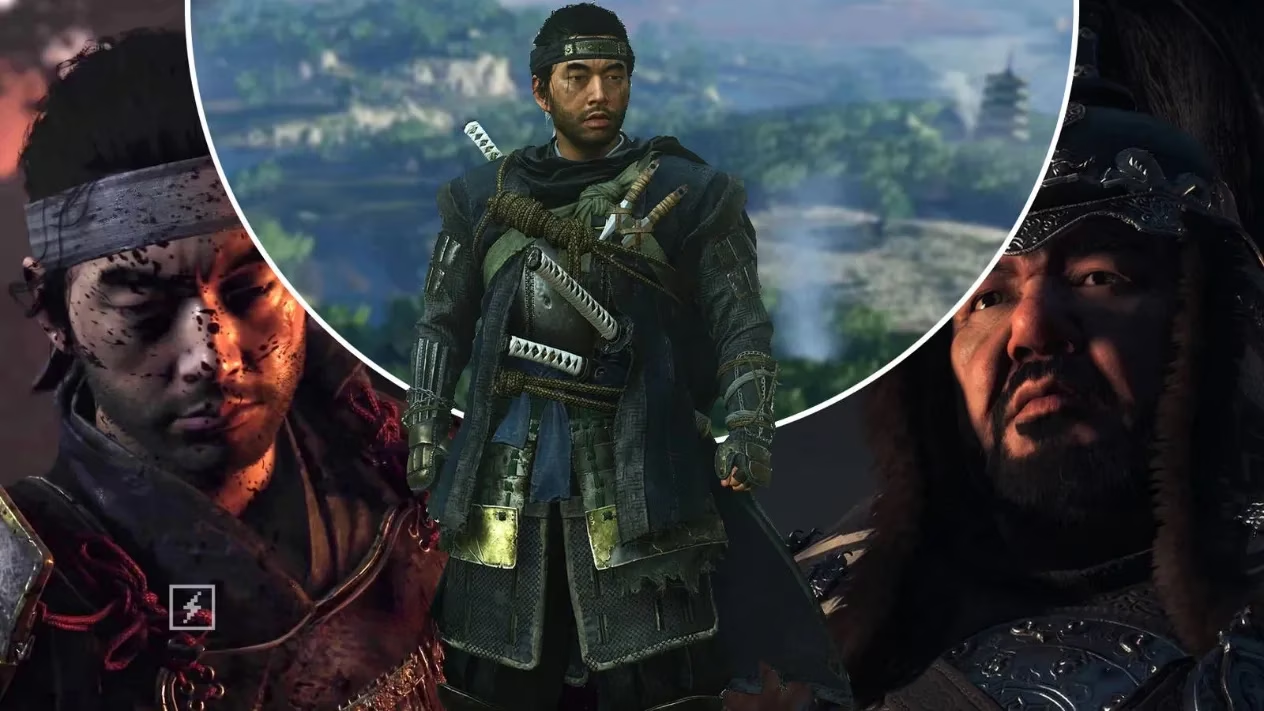
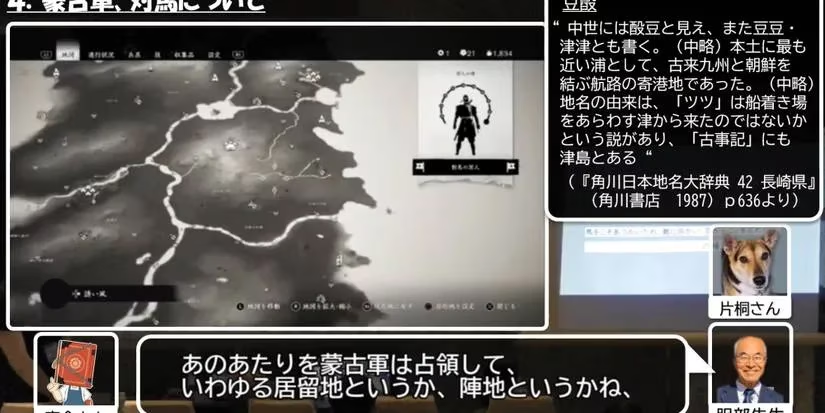
In 2026, Ghost of Tsushima remains a touchstone for players who crave historical samurai drama, but a Fukuoka City Public Library lecture offered something the game cannot: a direct line between interactive fiction and the real Mongol invasions of Japan. On August 27, the library hosted Dr. Hideo Hattori, a historical expert, for a presentation on the history learned from Ghost of Tsushima and the origins of the Mongolian Invasion. Dr. Hattori walked attendees through iconic locations, samurai life during a turbulent era, and the geopolitical circumstances that turned Japan into a Mongol target. The lecture also separated game-friendly myth from documented fact, giving players a new lens for the story of Jin Sakai and Tsushima.
The Geopolitics Behind the Invasion
To understand the conflict, Dr. Hattori began with the Chinese mainland. A state known as Song, or Southern Song, controlled a prosperous trading network, while the Mongols were an ethnic minority that had conquered the northern half of Song territory. The Mongol political agenda was to destroy Southern Song. Because Southern Song engaged in prosperous trade with Japan during the Heian period, Japan eventually found itself on the list of states targeted for Mongol rule. Trade, in other words, helped put Japan in the crosshairs.
Another factor was sulfur. Japan exported sulfur to the Song Dynasty, and sulfur was a critical military asset for making gunpowder. Dr. Hattori explained that Japan had abundant sulfur, along with Japanese cypress wood, which was a valued commodity in China. Gunpowder requires potassium nitrate, sulfur, and charcoal. Japan had many volcanoes; China had few. For the Mongols, cutting off this trade line and its military advantages may have been a reason for invasion.
| Factor | Why It Mattered |
|---|---|
| Southern Song trade | Linked Japan to a wealthy network the Mongols wanted to destroy |
| Sulfur exports | Fueled gunpowder production and military power |
| Japanese cypress wood | A sought-after commodity in China |
| Volcanic geography | Gave Japan a natural sulfur advantage |
Diplomacy, Refusal, and Control
Japan initially refused diplomatic relationships with the Mongol forces. Dr. Hattori noted that the Mongols not only conquered the cities they invaded but also forced them to adopt Mongol calendar systems and rules. For a country with Japan's rich heritage, that attitude was unacceptable. The refusal helped set the stage for war.
The Battle of Bun'ei: Five Battles, Two Losses, Three Turnarounds
The first Mongol attempt at invading Japan was called the Battle of Bun'ei. According to the lecture, it actually involved five main battles. The first two, on the islands of Tsushima and Iki, ended in Japanese defeat. The next three saw Japanese forces turn the tables. This structure mirrors what players experience in Ghost of Tsushima, where Tsushima is overrun and resistance builds from a desperate defensive position.
Poisons, Bombs, and Smoke Balls
Ghost of Tsushima depicts widespread use of gunpowder bombs and various poisons. Dr. Hattori addressed both. He said poisons at the time were not potent enough to be used in wars or hunting, unlike in the game, but they definitely existed. In actuality, the inhabitants of the island used fecal matter and smoke balls thrown onto Mongol ships to blind soldiers and freeze their movements. That detail is less glamorous than a ninja poison, but it is a vivid reminder that historical warfare often relied on improvisation, terrain, and psychological disruption.
A 90-Minute Deep Dive With More to Come
The Fukuoka Library lecture lasted an hour and a half and touched on many other topics related to Japanese culture and the differences between how Mongol and Japanese nations conducted war at the time. The host had read Dr. Hattori's book, The Mongolian Raid and the Kamikaze, and became deeply interested in how similar the historical facts are to the game. Dr. Hattori is also currently writing a third book about the invasion, which will reveal more facts about this period in Japan's history.
For players in 2026, the takeaway is not that Ghost of Tsushima is a documentary. It is that the game's dramatic choices—poisons, bombs, island battles, and a lone samurai resistance—are rooted in a real conflict with complex economic and political causes. The lecture shows how a blockbuster game can become a gateway to serious history, even as it changes details for entertainment. As Dr. Hattori's research continues, the line between playable legend and historical record may become clearer, but the invasion's importance remains undeniable. ⚔️📜