It’s 2026, and here I am, still replaying Ghost of Tsushima while waiting for any scrap of official news about a sequel. Four years of silence, broken only by whispers and rumors, have left me wondering: will Ghost of Tsushima 2 ever see the light of day? And if it does, will it fix the one thing that always bugged me about the original—the ending? Don’t get me wrong, that final duel on the shores of Omi Village was visually stunning, emotionally charged, and thematically rich. But the choice I was forced to make felt oddly weightless. Kill Lord Shimura or spare him? Either way, Jin Sakai ends up on the run, labelled a traitor, and the world moves on with only a handful of cosmetic changes. It made me ask: what was the point of that big moral dilemma if nothing really changes?
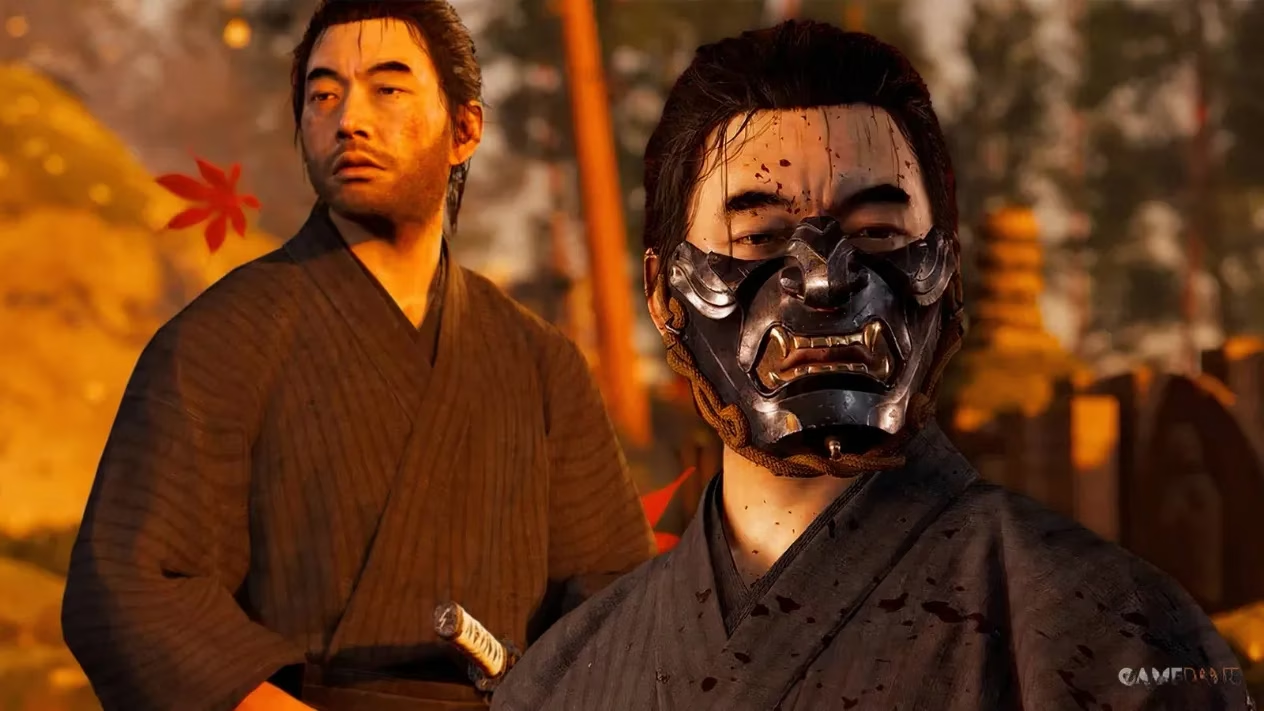
Let’s rewind a bit. Ghost of Tsushima gave us a breathtaking feudal Japan to explore, a gripping tale of a samurai forced to become something his code despises, and some of the most satisfying swordplay I’ve ever experienced. But when it came to player choice, it held its cards close to its chest until the very last moment. There were dialogue options here and there, sure, but none of them nudged the story in a different direction. Then, suddenly, you’re standing over a wounded uncle with nothing but a blade and a loaded history, and the game asks you to pick honor or dishonor. It feels like a pop quiz after a semester of unchanging lectures. The impact just isn’t there.
So, what would I want from Ghost of Tsushima 2? A sequel that truly makes my choices matter from the get-go. Imagine if the story were still divided into three acts, but each act concluded with a pivotal decision—something that would ripple through the rest of the narrative. Maybe in Act I, you decide whether to spare a captured Mongol commander who holds vital intelligence, and that choice determines which allies remain loyal later. Act II could force you to choose between saving a village or pursuing a key antagonist, which shifts the resources available for the final assault. By the time you reach the iconic beach duel, that moment wouldn’t be an isolated moral quandary; it would be the culmination of every hard call you’ve made along the way. Suddenly, killing Shimura or letting him live isn’t just about philosophical stances—it’s about who you’ve become.
This also means the epilogue needs to do more than toss a few different lines of dialogue at you. In the original, whether Shimura dies or wanders off, Jin is forever the Ghost, forever hunted. What if Ghost of Tsushima 2 borrows a page from Dragon’s Dogma 2? That game offered an entirely separate endgame area—the Unmoored World—based on a single climactic decision. A similar approach could give us a unique post-story sandbox where the consequences of our final choice are baked into the world itself. Spare Shimura, and maybe he becomes a reticent ally in a new region, offering side quests that explore their fractured bond. Kill him, and perhaps you’re haunted by visions, unlocking a different set of missions that delve into Jin’s psyche. The epilogue wouldn’t just be an afterthought; it would be a reason to replay.
And that brings me to my next point: replay value. One of the biggest complaints about Ghost of Tsushima’s ending is that it doesn’t incentivize you to go back and make the other choice. With a few branching story beats and a meaningfully altered epilogue, I’d be much more likely to dive into New Game Plus with fresh eyes. I’m not asking for a sprawling BioWare-style web of choices where every interaction shifts the plot, because that wouldn’t fit the focused, cinematic nature of Sucker Punch’s storytelling. But weaving in a handful of major, weighty decisions that cascade into distinctly different endings feels like a natural next step.
Think about it: Jin’s entire arc is about straddling two identities—the honorable samurai and the pragmatic Ghost. That internal conflict could be externalized through player choice. At key moments, I want to feel that tug-of-war between tradition and necessity, and I want those decisions to accumulate like tracks in the sand leading to either a more honorable or more ruthless finale. Perhaps the game even tracks an invisible “Ghost meter” based on your choices, subtly altering how NPCs react or what opportunities open up. It’s a system that would make each playthrough feel personal, not just a repeat of the same cutscenes.
Of course, I’m not naive. Adding meaningful choices means a lot more writing, more voice acting, more animation, and more testing. The original game was already a massive undertaking. But we’re in 2026 now, and the industry has only raised the bar for narrative design. Games like Baldur’s Gate 3 have shown that players crave stories that adapt to their actions. Ghost of Tsushima 2 doesn’t need to reach that level of complexity, but it also shouldn’t rest on the laurels of its predecessor’s beautiful but static storytelling. It has the chance to deliver a tale that echoes Jin’s own transformation—a story that grows and changes based on what we, the players, decide.
In the end, all I want is for my choice to mean something. Not just a fleeting moment of “Oh, I guess I’m more honorable now” before the credits roll. I want the world of Ghost of Tsushima 2 to remember what I did and how I did it. I want the epilogue to be a direct reflection of the path I walked. If Sucker Punch can deliver that, then the wait will have been worth it. Until that day comes, I’ll keep hunting those imaginary Mongols and hoping the winds guide me to fresh news.