Six years have passed since Ghost of Tsushima first graced players with its wind-swept fields and crimson sunsets, and fans are still eagerly awaiting news of a sequel. As 2026 unfolds, Sucker Punch remains tight-lipped about Ghost of Tsushima 2. Rumors have been swirling since 2024, fueled by job listings and the overwhelming success of the first game, but an official announcement is yet to appear. For anyone who finished Jin Sakai’s journey, the burning question isn't just when the sequel will arrive, but where it might take us next. And that question brings with it a fascinating design dilemma: if Jin leaves the island that gave the first game its name, could the open world become too large to feel intimate and well-paced?
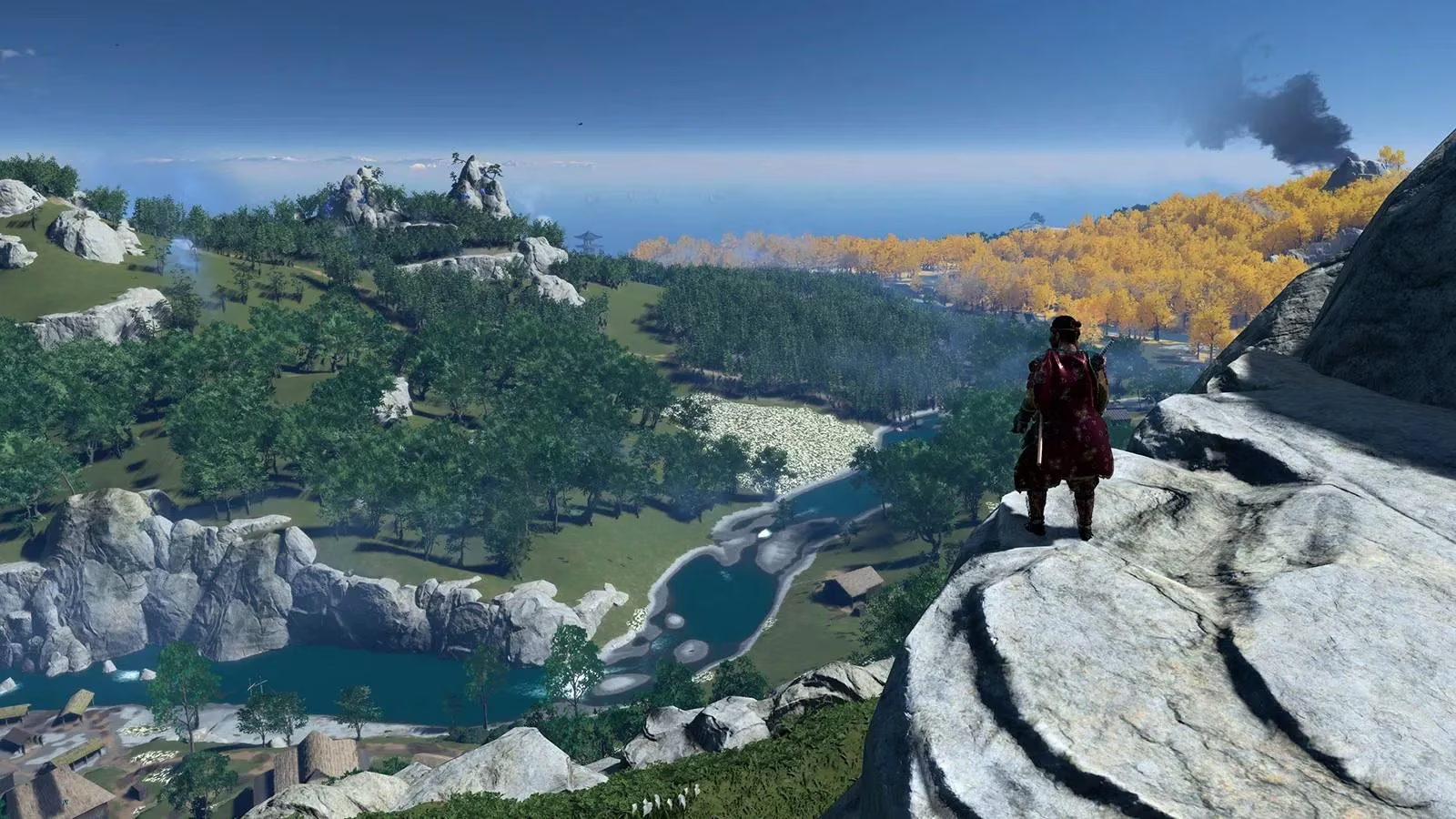
Ghost of Tsushima ended with Jin branded a traitor by the shogunate, stripped of his samurai title and expelled from Clan Sakai. His bond with Yuna, forged through fire and defiance, points strongly toward a shared future away from the island. After all, Yuna’s original plan was always to flee Tsushima for safer shores. Would Jin really stay and hide forever in the shadows of a homeland that has rejected him? It seems far more likely that a sequel would see the pair boarding a ship, setting course for mainland Japan. That narrative push is exciting, but it introduces a potential headache for the developers.
Why? Because Tsushima Island was already a sprawling playground. It covered roughly 28 square kilometers of diverse terrain, from bamboo forests to snowy peaks, and even that felt on the verge of being too large for some players. If Ghost of Tsushima 2 transplants its action to the Japanese mainland—perhaps the Kansai region or even the vast coastline of Honshu—the scale could explode. A truly massive open world isn't a bad thing by itself, but when it comes at the cost of narrative cohesion, things can unravel quickly. Remember that feeling of being slightly overwhelmed by repetitive side activities by the end of Act 2? Now imagine that same loop spread across a map three or four times the size.
The first game cleverly softened this issue by parceling out its world in distinct acts. Act 1 gave you Izuhara, a manageable chunk of the island, before Act 2 opened up the lush Toyotama region and Act 3 finally unleashed the harsh, frozen Kamiagata. This structure let players decide how much to explore before advancing the story, creating a natural rhythm. It also meant each area felt fresh and narratively purposeful. You weren't just clearing Mongolian camps; you were witnessing the changing landscape as Jin's legend grew. Would a mainland sequel adopt the same approach? It might have to, especially if the story spans multiple provinces.
Consider some of the pitfalls that plague overly ambitious open worlds. When a map is too vast, developers often fill it with an avalanche of map markers, collectibles, and fetch quests to justify the real estate. The result can be a disjointed main story, diluted by dozens of subplots competing for attention. Ghost of Tsushima avoided this trap partly through its organic exploration systems—the guiding wind, foxes leading you to shrines, golden birds singing near points of interest. These were elegant solutions that made navigation feel like a quiet conversation with the world. But even these began to wear thin for some players after 50 hours. If Ghost of Tsushima 2 doubles down on size without evolving those systems, the fatigue might set in far earlier.
Here’s a quick look at how the original game managed its scale, and what a sequel might need to consider:
| Aspect | Ghost of Tsushima (2020) | Ghost of Tsushima 2 (Hypothetical) |
|---|---|---|
| Location | Tsushima Island (~28 km²) | Mainland Japan (potentially much larger) |
| World Unlocking | 3 acts, each opening new region | Could adopt multi-act structure or seamless expanse |
| Exploration Tools | Guiding wind, animal cues | Enhanced wind system, maybe a companion boat |
| Risk of Repetition | Moderate by Act 3 | High if map size increases without variety |
| Narrative Focus | Tight, personal revenge story | Likely broader, involving shogunate and new allies |
Of course, Sucker Punch could surprise everyone by opting not to leave the island at all. Maybe Jin stays as the Ghost of Tsushima, defending his people from a second invasion. That would certainly keep the scope grounded, but it risks feeling like a rehash. Alternatively, a dual-protagonist approach—switching between Jin on Tsushima and Yuna on the mainland—could split the difference, offering both familiarity and novelty without ballooning one map into an unwieldy continent.
What seems clear is that Ghost of Tsushima 2 will need to recapture that delicate balance between scale and intimacy. The first game made players feel like wandering samurai poets, never hurried but always curious. A sequel should aim for the same, even if the horizon stretches far beyond the shores of Tsushima. Until Sucker Punch finally breaks the silence, fans can only hope that the studio remembers why Jin’s journey resonated so deeply: it wasn't just the size of the world, but the quiet moments within it that truly mattered.